The Evolution of the Fengdu MX5: Dongfeng’s Modern Compact Crossover SUV
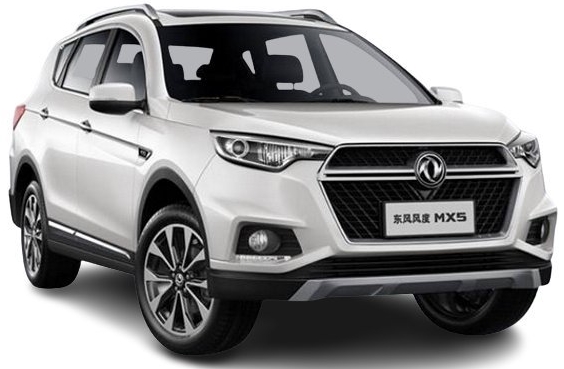
The Fengdu MX5 is a compact crossover sport utility vehicle (SUV) produced by Zhengzhou Nissan under the Dongfeng Fengdu brand. Manufactured from 2016 through 2019, the MX5 was developed as the second production model in the Fengdu lineup, following the larger MX6. Unlike the MX6, which was based almost entirely on the second-generation Nissan X-Trail, the MX5 adopted a more contemporary crossover design and was built on a newer front-wheel-drive platform shared with other Dongfeng and Nissan products.
Designed to appeal to younger buyers and growing families, the MX5 emphasized modern styling, improved comfort, and everyday practicality rather than rugged off-road capability. While it never became one of China’s highest-volume SUVs, the model played an important role in expanding the Fengdu brand into the increasingly competitive compact crossover segment.
Background
Dongfeng Motor introduced the Fengdu brand in 2013 as a division of Zhengzhou Nissan. The brand was created to market affordable sport utility vehicles using proven Nissan engineering while establishing a separate identity from Nissan-branded products.
After launching the MX6 in 2015, Dongfeng expanded the lineup with the smaller MX5, which debuted in 2016. Instead of recycling an older Nissan platform, the MX5 featured a more modern crossover design intended to compete directly with the growing number of compact SUVs entering the Chinese market.
The vehicle combined contemporary styling, a spacious interior, and competitive pricing, making it an attractive option for buyers seeking a practical family vehicle.
.
You’ve got that cool car, but is it resting in its own cool place?
It’s visually pleasing for the surrounding areas outside of your home to look as awesome as what’s stored inside your garage! If you desire a truly inspirational environment for your landscape, you should check into these easy plans! You’ll happy with the end results!

.
Production History (2016–2019)
Production of the Fengdu MX5 began in 2016 at Zhengzhou Nissan’s manufacturing facilities in China.
Unlike the MX6, which focused on proven off-road capability, the MX5 targeted urban drivers who preferred car-like handling and fuel efficiency. Throughout its production life, the vehicle underwent only modest revisions, with annual updates generally limited to equipment improvements, software revisions, and expanded color selections.
Production ended during 2019, as Dongfeng gradually shifted its attention toward newer crossover models and changing consumer preferences.
2016 Model Year
The 2016 model year marked the introduction of the MX5.
The SUV featured a contemporary exterior with a large chrome grille, swept-back headlights, sculpted body panels, and a spacious five-passenger interior. Compared with the MX6, the new model offered a more refined appearance and greater emphasis on passenger comfort.
At launch, the officially documented trim levels included:
- Standard
- Comfort
- Elite
- Luxury
- Premium
Depending on the drivetrain selected, certain trims were available with either a manual transmission or a continuously variable transmission (CVT).
Standard equipment generally included:
- Power windows
- Power door locks
- Air conditioning
- Remote keyless entry
- Multi-function steering wheel
- USB connectivity
- Bluetooth hands-free calling
- Cloth seating
- Rear parking sensors
Higher trim levels added features such as:
- Leather upholstery
- Automatic climate control
- Touchscreen infotainment system
- Rearview camera
- Power sunroof
- Push-button start
- Keyless entry
- Alloy wheels
- Chrome exterior trim
Powertrain
Throughout production, the MX5 was offered with a single gasoline engine.
Specifications included:
- 2.0-liter naturally aspirated inline-four
- Approximately 144 horsepower
- Approximately 146 pound-feet (198 Nm) of torque
Transmission options included:
- Six-speed manual
- Continuously variable transmission (CVT)
All versions featured front-wheel drive.
The naturally aspirated engine emphasized long-term reliability and low maintenance costs rather than outright performance, making the MX5 well suited to daily commuting and family transportation.
2017 Model Year
For 2017, Dongfeng introduced minor refinements to the MX5.
Mechanical specifications remained unchanged, while updates focused on equipment enhancements and improved interior quality.
Changes included:
- Revised infotainment software
- Additional exterior paint colors
- Improved seat materials
- Updated dashboard trim
- Expanded availability of rearview cameras
The trim lineup remained largely unchanged:
- Standard
- Comfort
- Elite
- Luxury
- Premium
These revisions improved the vehicle’s competitiveness without requiring significant engineering changes.
2018 Model Year
The 2018 model year brought another round of modest improvements.
Equipment updates included:
- Larger touchscreen display on higher trims
- Improved Bluetooth compatibility
- Additional USB charging ports
- Updated alloy wheel designs
- Minor interior trim revisions
The drivetrain remained unchanged, continuing to use the dependable 2.0-liter engine paired with either the six-speed manual transmission or the CVT.
The SUV’s comfortable ride, spacious cabin, and affordable operating costs remained among its strongest selling points.
2019 Final Model Year
The final year of production saw only incremental changes.
Available trim levels continued to include:
- Standard
- Comfort
- Elite
- Luxury
- Premium
Equipment improvements focused primarily on multimedia compatibility and convenience features.
Mechanically, the MX5 remained unchanged, reflecting the maturity of its platform.
Production concluded during 2019, ending a relatively short but stable production run.
Models and Trim Levels
Throughout its production history, the principal trim levels offered on the Fengdu MX5 included:
2016–2019
- Standard
- Comfort
- Elite
- Luxury
- Premium
Some regional markets offered slight variations in equipment packages, but these five trim levels represented the core factory lineup during production.
Design
The MX5 featured styling that reflected the growing popularity of modern crossover SUVs.
Exterior highlights included:
- Five-door crossover body
- Large chrome front grille
- Projector-style headlights
- Roof rails
- Integrated rear spoiler
- Alloy wheels
- Sculpted body panels
The interior emphasized passenger comfort and practicality.
Available interior features included:
- Multi-function steering wheel
- Touchscreen infotainment system
- Leather seating
- Automatic climate control
- Rearview camera
- Power-adjustable driver’s seat
- Fold-flat rear seats
The cargo compartment offered generous storage capacity, making the MX5 suitable for both daily commuting and family travel.
Market Position
The MX5 competed in one of China’s fastest-growing automotive segments.
Its primary competitors included compact crossover SUVs from Changan, Great Wall Motor, Geely, BYD, and several international joint-venture manufacturers.
Rather than emphasizing off-road performance, the MX5 focused on:
- Comfortable daily driving
- Competitive pricing
- Modern styling
- Low ownership costs
- Practical family transportation
These characteristics appealed to buyers seeking an affordable crossover without unnecessary complexity.
Reliability and Ownership
The MX5 benefited from using well-established mechanical components and straightforward engineering.
Owners generally appreciated the vehicle for:
- Reliable naturally aspirated engine
- Comfortable ride quality
- Spacious interior
- Low maintenance costs
- Good fuel economy
- Simple mechanical design
Because many drivetrain components were shared with other Dongfeng and Nissan products, replacement parts remained readily available throughout its production life.
Legacy
Although the Fengdu MX5 enjoyed a relatively brief production run, it represented an important step in the evolution of the Fengdu brand. It demonstrated Dongfeng’s ability to develop a modern crossover that appealed to mainstream buyers while maintaining the reliability associated with Nissan-derived engineering.
The MX5 also helped broaden the Fengdu lineup beyond rugged SUVs, allowing the brand to compete in China’s rapidly expanding compact crossover market.
Future Outlook
Production of the Fengdu MX5 ended in 2019, and no direct successor has been introduced under the Fengdu name. Consumer demand has increasingly shifted toward more technologically advanced crossover SUVs and electrified vehicles, leading Dongfeng to focus on newer products across its broader portfolio.
Although no longer in production, the MX5 remains a practical used crossover thanks to its dependable mechanical components, spacious interior, and straightforward design. Its role in expanding the Fengdu brand beyond the original MX6 ensures that it remains an important chapter in the history of Zhengzhou Nissan’s efforts to establish a competitive Chinese SUV lineup.