The Evolution of the Simca 1100: A Pioneer of the Modern Hatchback
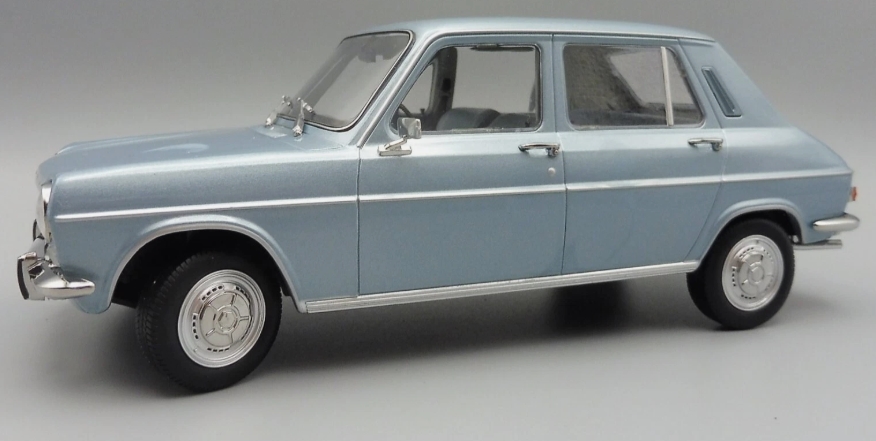
Introduced during a transformative era in European automotive design, the Simca 1100 became one of the most influential compact cars of the late twentieth century. Produced from 1967 to 1982 in passenger form and until 1985 for commercial versions, the Simca 1100 combined front-wheel drive, a transverse engine, and a practical hatchback body—features that would later become standard across the automotive industry.
During its long production life, the Simca 1100 evolved through multiple styling revisions, mechanical improvements, and trim levels ranging from basic economy models to early performance-oriented versions. The model also spawned numerous derivatives, including station wagons, vans, and sport-inspired variants. Its legacy remains significant, as it helped define the template for modern compact family cars.
Origins and Development
During the early 1960s, the French automaker Simca sought to replace its rear-engine Simca 1000 with a more modern and practical compact family car.
European automotive design was evolving rapidly, and manufacturers were increasingly experimenting with front-wheel drive layouts that allowed better interior space utilization. Simca engineers developed a completely new platform that placed the engine transversely at the front while driving the front wheels.
This configuration maximized interior room within a relatively compact footprint. When the Simca 1100 debuted in 1967, it represented one of the most modern family cars on the European market.
Key engineering characteristics included:
- Front-engine, front-wheel drive layout
- Transverse inline-four engine
- Independent suspension
- A hatchback body style, still rare in the late 1960s
The combination of these features gave the Simca 1100 impressive practicality for its size.
.

.
Production and Assembly
The Simca 1100 was manufactured primarily at Simca’s major factory in Poissy, France. Production began in May 1967, and the model remained in continuous production for over fifteen years.
In addition to France, the car was produced internationally:
- Spain, where it was marketed as the Simca 1200
- Other export markets across Europe and South America
Passenger versions were produced until 1982, while certain commercial versions such as delivery vans continued until 1985.
Body Styles and Variants
One of the Simca 1100’s most distinctive traits was its wide variety of body styles.
Available configurations included:
- 3-door hatchback
- 5-door hatchback
- 5-door station wagon (Break)
- Panel van
- High-roof delivery van
- Pickup truck
These diverse configurations helped make the 1100 attractive to both private owners and commercial buyers.
The station wagon version, known as the Break, was introduced soon after launch and became particularly popular among families. The commercial versions formed the basis for Simca’s light-utility vehicle lineup.
Engines and Mechanical Specifications
Throughout its life, the Simca 1100 used several variations of Simca’s inline-four engines.
Common engine options included:
- 944 cc engine
- 1118 cc engine
- 1204 cc engine
- 1294 cc engine
- 1442 cc engine (Spain only)
Power outputs ranged from approximately 47 horsepower to 82 horsepower, depending on the engine and model version.
Most models used a four-speed manual transmission, though automatic transmissions were offered on certain variants.
Early Models and Trim Levels (1967–1969)
At its launch in 1967, the Simca 1100 lineup was relatively simple, offering a few basic trim levels designed to cover different price points.
LS
The LS served as the entry-level model.
Features included:
- Basic interior trim
- Minimal chrome
- Smaller engines for fuel efficiency
GL
The GL represented the mid-range version.
Improvements included:
- Better interior upholstery
- Additional instrumentation
- More exterior trim
GLS
The GLS served as the more luxurious variant.
Features included:
- Higher-quality materials
- Additional chrome accents
- More comfort features
The GLS quickly became one of the most popular versions because it balanced price and equipment.
Early Mechanical Updates
Simca began refining the 1100 soon after launch.
By 1969, several improvements had been introduced:
- A new 944-cc engine producing about 45 horsepower
- Improved braking systems
- Enhanced interior instrumentation
At the same time, Simca expanded the lineup by introducing additional body styles, including the three-door hatchback and the station wagon version.
The Simca 1100 Special (1970)
A significant development occurred in 1970 with the introduction of the 1100 Special.
This model offered a more powerful engine and additional equipment, including:
- A 1204-cc engine producing around 75 horsepower
- Brake servo assistance
- Sportier styling details
- Additional instrumentation such as a tachometer
The Special was one of the earliest examples of a compact car designed with mild sporting intentions.
Expanded Trim Levels (Early 1970s)
During the early 1970s, the Simca 1100 lineup expanded with additional trim levels.
Common trims included:
- LS
- GL
- GLS
- Special
These versions differed mainly in equipment levels, interior materials, and engine size.
Entry-level models focused on affordability, while GLS and Special variants offered greater comfort and performance.
The Simca 1100 TI: An Early Hot Hatch
One of the most important versions of the Simca 1100 arrived in 1973 with the introduction of the 1100 TI.
This model featured:
- A 1294-cc engine producing about 82 horsepower
- Twin carburetors
- Sport-tuned suspension
- Distinctive wheels and trim
- Additional instrumentation
The TI version significantly improved performance and is often considered one of the earliest examples of the modern hot hatchback concept.
Its sporty character made it popular with enthusiasts.
Commercial Variants and Utility Models
Simca also developed commercial versions of the 1100 platform.
In 1973, the company introduced the VF series of utility vehicles.
Examples included:
- VF1 – a panel-style delivery van
- VF2 – a higher-capacity cargo van
These vehicles were widely used by businesses and tradespeople throughout Europe.
The practical nature of the Simca 1100 made it particularly suitable for commercial use.
Mid-1970s Updates
By the mid-1970s, the Simca 1100 received several updates.
In 1974, Simca introduced new trim levels including:
- LE
- ES
These models provided additional equipment options and updated styling.
In 1975, the car underwent a more noticeable update featuring:
- A redesigned dashboard
- Improved ergonomics
- Larger rear lights
- Revised interior materials
These changes helped keep the aging design competitive in a rapidly evolving automotive market.
Chrysler Ownership and Brand Changes
During the 1970s, Simca became part of Chrysler Europe.
This corporate change influenced the branding of the Simca 1100 in later years.
In 1978, the French automaker PSA Group acquired Chrysler Europe.
Following the takeover, the Simca brand was gradually replaced with the Talbot name.
As a result, later versions of the Simca 1100 were sometimes marketed as the Talbot 1100.
Related Models and Derivatives
The Simca 1100 platform served as the basis for several related vehicles.
Simca 1200 (Spain)
In Spain, the car was marketed as the Simca 1200, featuring larger engines and slightly different trim options.
Matra-Simca Rancho
In 1976, the rugged leisure vehicle Matra-Simca Rancho was introduced.
Although it appeared to be an off-road vehicle, the Rancho used the Simca 1100’s chassis and drivetrain.
It is sometimes considered an early precursor to modern crossover SUVs.
Driving Characteristics
The Simca 1100 was widely praised for its driving dynamics.
Advantages included:
- Excellent road holding
- Stable handling
- Good ride comfort
- Spacious interior relative to size
The front-wheel-drive layout helped improve traction and interior space, giving the car practical advantages over many rear-wheel-drive competitors.
Market Reception
The Simca 1100 became one of Simca’s most successful models.
Its popularity was driven by several factors:
- Practical hatchback design
- Versatile body styles
- Competitive pricing
- Modern engineering
The car was particularly successful in France and other European markets, where it became a common sight on roads throughout the 1970s.
End of Production
Production of the Simca 1100 gradually declined in the late 1970s.
Passenger versions were phased out by 1981–1982, while certain commercial models continued until 1985.
The model was ultimately replaced by newer front-wheel-drive cars developed under PSA ownership.
The primary successor was the Talbot Horizon, which continued the concept of a practical front-wheel-drive family hatchback.
Legacy and Historical Importance
The Simca 1100 is widely regarded as one of the most influential compact cars of its era.
Its significance lies in several innovations:
- Early adoption of the hatchback body style
- Front-wheel drive with transverse engine
- Wide range of body styles and commercial versions
These features would later become industry standards.
The model also helped popularize the concept of the hot hatchback, paving the way for later performance compacts.
Collectibility and Future Outlook
Today, surviving Simca 1100 models are relatively rare due to rust issues that affected many vehicles.
However, the car has gained increasing recognition among classic car enthusiasts.
Collectors value it for:
- Its historical importance
- Its role in hatchback development
- Its unique French design
Sporting versions such as the 1100 TI are particularly sought after.
Produced from 1967 to the early 1980s, the Simca 1100 was a groundbreaking compact car that helped shape the future of automotive design. With its front-wheel-drive layout, versatile hatchback body, and wide range of trim levels—including LS, GL, GLS, Special, TI, LE, and ES—the model demonstrated how practical engineering could meet everyday transportation needs.
Its influence extended beyond its own production life, inspiring later hatchbacks and crossover vehicles while establishing Simca as a major innovator in European automotive design.
Today, the Simca 1100 stands as a historically important vehicle—a pioneering compact car whose engineering concepts remain fundamental to modern automobiles.