The Evolution of the WEY VV7: The SUV That Launched a Premium Chinese Brand
The WEY VV7 holds a unique place in automotive history as the first production model from Great Wall Motor’s premium brand, WEY. Introduced in 2017, the VV7 was designed to elevate Chinese automotive manufacturing into the luxury crossover segment, competing with established global brands through a combination of bold design, advanced technology, and competitive pricing.
Although its production life was relatively short—lasting from 2017 through 2021—the VV7 underwent several important developments, including new trims, a coupe-style variant, and plug-in hybrid technology. This article explores the full evolution of the WEY VV7, including its history, production years, trim levels, and long-term significance.
Origins and Brand Background
WEY was established by Great Wall Motor in 2016 as a premium division aimed at competing with global luxury automakers. Named after company founder Wei Jianjun, the brand sought to redefine perceptions of Chinese vehicles by offering upscale design and features at a competitive price.
The VV7 was the first production model from WEY, originally developed under the internal codename “01.” It debuted shortly after the brand’s creation and became the foundation upon which WEY built its identity.
.

.
Concept and Development (2016–2017)
The design of the VV7 was previewed by the Haval Coupe Concept, reflecting a shift toward more expressive styling and premium positioning.
The production version was officially launched in April 2017, marking the beginning of WEY’s entry into the luxury SUV segment.
From the outset, the VV7 was positioned as a mid-size luxury crossover SUV, built on a platform shared with models like the Haval H6 and WEY VV5.
First Generation WEY VV7 (2017–2021)
Production and Overview
- Production years: 2017–2021
- Assembly location: Tianjin, China
- Body styles:
- Standard SUV
- Coupe-style SUV (VV7 GT)
The VV7 remained in a single generation throughout its lifecycle, receiving updates and additional variants rather than a full redesign.
Initial Launch and Trim Levels (2017–2018)
At launch, the VV7 was offered in two primary trim levels, both powered by the same engine but differing in styling and features.
2017–2018 Trim Levels
- VV7 C (Base Model)
- VV7 S (Sport Model)
Key Differences
- VV7 C:
- Entry-level trim
- Focus on comfort and value
- VV7 S:
- Sportier design
- More aggressive exterior styling
- Additional premium features
Both trims were powered by a 2.0-liter turbocharged inline-4 engine producing approximately 227–234 horsepower, paired with a 7-speed dual-clutch transmission.
Features and Equipment
Even in its base form, the VV7 emphasized premium features:
- Leather upholstery
- Advanced infotainment system
- Driver assistance technologies
- High-end interior materials
This strong feature set helped the VV7 stand out in its price segment.
Expansion and Refinement (2019–2020)
Introduction of New Variants
In 2019, WEY expanded the VV7 lineup significantly, introducing new variants that broadened its appeal.
1. WEY VV7 GT (2019–2021)
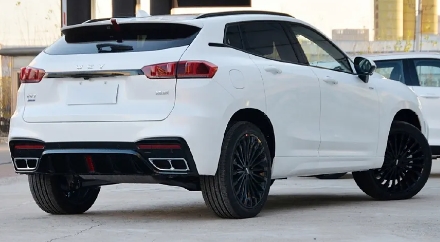
The VV7 GT was a coupe-style version of the standard SUV, featuring:
- Sloping roofline
- More aggressive design
- Launch control system (exclusive feature)
This variant targeted buyers seeking a more dynamic and sporty appearance.
2. WEY VV7 GT Brabus Edition (2019–2021)
A high-performance styling variant developed with Brabus, the German tuning company:
- Wider body and flared fenders
- 21-inch wheels
- Unique exterior styling elements
- Enhanced interior detailing
This version represented WEY’s attempt to move further upmarket.
3. Plug-in Hybrid (PHEV) Models (2019–2021)
WEY introduced electrified variants of the VV7:
- VV7 PHEV (standard SUV)
- VV7 GT PHEV (coupe version)
Key specifications included:
- 2.0-liter turbo engine + electric motor
- Combined output with improved performance
- Electric-only range of approximately 31 miles (50 km)
These models marked WEY’s early entry into electrification.
Expanded Trim Levels (2019–2021)
With the addition of hybrid and coupe variants, the VV7 lineup effectively expanded into multiple configurations:
Gasoline models:
- VV7 C
- VV7 S
Coupe models:
- VV7 GT
- VV7 GT Brabus
Plug-in hybrid models:
- VV7 PHEV
- VV7 GT PHEV
Within these categories, trims varied by equipment level, drivetrain (FWD or AWD), and luxury features.
Engineering and Performance
The WEY VV7 emphasized a balance of performance and comfort.
Engine and Drivetrain
- Engine: 2.0-liter turbocharged inline-4
- Power output: ~227–234 hp
- Transmission: 7-speed dual-clutch
- Drivetrain: Front-wheel drive or all-wheel drive
Hybrid Performance
- Additional electric motor (approx. 114 hp)
- Improved acceleration (0–60 mph in ~5.9 seconds for PHEV)
Dimensions and Platform
- Wheelbase: 116.1 inches (2,950 mm)
- Length: ~187 inches
The VV7’s size placed it squarely in the mid-size SUV category, offering ample interior space.
Design and Interior Evolution
Exterior Design
The VV7 introduced a bold design language for WEY:
- Large front grille
- Slim LED headlights
- Coupe-inspired proportions (especially in GT models)
The GT and Brabus versions further enhanced this with more aggressive styling elements.
Interior Features
Across its lifecycle, the VV7 offered:
- Premium leather seating
- Digital displays
- Advanced driver assistance systems
- High-quality materials
The Brabus edition added bespoke styling and upgraded finishes.
Model Year Overview
2017 Model Year
- Initial launch
- Two trims: VV7 C and VV7 S
2018 Model Year
- Minor updates
- Continued production of C and S trims
2019 Model Year
- Introduction of VV7 GT
- Launch of PHEV variants
- Debut of Brabus edition
2020 Model Year
- Refinements to hybrid systems
- Expanded availability of variants
2021 Model Year (Final Year)
- Final production year
- Full lineup available:
- VV7 C
- VV7 S
- VV7 GT
- VV7 GT Brabus
- VV7 PHEV
- VV7 GT PHEV
Market Impact and Reception
The WEY VV7 played a crucial role in establishing WEY as a premium brand:
- Positioned as an affordable luxury SUV
- Offered premium features at a competitive price
- Helped build brand recognition in China
While it did not achieve major global sales success, it was instrumental in shaping WEY’s identity.
End of Production and Successor
Production of the VV7 ended in 2021, after which it was succeeded by the more advanced WEY Mocha.
The Mocha introduced newer technology, improved electrification, and a more modern design, reflecting the next phase of WEY’s evolution.
Key Innovations
1. First WEY Production Model
The VV7 established the foundation for the entire WEY brand.
2. Early Electrification
The introduction of PHEV variants demonstrated WEY’s commitment to hybrid technology.
3. Coupe SUV Design
The VV7 GT helped popularize coupe-style SUVs in the Chinese market.
4. Collaboration with Brabus
The Brabus edition elevated the brand’s premium image.
Future Outlook and Legacy
Although the WEY VV7 is no longer in production, its influence continues to shape the brand’s direction.
Lasting Impact
- Established WEY as a credible premium brand
- Demonstrated China’s growing automotive capabilities
- Paved the way for future electrified models
Future Trends
WEY has since shifted toward:
- Plug-in hybrid and electric vehicles
- Advanced driver assistance systems
- Global market expansion
Models like the Mocha and newer “Coffee” series SUVs build upon the foundation laid by the VV7.
The WEY VV7 represents a landmark vehicle in the evolution of Chinese automotive manufacturing. Produced from 2017 to 2021, it introduced a new level of luxury, design, and technology to the domestic market while laying the groundwork for WEY’s future success.
With multiple trims—including the VV7 C, VV7 S, VV7 GT, Brabus edition, and PHEV variants—the VV7 evolved into a diverse and technologically advanced lineup. Though its production run was relatively short, its impact was significant.
As the first model from WEY, the VV7 not only defined the brand’s identity but also helped set the stage for the next generation of premium Chinese SUVs.