The Evolution of the Foton Tunland V7 and V9: Foton’s Modern Full-Size Pickup Revolution
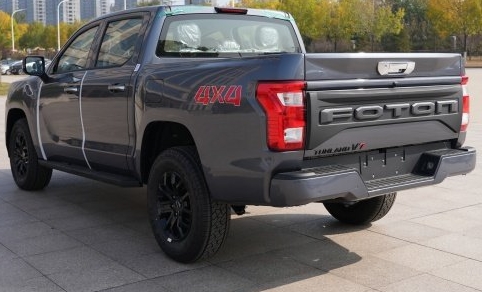
The Foton Tunland V7 and V9 represent one of the most ambitious pickup truck programs ever developed by Chinese commercial vehicle manufacturer Foton Motor. Introduced during the mid-2020s, the V7 and V9 expanded the long-running Tunland lineup into the premium full-size pickup segment, combining rugged utility with luxury-oriented interiors, advanced technology, hybrid-assisted diesel powertrains, and bold styling heavily inspired by American trucks.
Although the Tunland name had existed since 2011, the V7 and V9 marked a dramatic shift in design philosophy and market positioning. These trucks demonstrated Foton’s intention to compete not only against traditional midsize pickups such as the Toyota Hilux and Ford Ranger, but also against larger premium trucks from brands including Ram and Ford. Their introduction reflected the rapid evolution of Chinese pickup engineering and the growing global influence of Chinese automakers in commercial vehicle markets.
Origins of the Tunland Lineup
The Foton Tunland series first entered production in 2011 as a compact and midsize pickup designed primarily for commercial use and emerging global markets. Early Tunland models focused on affordability and practicality, often using Cummins diesel engines and relatively simple interiors. The trucks achieved moderate export success across Asia, South America, Africa, and Australia.
Over time, Foton continuously expanded the Tunland lineup with updated generations, revised styling, and increasingly sophisticated features. By the early 2020s, Chinese pickup manufacturers were rapidly improving quality, safety, and technology in order to compete more directly with Japanese, American, and European brands.
The V7 and V9 emerged from this transformation.
In China, the trucks were originally marketed under the “Mars” name before being exported globally as the Tunland V7 and Tunland V9. Industry reviews noted that the trucks had already been sold domestically in China for roughly two years before their wider international launch.
.

.
Production Years
The Foton Tunland V7 and V9 entered production in:
- 2023
Production continues today in several international markets, including:
- China,
- Australia,
- Russia,
- Brazil,
- Cambodia,
- the Philippines,
- and selected Middle Eastern and African regions.
As of 2026, both models remain in active production.
Development and Platform
The Tunland V7 and V9 were built on a new-generation body-on-frame platform developed specifically for larger premium pickup trucks. Compared to earlier Tunland models, the V-series trucks grew substantially in size and sophistication.
The trucks were designed to offer:
- greater towing capability,
- improved ride comfort,
- more advanced safety systems,
- premium cabin technology,
- and stronger off-road capability.
One of the major engineering differences between the V7 and V9 involved rear suspension design.
Tunland V7
The V7 used:
- a traditional leaf-spring rear suspension,
- optimized for heavier payloads and commercial durability.
Tunland V9
The V9 adopted:
- a multi-link coil-spring rear suspension,
- designed to improve ride comfort and on-road refinement.
This distinction allowed Foton to market the V7 more toward commercial and utility buyers, while positioning the V9 as a premium lifestyle truck.
Exterior Design Evolution
The V7 and V9 attracted immediate attention because of their aggressive styling and strong resemblance to American full-size pickups.
Tunland V7 Styling
The V7 featured:
- a large rectangular grille,
- vertically oriented daytime running lights,
- muscular fenders,
- and styling cues similar to the Ford F-150 Raptor.
Tunland V9 Styling
The V9 adopted:
- a wider grille,
- horizontally oriented lighting,
- chrome-heavy detailing,
- and front-end styling frequently compared to the Ram 1500 TRX.
Online automotive discussions often debated the trucks’ styling influences, with enthusiasts comparing various exterior elements to Ram, Ford, Toyota, and Nissan pickups.
Despite these comparisons, the trucks developed their own identity through:
- oversized dimensions,
- futuristic interiors,
- and extensive technology features.
Dimensions and Capability
The Tunland V7 and V9 became some of the largest pickups sold in several export markets.
Typical dimensions included:
- Length: approximately 221 inches
- Width: 82.3 inches
- Height: 75–77 inches
- Wheelbase: approximately 132 inches
Payload ratings varied by model:
- approximately 2,200–2,315 pounds for the V7,
- approximately 2,200 pounds for the V9.
Both trucks offered:
- 4×4 capability,
- rear differential locks,
- off-road drive modes,
- and approximately 27.5 inches of water-wading capability.
Maximum towing capacity reached:
- approximately 7,700 pounds in several markets.
Engines and Hybrid Technology
One of the most important advancements in the V7 and V9 was the introduction of a 48-volt mild-hybrid diesel system.
Primary Powertrain
Most V7 and V9 models used:
- a 2.0-liter Aucan turbo-diesel four-cylinder engine,
- combined with a 48V mild-hybrid system,
- producing approximately 160–175 horsepower,
- and roughly 332 lb-ft of torque.
The hybrid system improved:
- fuel efficiency,
- low-speed torque response,
- and emissions compliance.
Transmission Options
Available transmissions included:
- 6-speed manual transmission,
- and 8-speed ZF automatic transmission.
The ZF automatic became especially important in premium export markets where buyers expected smoother driving refinement.
Future Gasoline Models
By 2026, reports indicated that the V9 was also receiving a gasoline-powered engine option in some markets.
Trim Levels and Configurations
Unlike earlier Tunland trucks, the V7 and V9 used relatively simplified trim structures centered around equipment levels and drivetrain choices.
2023–2024 Initial Launch Models
Tunland V7
Initial V7 configurations included:
- V7 Standard
- V7 Luxury
- V7 Premium
These models emphasized:
- heavy-duty suspension,
- cargo capability,
- and commercial-oriented durability.
Common features included:
- 18-inch wheels,
- LED lighting,
- 12.3-inch digital instrument cluster,
- 14.6-inch infotainment display,
- cloth or leather seating,
- and advanced safety systems.
Tunland V9
The V9 lineup included:
- V9 Luxury
- V9 Flagship
- V9 Executive
The V9 focused more heavily on:
- premium interior comfort,
- ride quality,
- and technology features.
Higher trims added:
- panoramic sunroof,
- ventilated seats,
- larger multimedia displays,
- premium sound systems,
- ambient lighting,
- and expanded driver-assistance systems.
2025–2026 Expanded Variants
As exports increased, additional trims appeared in various markets.
Russian Market Updates
In Russia, Foton introduced:
- new top-level V7 trims,
- and additional V9 gasoline variants during 2026.
Cambodian Variants
In Cambodia, the trucks were rebadged as:
- GTV Kouprey (V7),
- and GTV Kouprey Pro (V9).
These versions retained most core mechanical components while adapting equipment packages for local buyers.
Interior and Technology
The V7 and V9 represented a major leap forward for Foton interiors.
Features available throughout the lineup included:
- dual digital displays,
- 12.3-inch instrument panels,
- 14.6-inch infotainment systems,
- wireless charging,
- leather upholstery,
- voice recognition,
- and panoramic sunroofs.
Advanced safety technology included:
- adaptive cruise control,
- autonomous emergency braking,
- blind-spot monitoring,
- lane departure warning,
- and rear cross-traffic alert.
Many reviewers noted that the interiors resembled premium SUVs more than traditional work trucks.
Market Reception
The Tunland V7 and V9 received significant attention internationally because of their aggressive pricing and high equipment levels.
Reviewers frequently praised:
- interior space,
- advanced technology,
- ride comfort,
- and value for money.
However, some buyers expressed concerns about:
- long-term reliability,
- parts availability,
- and brand reputation compared to Toyota or Ford.
Online discussions often highlighted the trucks’ impressive feature lists while questioning whether Foton could match the long-term durability of more established pickup manufacturers.
Future Outlook
The future of the Tunland V7 and V9 appears promising as Foton continues expanding internationally.
Potential future developments may include:
- plug-in hybrid powertrains,
- fully electric pickup variants,
- more advanced autonomous driving systems,
- expanded global distribution,
- and additional luxury-oriented trims.
The V7 and V9 already demonstrate how rapidly Chinese automakers have evolved in the pickup truck segment. Only a decade earlier, Chinese pickups were viewed primarily as low-cost commercial vehicles. By the mid-2020s, trucks like the Tunland V9 offered:
- luxury interiors,
- advanced hybrid technology,
- modern safety systems,
- and premium styling rivaling global competitors.
Although the trucks still face challenges regarding long-term reputation and worldwide dealer support, the Tunland V7 and V9 have become important examples of China’s growing influence in the global pickup market.