The Evolution of the Cowin C3 and C3R: Kaiyi’s Affordable Compact Car Line
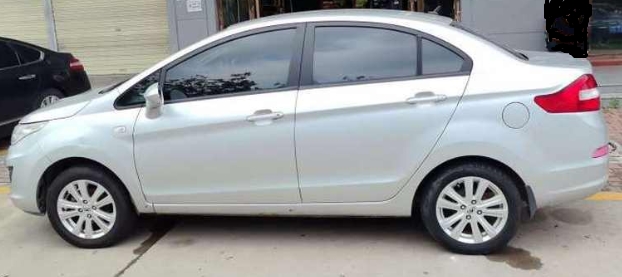
The Cowin Auto C3 and C3R represented an important stage in the development of China’s growing budget-car market during the 2010s. Developed by Kaiyi Auto, a subsidiary of Chery, the C3 family was designed to provide inexpensive transportation for younger buyers and first-time car owners. Although the vehicles never became major global exports, they played a meaningful role in the expansion of Chinese domestic brands and demonstrated how smaller manufacturers adapted existing platforms into affordable sedans, hatchbacks, and electric vehicles.
The Cowin C3 sedan and the Cowin C3R hatchback were produced during a relatively short but important period for the Chinese automotive industry. Their development reflected the industry’s transition from simple low-cost transportation toward better styling, improved technology, and eventually electrification.
The Cowin C3 sedan entered production in 2014, while the C3R hatchback followed in 2015. Both models remained in production until 2020.
Origins of the Cowin Brand
Cowin Auto, also known as Kaiyi Auto in China, was established as a budget-oriented division of Chery Automobile. The company focused on younger buyers who wanted inexpensive vehicles with modern styling and practical features. Instead of creating entirely new platforms, Cowin often adapted existing Chery designs and updated them with revised bodywork and branding.
The C3 series was heavily related to the earlier Chery E-series compact cars. This allowed Kaiyi to reduce development costs while still launching competitive products in the crowded Chinese subcompact segment. The vehicles were assembled in Wuhu, Anhui Province, China, which was also a major production center for Chery vehicles.
The styling of the C3 and C3R was developed with assistance from Torino Design, an Italian design studio led by Giuliano Biasio. This collaboration gave the cars a more contemporary appearance than many earlier low-cost Chinese vehicles.
.

.
2014: Introduction of the Cowin C3 Sedan
The Cowin C3 prototype debuted at the 2014 Chengdu Auto Show before the production version officially appeared at the Guangzhou Auto Show later that year. Sales in China began in November 2014.
The C3 was positioned as a subcompact four-door sedan aimed at value-conscious buyers. It used a front-engine, front-wheel-drive layout and rode on a 98.8-inch wheelbase. The vehicle measured approximately 167.3 inches long, making it practical for crowded urban environments while still offering usable rear-seat space.
Power came from a naturally aspirated 1.5-liter four-cylinder gasoline engine known internally as the SQR477F. This engine was paired with either a five-speed manual transmission or a four-speed automatic transmission.
2014–2020 Cowin C3 Models and Trim Structure
Unlike many Western automakers, Cowin did not consistently use elaborate trim names across all years. Instead, the company often marketed the C3 through equipment packages and transmission combinations. Throughout its production run, the lineup generally included:
- Standard manual-transmission sedan
- Higher-equipment manual sedan
- Automatic-transmission sedan
- Updated facelift and convenience packages introduced during later model years
Equipment varied by year, but common features included:
- Air conditioning
- Power windows
- Infotainment systems with touchscreen displays
- USB connectivity
- Alloy wheels on upper versions
- Dual front airbags
- Anti-lock braking systems on higher-equipped models
At launch, pricing ranged from approximately 45,800 yuan to 51,800 yuan, helping establish the C3 as one of the more affordable sedans in its segment. Prices later increased modestly as equipment levels improved.
2015: Arrival of the Cowin C3R Hatchback
In April 2015, Cowin introduced the C3R, a hatchback variant of the C3 sedan. The “R” designation identified the model as a more youthful and practical five-door hatchback.
The C3R used the same platform, engine, and drivetrain as the sedan but featured a shorter rear body structure and a sportier appearance. At roughly 156.4 inches in length, the hatchback was noticeably shorter than the sedan and easier to maneuver in urban traffic.
The C3R targeted younger buyers who preferred hatchbacks over traditional sedans. The model competed against other inexpensive Chinese hatchbacks from brands such as Geely, JAC, and Great Wall.
2015–2020 Cowin C3R Models and Trim Levels
Like the sedan, the C3R was offered primarily through transmission and equipment variations rather than highly distinctive trim names. The available configurations generally included:
- Base five-speed manual hatchback
- Mid-level comfort-oriented hatchback
- Automatic-transmission hatchback
- Special equipment packages introduced in later years
The C3R carried many of the same features as the sedan but emphasized practicality with its rear hatch and foldable rear seating. Buyers appreciated the combination of low pricing and compact dimensions.
Initial pricing mirrored the sedan, starting around 45,800 yuan and extending slightly above 51,000 yuan depending on equipment.
2016: Introduction of the Cowin C3R EV
One of the most significant developments in the C3 family came in 2016 with the introduction of the Cowin C3R EV. This version reflected the rapid growth of China’s electric vehicle industry during the middle of the decade.
The C3R EV replaced the gasoline engine with a permanent magnet synchronous electric motor producing approximately 57 horsepower and 111 pound-feet of torque. The vehicle had a claimed driving range of about 124 miles and a top speed close to 62 miles per hour.
The electric version was designed primarily for city driving and appealed to buyers seeking lower operating costs and access to Chinese government EV incentives.
C3R EV Variants
The electric lineup was relatively simple and generally included:
- Standard C3R EV
- Updated battery and equipment versions in later production years
The EV platform later evolved into the Chery eQ2, a rebadged and updated electric vehicle sold under Chery’s new-energy division.
Design and Engineering
The Cowin C3 and C3R were not technologically groundbreaking, but they represented a clear improvement over many earlier Chinese budget vehicles. Their styling was more modern and cohesive, and the interiors featured improved materials and digital technology compared with older Chery-derived products.
Mechanically, the cars emphasized simplicity and low ownership costs. The naturally aspirated 1.5-liter engine was designed for reliability and fuel economy rather than performance. Suspension systems were straightforward, using MacPherson struts in front and a torsion-beam rear setup.
The platform’s affordability helped Cowin maintain low retail prices while still offering features that younger Chinese buyers increasingly expected.
Market Performance and Discontinuation
The C3 and C3R achieved moderate success in China’s domestic market, particularly among entry-level buyers in smaller cities. However, the vehicles faced intense competition from rapidly improving Chinese manufacturers.
By the late 2010s, consumer expectations had changed dramatically. Buyers increasingly preferred compact SUVs and crossovers over traditional subcompact sedans and hatchbacks. At the same time, Chinese automakers began introducing more advanced infotainment systems, turbocharged engines, and higher-quality interiors.
Production of both the C3 sedan and C3R hatchback ended in 2020.
Legacy and Future Outlook
Although the Cowin C3 and C3R were never internationally famous vehicles, they represented an important transitional step for China’s automotive industry. They showed how domestic manufacturers could combine affordable pricing with increasingly modern styling and technology.
The C3R EV also illustrated the early stages of China’s rapid move toward electrification. Lessons learned from vehicles such as the C3R EV contributed to later generations of more advanced electric vehicles produced by Chery and other Chinese automakers.
Today, Kaiyi Auto continues to build affordable vehicles, although the company has shifted much of its focus toward crossovers and SUVs. The original C3 and C3R remain notable examples of mid-2010s Chinese automotive development and the growing confidence of domestic manufacturers during that era.