The Evolution of the Sinogold Sena EV300 and E400
The Sinogold Sena lineup represents part of the growing wave of Chinese electric vehicles that emerged during the rapid expansion of battery-powered transportation in the late 2010s and early 2020s. Although the Sinogold brand remains relatively unknown outside select export markets, the Sena EV300 and Sena E400 illustrate how Chinese manufacturers began targeting both commercial and passenger electric vehicle sectors with affordable, practical EV platforms.
Publicly available information on the Sinogold Sena range is limited compared with larger global manufacturers such as Tesla, BYD, or Nissan. However, enough technical and market information exists to trace the development of the EV300 and E400, their production timelines, specifications, and intended market roles.
Origins of the Sinogold Brand
Sinogold is associated with Chinese electric vehicle manufacturing and export operations that focused primarily on practical transportation solutions rather than luxury or performance-oriented EVs. The company’s products appeared in several overseas markets through regional distributors and importers during the early 2020s. One of the most visible distributors was Sena Auto Group, which marketed the vehicles in regions including Eastern Europe and parts of Eurasia.
The company entered the market during a period when China rapidly expanded its EV production capacity. Chinese automakers benefited from government investment, battery supply chain dominance, and growing demand for affordable electric mobility. Unlike premium EV brands, Sinogold concentrated on utility, low operating costs, and simple engineering.
The EV300 and E400 became two of the better-known vehicles in the company’s catalog.
.

.
Sinogold Sena EV300
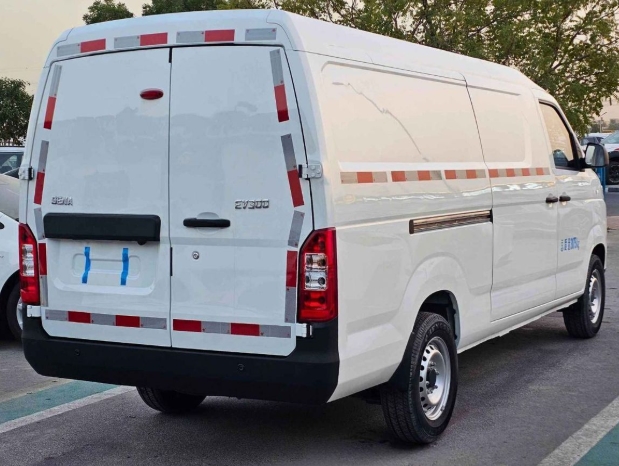
The Sinogold Sena EV300 was introduced during the early 2020s as an electric commercial van. Documentation published by Sena Auto Group indicates the model was available by at least 2023.
Production Years
- 2023–present (confirmed through distributor documentation)
While the exact initial launch year in China is not widely documented, export specifications began appearing publicly in 2023. No official end-of-production date has been announced as of 2026.
Vehicle Category
The EV300 was designed primarily as:
- A commercial cargo van
- A light delivery vehicle
- A fleet-oriented urban transport solution
Its overall dimensions and cargo-focused layout placed it in the same general category as electric commercial vans produced by manufacturers such as Maxus, DFSK, and Dongfeng.
Technical Specifications
According to published specification sheets, the EV300 featured:
- Rear-wheel-drive configuration
- A single electric motor producing up to 60 kW
- Maximum torque figures listed between 170 and 220 Nm
- CATL lithium iron phosphate battery technology
- A 42 kWh battery pack
- Approximately 280 km of NEDC-rated range
- DC fast-charging capability
- A top speed of approximately 62 mph (100 km/h)
The use of lithium iron phosphate batteries reflected a growing trend among Chinese EV manufacturers. LFP batteries generally offered:
- Lower production costs
- Better thermal stability
- Longer cycle life
- Reduced fire risk compared with some nickel-rich battery chemistries
EV300 Models and Trim Levels
Public export documentation suggests the EV300 was primarily offered as a single commercial specification rather than multiple luxury-oriented trim levels. Available configurations included:
- Cargo van version
- Passenger-seat-equipped delivery version
No officially documented trim names such as “Standard,” “Premium,” or “Luxury” have been consistently identified in public materials. Instead, the company appeared to focus on utility specifications and fleet customization.
Design and Market Position
The EV300 emphasized practicality over styling. Its box-shaped profile maximized cargo capacity, while sliding side doors improved urban loading access. The vehicle’s payload capacity of approximately 1,500 kg made it competitive for last-mile delivery operations.
The timing of the EV300’s launch coincided with increased demand for electric delivery vans resulting from:
- E-commerce expansion
- Urban emissions regulations
- Fleet electrification programs
- Rising fuel prices
Because of these factors, smaller manufacturers like Sinogold found opportunities in regional and export markets where affordability mattered more than brand recognition.
Sinogold Sena E400
The Sena E400 represented the company’s move into passenger-oriented electric sedans. Public specifications indicate the vehicle was marketed internationally by at least 2023.
Production Years
- 2023–present (confirmed through distributor specification documents)
As with the EV300, there is little publicly available information documenting the earliest domestic Chinese production dates. However, export documentation confirms active availability beginning in 2023.
Vehicle Segment
The E400 competed in the compact-to-midsize electric sedan segment. Its dimensions and technical layout positioned it against affordable EV sedans produced by:
- BYD
- BAIC
- Geely
- JAC
- Dongfeng
Unlike premium EV sedans, the E400 focused on:
- Cost-effective ownership
- Practical range
- Everyday commuting
- Basic modern technology features
Technical Specifications
Published specifications for the E400 included:
- Front-wheel drive
- Permanent magnet synchronous motor (PMSM)
- Maximum motor output of 120 kW
- Peak torque of 250 Nm
- 54.3–55 kWh ternary lithium battery
- NEDC-rated range of approximately 420 km
- Maximum range claims approaching 500 km
- Top speed of approximately 94 mph (152 km/h)
The sedan also included features increasingly expected in modern EVs:
- Electronic stability systems
- Tire pressure monitoring
- Integrated dash camera
- Rear parking radar
- Fast-charging capability
E400 Models and Trim Levels
As with the EV300, publicly documented trim-level information is limited. Available evidence suggests the E400 was mainly sold in one highly equipped configuration for export markets.
Documented equipment packages included:
- Standard front-wheel-drive sedan configuration
- Technology-oriented convenience equipment
- Fast-charging support
No verified evidence currently confirms multiple named trims such as “Sport,” “Luxury,” or “Long Range.”
Styling and Engineering
The E400 adopted contemporary EV sedan styling trends common among Chinese manufacturers during the early 2020s:
- Aerodynamic body lines
- Closed front grille design
- LED lighting elements
- Simplified interior controls
- Digital instrumentation
The engineering approach emphasized affordability and efficiency rather than extreme performance. The vehicle’s acceleration and range figures were competitive within its pricing class, especially in developing EV markets.
Export Strategy and International Presence
One of the most interesting aspects of the Sinogold Sena vehicles was their export-oriented strategy. Instead of focusing exclusively on China’s domestic market, the company worked with overseas distributors to enter emerging EV regions.
This strategy reflected a broader trend in the Chinese automotive industry:
- Smaller brands targeting underserved markets
- Competitive pricing against established automakers
- Flexible export partnerships
- Rapid deployment of EV platforms
The Sena EV300 proved particularly attractive for:
- Commercial fleets
- Municipal transport operators
- Urban delivery companies
Meanwhile, the E400 targeted:
- Private buyers
- Taxi operators
- Entry-level EV consumers
Challenges Facing the Brand
Despite promising specifications, Sinogold faced several obstacles:
- Limited global brand recognition
- Sparse dealer networks
- Concerns about long-term parts availability
- Competition from larger Chinese EV brands
- Rapidly changing battery technology
The company also entered an increasingly crowded marketplace. By the mid-2020s, Chinese EV exports had expanded dramatically, with dominant companies such as BYD and SAIC gaining stronger international footholds.
For smaller manufacturers, maintaining competitiveness required constant improvements in:
- Battery efficiency
- Software systems
- Build quality
- Charging compatibility
- Safety standards
Future Outlook
The future of the Sinogold Sena EV300 and E400 depends largely on the evolution of export EV markets and the company’s ability to scale operations.
The EV300 may continue finding demand in commercial sectors because:
- Electric delivery fleets continue expanding
- Cities increasingly restrict combustion-engine vans
- Fleet operators prioritize lower operating costs
The E400’s future is more uncertain because the passenger EV segment is becoming highly competitive. However, affordable EV sedans remain attractive in markets where consumers want lower-cost alternatives to established global brands.
If Sinogold continues development, future improvements could include:
- Longer-range battery systems
- Updated infotainment technology
- Advanced driver assistance systems
- Faster charging speeds
- Expanded trim offerings
Although the Sinogold Sena EV300 and E400 are not among the world’s most famous electric vehicles, they represent an important chapter in the globalization of Chinese EV manufacturing. These vehicles demonstrate how smaller automakers contributed to the broader electrification movement by delivering affordable electric transportation solutions to developing and emerging markets. Their evolution reflects the rapid transformation of the automotive industry during the 2020s, when electric vehicles shifted from niche products to mainstream transportation worldwide.