The History of BAIC’s Changhe, Huansu, & Weiwang Sub Brands
Beijing Automotive Industry Holding Company’s Diverse Automotive Segments
The history of China’s automotive industry is filled with brands that rose rapidly during the country’s economic boom and then either evolved, merged into larger organizations, or disappeared as market conditions changed. Among the most notable examples are Changhe, Huansu, and Weiwang, three brands associated with Beijing Automotive Industry Holding Co., Ltd. (BAIC).
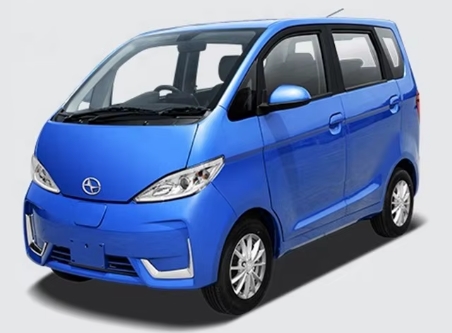
Although these brands served different market segments, they shared a common purpose: helping BAIC expand beyond its traditional passenger car business and compete in China’s rapidly growing automotive market. Changhe specialized in compact cars and commercial transportation, Huansu targeted budget-conscious SUV and MPV buyers, and Weiwang focused on affordable microvans and entry-level commercial vehicles.
Together, these brands illustrate both the opportunities and challenges faced by Chinese automakers during one of the most competitive periods in automotive history.
Understanding BAIC
Before examining the three brands individually, it is important to understand their parent company.
BAIC, formally known as BAIC Group, was established in 1958 in Beijing, China. It is one of China’s largest state-owned automobile manufacturers.
Unlike companies founded by individual entrepreneurs such as Henry Ford or Soichiro Honda, BAIC was created by the Beijing municipal government as part of China’s industrial development efforts.
Today, BAIC produces passenger cars, commercial vehicles, military vehicles, and electric vehicles through numerous subsidiaries and joint ventures.
Changhe: From Aircraft Manufacturing to Automobiles
Years of Operation
- Original company founded: 1969
- Automotive production began: 1982
- Operated independently: 1982–2013
- Under BAIC ownership: 2013–Present
Unlike Huansu and Weiwang, Changhe existed long before becoming part of BAIC.
Origins of Changhe
Changhe originated as Changhe Aircraft Industries Corporation, an aerospace manufacturer established in Jiangxi Province in 1969.
The company initially produced helicopters and aviation equipment for China’s aerospace industry.
As China began economic reforms in the late 1970s and early 1980s, many state-owned aerospace and defense firms sought additional sources of revenue. Changhe entered automobile production in 1982, becoming one of China’s earliest manufacturers of small commercial vehicles.
This dual aerospace-automotive heritage distinguished Changhe from many competitors.
Suzuki Partnership
One of Changhe’s most important milestones occurred when it formed a partnership with Suzuki.
During the 1990s and 2000s, Changhe built numerous Suzuki-based vehicles under license, including:
The Beidouxing became one of the company’s best-known vehicles. Based on the Suzuki Wagon R platform, it offered exceptional practicality and affordability.
Acquisition by BAIC
A major turning point occurred in 2013.
Changhe had previously been controlled by Changan Automobile following a government-directed restructuring.
However, Changhe experienced disagreements regarding management direction and future investment.
In November 2013, BAIC purchased a controlling stake in Changhe and formally integrated the company into its operations.
This was not a merger between equals. BAIC was the acquiring company, and Changhe became a BAIC subsidiary.
The acquisition gave BAIC:
- Additional production capacity
- Manufacturing facilities in Jiangxi Province
- Greater presence in central China
- Expanded commercial vehicle capabilities
Changhe continues to exist today as a BAIC subsidiary.
Factory Operations
Changhe’s factories are primarily located in:
- Jingdezhen, Jiangxi Province
- Jiujiang, Jiangxi Province
Operations include:
- Stamping
- Welding
- Painting
- Vehicle assembly
- Engine production
Many facilities were modernized after BAIC’s acquisition.
Challenges
Loss of Suzuki Partnership
One of Changhe’s largest setbacks occurred when Suzuki gradually withdrew from the Chinese market.
Since many Changhe products were based on Suzuki technology, the company had to develop more independent products.
BAIC addressed this challenge by integrating Changhe into its own product development programs.
Competition
The rise of affordable SUVs significantly reduced demand for traditional microvans and compact wagons.
Changhe responded by introducing crossover SUVs and updated passenger vehicles.
Notable Models
Popular Changhe vehicles include:
- Changhe Beidouxing
- Changhe Q25
- Changhe Q35
- Changhe M60
The Beidouxing remains the most historically significant Changhe model because of its long production run and widespread popularity.
Huansu: BAIC’s Budget SUV Brand
Years of Operation
Huansu was a relatively short-lived brand.
Origins
Huansu was launched in 2014 by:
The brand’s full name was BAIC Yinxiang Huansu.
Its purpose was to target China’s booming SUV market with affordable family vehicles.
Unlike Changhe, Huansu was created specifically as an automobile brand and had no prior industrial history.
Market Strategy
Huansu focused on:
- Affordable SUVs
- Large family vehicles
- Entry-level buyers
- Smaller Chinese cities
This strategy initially worked extremely well.
During China’s SUV boom, consumers wanted larger vehicles at affordable prices.
Huansu positioned itself precisely in this segment.
Major Models
Key Huansu vehicles included:
The Huansu S3 became the brand’s best-selling model.
Rapid Growth
Between 2014 and 2016, Huansu achieved impressive growth.
Annual sales climbed into the hundreds of thousands of vehicles.
The brand became one of China’s fastest-growing domestic automotive marques.
Major Problems
Dependence on One Market Segment
Huansu relied heavily on low-cost SUVs.
When competition intensified, profitability declined.
Financial Difficulties
By 2018, BAIC Yinxiang experienced severe financial problems.
Production interruptions occurred.
Suppliers reportedly complained about delayed payments.
Vehicle production slowed dramatically.
Brand Collapse
As financial issues worsened, Huansu’s sales collapsed.
The company effectively ceased operations around 2019–2020.
Many of its products disappeared from the market.
Unlike Changhe, Huansu did not survive as an independent active brand.
Resolution
BAIC reorganized portions of the business and shifted resources toward other brands.
The Huansu name largely disappeared from new vehicle production.
Weiwang: BAIC’s Commercial Vehicle Specialist
Years of Operation
- Founded: 2011
- Active production: 2011–Present (although significantly reduced in prominence)
Weiwang was developed to compete in China’s microvan market.
Origins
The Weiwang brand was established by BAIC in 2011.
Its goal was straightforward:
Compete against successful commercial vehicle brands such as:
China’s rapidly growing economy created strong demand for:
- Delivery vehicles
- Small business transportation
- Rural transportation
Weiwang aimed to fill that demand.
What Made Weiwang Different?
Unlike many passenger car brands, Weiwang focused heavily on utility.
Key priorities included:
- Low purchase price
- High cargo capacity
- Easy maintenance
- Fuel efficiency
- Commercial applications
The vehicles were often purchased by small businesses rather than private consumers.
Major Models
Notable Weiwang vehicles included:
- Weiwang 205
- Weiwang 306
- Weiwang M20
- Weiwang M30
- Weiwang 407EV
The Weiwang 306 became one of the brand’s most recognizable products.
Sales Success
During the early 2010s, Weiwang achieved strong sales growth.
Affordable pricing and utility-focused design attracted:
- Small businesses
- Delivery companies
- Rural operators
The brand quickly became a notable competitor in China’s commercial vehicle segment.
Challenges
Market Shift Toward SUVs
As Chinese consumers increasingly preferred SUVs, demand for microvans declined.
This trend affected nearly every manufacturer in the segment.
Competition
Weiwang faced intense pressure from:
- Wuling
- Changan
- Dongfeng
These competitors often possessed stronger dealer networks and greater brand recognition.
Adaptation
BAIC gradually expanded Weiwang into:
- MPVs
- Crossovers
- Electric commercial vehicles
This helped the brand remain relevant as market conditions changed.
Marketing Strategies
Changhe
Changhe often emphasized:
- Japanese-derived engineering
- Reliability
- Practicality
- Low ownership costs
Huansu
Huansu marketed:
- Family-oriented SUVs
- Affordable luxury
- High value for money
Television advertising and auto show appearances were major promotional tools.
Weiwang
Weiwang targeted:
- Small business owners
- Fleet operators
- Commercial users
Marketing highlighted durability and cargo capacity.
Racing Programs
None of the three brands maintained major factory-backed international motorsports programs.
Unlike manufacturers such as:
Changhe, Huansu, and Weiwang concentrated on mass-market transportation rather than racing.
Some vehicles participated in local promotional rallies and demonstration events, but no significant global racing programs existed.
U.S. Consumer Reception
None of these brands officially sold passenger vehicles in the United States.
Therefore:
- U.S. sales figures: 0
- U.S. dealer networks: None
- Federal certification: None
Most American consumers have never encountered these vehicles.
Among automotive enthusiasts familiar with Chinese manufacturers, Changhe is generally the best known due to its historical Suzuki connection.
Most Successful Vehicle Overall
Among all three brands, the most successful vehicle was likely the:
Changhe Beidouxing
Reasons for success:
- Long production lifespan
- Strong Suzuki engineering heritage
- Excellent practicality
- Affordable pricing
- Widespread popularity throughout China
Sales reached several hundred thousand units over its production history, although exact lifetime totals are difficult to verify publicly.
The Beidouxing became one of China’s iconic compact utility vehicles.
Global Sales
Precise global sales figures vary and are often unavailable.
However:
Huansu
At its peak, annual sales exceeded 260,000 vehicles.
Weiwang
Annual sales surpassed 300,000 vehicles during its strongest years.
Changhe
Cumulative production across multiple decades reached well into the millions of vehicles.
These figures reflect domestic Chinese sales more than international exports.
Milestones and Accomplishments
Changhe
- Entered automotive production in 1982.
- Established successful Suzuki partnership.
- Survived multiple ownership restructurings.
- Acquired by BAIC in 2013.
- Produced millions of vehicles.
Huansu
- Became one of China’s fastest-growing SUV brands.
- Achieved rapid sales growth within two years of launch.
- Successfully entered multiple vehicle segments.
Weiwang
- Became a significant player in China’s commercial vehicle market.
- Expanded into electric commercial vehicles.
- Achieved nationwide distribution.
Current Status and Future Outlook
Changhe
Current status: Active as of 2026.
Changhe remains a BAIC subsidiary and continues producing vehicles under BAIC’s broader organizational structure.
Future outlook: Stable, though less prominent than some newer Chinese brands.
Huansu
Current status: Effectively defunct as an active mainstream brand.
Reason: Financial difficulties within BAIC Yinxiang, declining sales, supplier issues, and market competition led to the brand’s disappearance around 2019–2020.
Future outlook: Unlikely to return in its original form.
Weiwang
Current status: Still exists within BAIC’s portfolio, though with reduced visibility compared to its peak years.
Future outlook: Continued focus on commercial and electric utility vehicles is possible as China expands commercial EV adoption.
The histories of Changhe, Huansu, and Weiwang demonstrate the diversity of China’s automotive industry. Changhe evolved from an aerospace manufacturer into a long-running automobile producer and survived multiple ownership changes before becoming part of BAIC. Huansu experienced a meteoric rise during China’s SUV boom but ultimately succumbed to financial difficulties and market pressures. Weiwang successfully carved out a niche in commercial transportation and remains active, albeit on a smaller scale than during its peak.
Together, these brands helped BAIC expand across multiple market segments, from affordable family SUVs to commercial vans and compact passenger vehicles. Although none achieved significant success in the United States, each played an important role in China’s automotive development and contributed to BAIC’s growth into one of the country’s largest automotive groups.