BAW 212 Classic: Evolution of China’s Longest-Running Off-Road Utility SUV
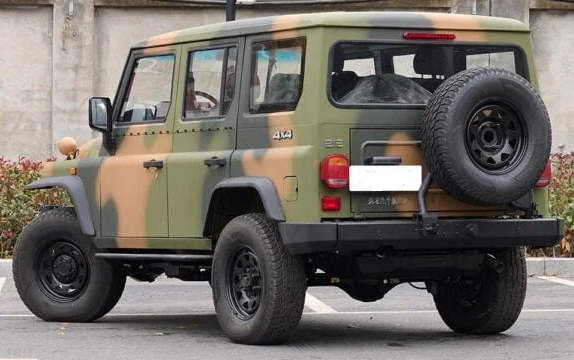
The BAW 212 Classic is the modern continuation of one of the most enduring off-road vehicle designs in automotive history: the Beijing Automobile Works (BAW) BJ212. First introduced in the mid-1960s, the original BJ212 became a foundational military and utility SUV in China, and its modernized “212 Classic” identity represents the latest chapter in a platform that has remained in production for more than six decades.
Unlike most vehicles that evolve through full generational redesigns, the 212 has persisted through continuous engineering updates, branding changes, and modernization programs while retaining its original body-on-frame, rugged off-road architecture. As of 2026, the 212 Classic remains on sale alongside newer models in the 212 brand lineup, including the more advanced 212 T01.
Origins: The BJ212 (1965–1980s)
The story of the 212 Classic begins in 1965 with the launch of the BJ212, developed by Beijing Automobile Works in cooperation with Soviet-era engineering influences. The vehicle was designed as a lightweight military and government utility 4×4, similar in philosophy to the UAZ-469 and the earlier GAZ 69.
It used a simple body-on-frame construction, part-time four-wheel drive, and a durable inline-four gasoline engine. Its design prioritized reliability, ease of repair, and off-road capability over comfort or refinement.
Early BJ212 models included:
- Standard five-seat military utility version
- Extended wheelbase variants (BJ212A)
- Canvas-top and soft-top configurations
- Basic pickup derivatives (limited production variants)
These early versions established the 212 as a core vehicle for Chinese military, forestry, agricultural, and government use.
.
MANY auto lovers not only spend time in their garages to tinker on their autos, but have other projects going on in there as well. Wood working is a popular pastime for the creative type of individual. Not sure what to make next? Or thinking about getting into this kind of hobby? There’s lots of possibilities… Here’s some of them…

.
Transition to BJ2020 and Expansion (1980s–2000s)
In the late 1980s, the BJ212 designation evolved into the BJ2020 naming system as part of China’s vehicle classification modernization. While the structure remained largely unchanged, the model line expanded significantly.
Key BJ2020-era developments included:
- BJ2020 standard SUV variants
- BJ2020S improved civilian versions
- BJ2020V “City Cruiser” variants with updated styling
- BJ2032 long-wheelbase configurations
- Pickup and convertible derivatives
Engine options expanded over time from early carbureted engines to later fuel-injected gasoline and diesel variants ranging from approximately 1.2 liters to 2.8 liters depending on configuration.
During this period, the vehicle became widely available in civilian markets and gained a reputation for extreme durability, though it remained technologically outdated compared to modern SUVs.
Modernization and the “Zhanqi” Era (2000s–2010s)
By the early 2000s, BAW introduced updated styling packages under names such as “Zhanqi,” which attempted to modernize the vehicle’s appearance while retaining its original platform.
These updates included:
- Revised front-end styling with modernized grilles
- Improved interior layouts
- Slight chassis refinements
- Expanded engine availability, including 2.0-liter and 2.4-liter gasoline engines
Despite visual updates, the underlying engineering remained fundamentally rooted in the original 1960s design.
During this era, the model continued to serve niche civilian buyers, rural users, and government fleets that valued its simplicity and mechanical toughness.
The Revival of the 212 Identity (2020s)
In the early 2020s, BAW began repositioning the vehicle as part of a renewed off-road-focused brand strategy. This led to the re-emergence of the “212” name as a standalone identity.
By 2023, BAW introduced a new generation of the vehicle, often referred to as the “BJ212 Sniper” in early promotional materials. This marked the beginning of the transition toward a modernized product line while still maintaining the iconic silhouette.
In 2024, the 212 name was officially relaunched as a standalone brand, separating it from general BAW utility vehicles. The existing BJ212-based model was renamed the 212 Classic, positioned as the heritage model alongside the newly developed 212 T01.
Production Timeline (Years Produced)
The 212 Classic lineage spans multiple eras:
| Era | Name | Years Produced |
|---|---|---|
| Original generation | BJ212 | 1965–1980s (continued updates) |
| Transitional naming | BJ2020 series | 1980s–2010s |
| Modernized updates | Zhanqi / City Cruiser variants | 2000s–2020s |
| Heritage branding | 212 Classic | 2024–present |
As of 2026, the 212 Classic remains in production as a heritage off-road model within the modern 212 brand lineup.
Platform and Engineering Characteristics
Despite decades of updates, the 212 retains its core engineering philosophy:
- Body-on-frame construction
- Front-engine layout
- Part-time four-wheel drive system
- Solid axles (in traditional configurations)
- Emphasis on mechanical simplicity
Modern versions have introduced improvements such as updated engines, enhanced suspension tuning, and improved safety systems, but the fundamental off-road architecture remains intact.
Recent specifications for updated 212 models include:
- 2.0-liter turbocharged gasoline engine
- Output up to approximately 185 kilowatts (around 248 horsepower in newer versions)
- 8-speed automatic transmission in modern variants
- Advanced off-road modes and locking differentials
- Improved approach and departure angles for serious terrain use
These updates represent a significant leap from the original 1960s mechanical simplicity while maintaining the vehicle’s rugged identity.
Models and Trim Levels
Unlike mainstream SUVs, the 212 Classic does not follow a conventional luxury trim structure. Instead, it is offered in configuration-based variants depending on body style and equipment.
Documented modern 212 Classic variants include:
| Variant | Description |
|---|---|
| Standard 212 Classic | Base off-road SUV configuration |
| Comfort Configuration | Improved interior materials and convenience features |
| Luxury Configuration | Enhanced infotainment and comfort upgrades |
| Hardtop SUV | Fully enclosed body version |
| Soft-top/Cabriolet | Open-top off-road variant |
| Utility Pickup Variant | Work-focused configuration (limited availability) |
In earlier BJ212 and BJ2020 eras, variants were far more numerous and inconsistent, often designated by internal codes rather than consumer-facing trim names. These included convertible utility versions, long-wheelbase models, and military-spec configurations.
Military and Utility Use
The 212 platform has historically been widely used by Chinese military and government agencies. Variants have included:
- Light troop transport versions
- Communications vehicles
- Weapons platform adaptations
- Field support and logistics vehicles
Its simple construction made it ideal for harsh environments where reliability and repairability were more important than comfort or speed.
Market Position
The 212 Classic occupies a unique position in the modern SUV market. While many competitors have moved toward luxury and electronics-heavy designs, the 212 remains focused on:
- Off-road capability
- Mechanical simplicity
- Low-cost durability
- Heritage identity
It competes more directly with rugged off-road SUVs rather than urban crossovers.
Future Outlook
The future of the 212 Classic is closely tied to the evolution of the 212 brand itself. Several likely directions include:
- Continued coexistence with modern 212 T01 models
- Gradual integration of advanced driver-assistance systems
- Possible mild hybrid or electrified off-road variants
- Expanded export-market availability
- Preservation of the classic body style as a heritage model
However, a full replacement of the 212 Classic appears unlikely in the near term, as its historical identity remains a core part of its market appeal.
The BAW 212 Classic represents one of the most remarkable cases of automotive longevity in the world. Originating as the BJ212 in 1965, it has survived decades of technological change, market evolution, and industrial transformation. Through its BJ2020 era, modernization updates, and eventual rebirth as a branded “212 Classic,” the vehicle has maintained its core identity as a rugged, simple, and highly capable off-road SUV.
Now positioned alongside modern successors like the 212 T01, the 212 Classic continues to embody a living piece of automotive history—bridging the gap between Cold War-era utility engineering and today’s increasingly advanced off-road vehicle market.