The Evolution of the Leapmotor T03: From Budget City EV to Global Contender
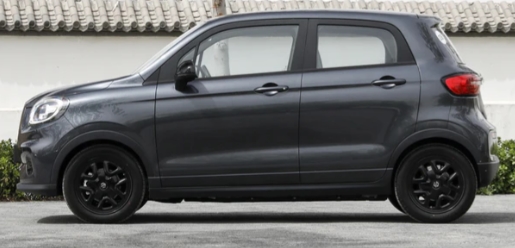
The Leapmotor T03 represents one of the most significant entries in the modern wave of affordable electric vehicles (EVs). Introduced in 2020 by Chinese automaker Leapmotor, the T03 has evolved from a domestically focused budget city car into a globally marketed EV with increasing technological sophistication and broader market ambitions. This article explores the full lifecycle of the T03, including its production timeline, trim levels, technical evolution, and future outlook.
Origins and Background (Pre-2020)
Leapmotor, founded in 2015, entered the automotive industry as part of China’s rapidly expanding EV startup ecosystem. Its first production model, the S01 coupe, was a niche product, but the company’s broader ambitions were realized with the development of a compact, affordable electric hatchback designed for mass urban mobility.
The T03 was conceived as a competitor to other entry-level EVs, prioritizing affordability, compact dimensions, and relatively advanced technology for its price point. It was officially launched on May 11, 2020, marking Leapmotor’s transition into mainstream automotive manufacturing.
.
THIS is GOOD stuff if your car is in need:

.
First Generation Launch (2020–2022)
Production Start: 2020
Assembly: Jinhua, Zhejiang, China
Body Style: 5-door hatchback
Platform: Dedicated EV city-car platform
The T03 debuted as a single-generation model that continues today, with iterative updates rather than full redesigns. At launch, it was offered in three primary trim levels:
- 400 Standard Edition
- 400 Comfort Edition
- 400 Deluxe Edition
These trims were named after their approximate NEDC range (around 400 km), which was impressive for a low-cost EV at the time.
Powertrain and Battery Options (Initial)
- Motor: 55 kW (approx. 74 hp)
- Battery: 36.5 kWh lithium-ion
- Range: Up to 403 km (NEDC)
- Charging: 30–80% in ~36 minutes (fast charging)
Key Features
Even in its earliest form, the T03 stood out for offering features uncommon in budget EVs:
- Level 2 driver assistance (ADAS)
- 10.1-inch infotainment touchscreen
- 8-inch digital instrument cluster
- Multiple cameras and radar sensors
This combination of affordability and technology helped the T03 gain traction in China’s competitive EV market.
Expansion and Diversification (2021–2023)
As Leapmotor refined the T03, it expanded the model’s range with additional powertrain configurations and trim adjustments.
New Battery and Motor Variants
By 2023, the T03 lineup included multiple configurations:
- 21.6 kWh battery / 40 kW motor
- Range: ~200 km (CLTC)
- 31.9 kWh battery / 55 kW motor
- Range: ~310 km
- 41.3 kWh battery / 80 kW motor
- Range: ~403 km
These variants effectively replaced the earlier trim naming structure with a more flexible, battery-based lineup.
Trim Strategy Shift
Instead of the original “Standard / Comfort / Deluxe” naming, Leapmotor began aligning trims more closely with battery size and range, simplifying the product offering while allowing customers to choose based on budget and driving needs.
Market Performance
Sales grew rapidly during this period:
- 2020: ~9,800 units
- 2021: ~40,000 units
- 2022: ~61,900 units
The T03 became one of Leapmotor’s best-selling models, helping establish the brand as a serious player in China’s EV sector.
Mid-Cycle Updates and Global Ambitions (2024–2025)
European Production and Expansion
A major turning point came after Stellantis acquired a stake in Leapmotor in 2023. This partnership enabled the T03 to expand beyond China.
- European production: Began in June 2024 in Tychy, Poland
- Production pause: Early 2025 due to regulatory and tariff considerations
The T03 was also introduced to new markets such as the United Kingdom, where it positioned itself as one of the most affordable EVs available.
2024 Updates
By 2024, the T03 received incremental improvements:
- Updated battery chemistry options (including LFP variants)
- Improved efficiency and range consistency
- Slight design and interior refinements
A notable variant included:
- 37.3 kWh battery (~95 hp)
- Range: ~265 km (WLTP-style estimates)
2025 Refresh and Simplification
Production Update: 2025
Leapmotor streamlined the T03 lineup significantly in 2025.
Trim Levels (2025)
- 310 Comfort
- 403 Comfort
Notably, the company dropped the lowest-spec variant (previously the 200 km range version), focusing instead on mid- and higher-range models.
Specifications (2025 Models)
310 Comfort:
- Battery: 31.9 kWh
- Motor: 55 kW
- Range: ~310 km
403 Comfort:
- Battery: 41.3 kWh
- Motor: 80 kW
- Range: ~403 km
Key Changes
- Simplified lineup
- Improved performance in higher trims
- Removal of some advanced driver assistance features in base configurations (market-dependent)
- Focus on cost efficiency and export readiness
This shift reflects a broader industry trend toward reducing complexity and optimizing production for global markets.
Design and Technical Characteristics
Throughout its lifecycle, the T03 has maintained consistent core characteristics:
Dimensions
- Length: ~3,620 mm
- Wheelbase: 2,400 mm
Layout
- Front-mounted electric motor
- Front-wheel drive
Performance Range
- Power output: 40 kW to 85 kW
- Range: 200 km to over 400 km depending on configuration
Technology
- Level 2 ADAS capability (select trims)
- OTA updates (market dependent)
- Connected infotainment system
The T03’s consistent emphasis on tech has been a defining feature, helping differentiate it from similarly priced competitors.
Trim Levels Overview (2020–2025)
2020–2021
- 400 Standard Edition
- 400 Comfort Edition
- 400 Deluxe Edition
2022–2023 (Expanded Variants)
- Entry-level (200 km range)
- Mid-range (310 km)
- Long-range (403 km)
2024
- Continued multi-battery lineup
- Introduction of updated battery chemistries
2025
- 310 Comfort
- 403 Comfort
Market Reception and Real-World Feedback
The T03 has been praised for:
- Strong value proposition
- High-tech features at a low price
- Competitive range for its segment
However, some long-term users have reported concerns such as:
- Build quality inconsistencies
- Component wear over time
- Real-world range degradation
For example, one long-term owner noted gradual range reduction after several years of use, a common issue in early EV battery systems.
Future Outlook
The future of the Leapmotor T03 appears closely tied to Leapmotor’s global ambitions and its partnership with Stellantis.
Key Trends
- Global Expansion
- Continued rollout in Europe and potentially other regions
- Expansion of dealership networks
- Platform Evolution
- Possible second-generation model in coming years
- Improved battery density and efficiency
- Cost Leadership Strategy
- Maintaining status as a low-cost EV leader
- Competing with models like the Dacia Spring
- Production Strategy
- Flexible manufacturing between China and Europe
- Adaptation to tariffs and regulatory environments
Leapmotor has also set ambitious growth targets, aiming to scale production significantly by the mid-2020s, which will likely influence the T03’s continued development.
Since its debut in 2020, the Leapmotor T03 has evolved from a simple, budget-friendly electric hatchback into a globally relevant EV with a clear identity: affordability combined with advanced features.
Its journey reflects broader trends in the automotive industry—especially the rapid rise of Chinese EV manufacturers and the increasing demand for accessible electric mobility. Through continuous updates, simplification of trims, and expansion into international markets, the T03 has remained competitive in a fast-changing landscape.
Looking ahead, the T03’s success will depend on Leapmotor’s ability to refine quality, maintain affordability, and adapt to global market demands. If current trends continue, the T03 could become one of the defining entry-level EVs of its era.