BAW Warrior Pickup: The Evolution of Beijing Auto Works’ Military-Inspired Utility Truck
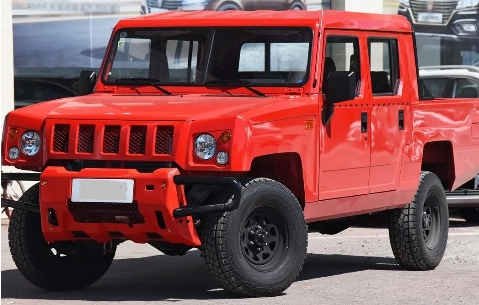
The BAW Warrior Pickup is one of the most distinctive light-duty trucks produced by Beijing Automobile Works (BAW). Derived from the rugged Warrior off-road vehicle family, the pickup combines military-grade durability with civilian practicality. Designed to operate in harsh terrain and challenging environments, the Warrior Pickup has served as both a commercial work vehicle and a specialized utility platform in domestic and export markets.
Unlike many modern pickups that emphasize luxury and lifestyle features, the Warrior Pickup was engineered with a focus on durability, off-road capability, payload capacity, and simplicity. Its roots can be traced directly to military vehicle programs that have been a major part of BAW’s history for decades.
Origins of the Warrior Family
The Warrior name originates from the BAW Yongshi (Warrior) military vehicle program. Development began during the early 2000s as China sought a modern light tactical vehicle capable of replacing older military transport platforms.
The resulting vehicle entered military service in 2007 and was heavily influenced by proven off-road vehicle designs. The Warrior featured a body-on-frame chassis, four-wheel-drive system, solid off-road credentials, and exceptional durability. Civilian versions eventually followed, creating opportunities for additional body styles, including utility vehicles, sport utility vehicles, and pickup trucks.
.
MANY auto lovers not only spend time in their garages to tinker on their autos, but have other projects going on in there as well. Wood working is a popular pastime for the creative type of individual. Not sure what to make next? Or thinking about getting into this kind of hobby? There’s lots of possibilities… Here’s some of them…

.
Introduction of the Warrior Pickup
The civilian Warrior Pickup emerged during the late 2010s as a practical commercial derivative of the Warrior off-road vehicle.
Production versions became available in China during 2017, although some export-market examples appeared slightly later depending on local certification requirements. The pickup retained much of the military vehicle’s structure and engineering, including its ladder-frame chassis and four-wheel-drive capability.
The truck was marketed toward:
- Construction companies
- Agricultural operators
- Government agencies
- Mining operations
- Forestry services
- Emergency-response organizations
- Rural commercial users
Its military heritage made it especially attractive in regions where durability was more important than luxury.
First Generation (2017–Present)
The Warrior Pickup entered civilian production in 2017 and remains available in various markets as of 2026.
The vehicle’s design is immediately recognizable thanks to its upright body, high ground clearance, squared-off styling, and rugged cargo bed. Unlike many modern pickups that adopt aerodynamic styling, the Warrior retains a purposeful appearance that emphasizes function over form.
Key specifications have varied by market and configuration but generally include:
- Body-on-frame construction
- Part-time four-wheel drive
- Manual transmission
- Diesel or gasoline engines
- Heavy-duty suspension
- High payload ratings
- Military-derived chassis architecture
Powertrain Evolution
Throughout production, the Warrior Pickup has been offered with several engine options depending on market and model year.
Diesel Models
Many export-market vehicles have used the well-known 2.8-liter 4JB1 diesel engine. This powerplant was selected for its reliability, ease of maintenance, and strong low-speed torque. Output was approximately 91 horsepower in certain configurations.
Later export versions featured upgraded diesel engines producing around 134 horsepower, improving highway performance and carrying capacity.
Gasoline Models
Gasoline-powered Warrior Pickups appeared in several domestic-market configurations.
By 2019, BAW offered a turbocharged 2.4-liter gasoline engine producing approximately 204 horsepower and 236 lb-ft (320 Nm) of torque. This represented a substantial increase in performance compared with earlier naturally aspirated engines.
Most gasoline variants were paired with a five-speed manual transmission and four-wheel-drive system.
Model and Trim Variations
Unlike many North American pickups, the Warrior Pickup was primarily differentiated by cab style, wheelbase, and intended usage rather than traditional trim names such as XL, XLT, or Limited.
Documented production variants include:
2017–2018 Warrior Pickup
- Single-Cab Pickup
- Double-Cab Pickup
- Diesel-powered utility models
- Commercial fleet configurations
These early civilian models closely mirrored the military Warrior platform and emphasized ruggedness over comfort.
2019 Warrior Pickup Range
For 2019, publicly documented configurations included:
| Model | Body Style | Wheelbase |
|---|---|---|
| Warrior 2.4T Single Cab | 2-door | 3,035 mm |
| Warrior 2.4T Double Cab | 4-door | 3,035 mm |
Both versions used the turbocharged 2.4-liter gasoline engine and four-wheel drive.
2020 Warrior Pickup Range
The lineup expanded further in 2020 with additional wheelbase choices:
| Model | Body Style | Wheelbase |
| Warrior Single Cab | 2-door | 2,850 mm |
| Warrior Single Cab | 2-door | 3,035 mm |
| Warrior Double Cab | 4-door | 3,035 mm |
These configurations allowed buyers to choose between improved maneuverability and greater cargo capacity.
2021–2023 Warrior Pickup
By 2021, BAW continued offering gasoline and diesel-powered versions across several body configurations. Production records show continued availability of:
- Single-cab cargo models
- Double-cab passenger models
- Stake-bed configurations
- Utility-body variants
- Export-market diesel trucks
Some configurations remained in production through 2023.
Off-Road Capability
One of the Warrior Pickup’s defining characteristics is its off-road performance.
Features commonly found on Warrior models include:
- High ground clearance
- Two-speed transfer case
- Heavy-duty suspension
- Large all-terrain tires
- Body-on-frame construction
- Front and rear solid-axle durability characteristics
The platform’s military origins allow it to operate effectively in environments where conventional road-oriented pickups may struggle.
Export Market Success
Although primarily developed for China, the Warrior Pickup has achieved modest success in export markets.
BAW has marketed the vehicle throughout parts of:
- Africa
- Southeast Asia
- South America
- The Middle East
Its combination of mechanical simplicity, rugged construction, and relatively low purchase cost has made it appealing in regions where reliability and ease of repair are critical considerations.
Production Timeline
The Warrior Pickup production history can be summarized as follows:
| Years | Model Status |
| 2017 | Civilian production begins |
| 2018 | Expanded commercial availability |
| 2019 | New 2.4-liter turbo gasoline models introduced |
| 2020 | Additional wheelbase configurations added |
| 2021 | Expanded single-cab and double-cab range |
| 2022 | Continued production |
| 2023 | Certain configurations remain available |
| 2024–2026 | Ongoing production in selected markets |
Production details vary by region and market demand.
Future Outlook
The future of the Warrior Pickup appears closely tied to BAW’s continued focus on utility vehicles and off-road platforms.
As global emissions regulations become stricter, future Warrior models may receive updated diesel engines, cleaner gasoline powertrains, or hybrid technology. BAW has also demonstrated increasing interest in electrification across other vehicle categories, raising the possibility of an electrified Warrior variant in the future.
However, the pickup’s core identity is likely to remain unchanged. Buyers continue to value the Warrior for its durability, off-road capability, and straightforward mechanical design rather than luxury features or advanced driver-assistance technologies.
The BAW Warrior Pickup represents a unique blend of military engineering and civilian utility. Introduced in 2017 as a derivative of the proven Warrior off-road vehicle, the pickup has evolved through multiple wheelbase options, cab configurations, and engine choices while maintaining its rugged character.
Although it remains a niche vehicle compared with mainstream global pickups, the Warrior Pickup has established a reputation for toughness and reliability in demanding environments. Its military heritage, robust construction, and practical design ensure that it remains one of the most distinctive utility trucks produced by Beijing Automobile Works.