Nammi Nano Box: The Rise and Evolution of Dongfeng’s Budget Electric City Car
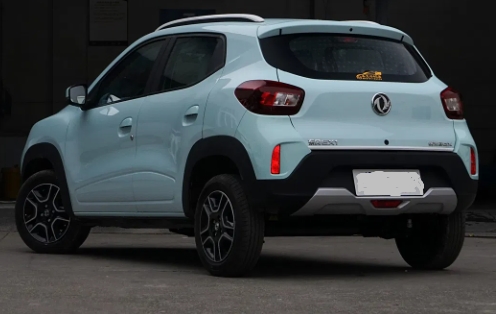
The Dongfeng Nammi Nano Box—often referred to simply as the Nano Box—is a compact, entry-level electric vehicle (EV) that reflects the rapid expansion of China’s affordable urban EV segment in the early 2020s. Developed under Dongfeng’s small EV initiatives (originally tied to the Renault-Nissan-Dongfeng eGT joint venture), the Nano Box was designed as a low-cost, practical solution for city commuting.
Produced primarily between 2022 and 2024, the Nano Box served as a transitional model between rebadged global EV platforms and Dongfeng’s later fully independent Nammi-branded vehicles. Despite its short lifecycle, it offered a wide variety of trims and configurations, showcasing the flexibility and fragmentation typical of China’s budget EV market.
This article provides a comprehensive overview of the Nano Box’s evolution, including its origins, production timeline, trim levels, and future outlook.
Origins and Development (2020–2021)
The Nano Box traces its roots to the eGT New Energy Automotive joint venture, a collaboration between Dongfeng and the Renault-Nissan Alliance. This partnership produced several small EVs based on the Renault Kwid-derived platform, including the Renault City K-ZE and Dacia Spring.
Before the Nano Box, Dongfeng marketed a closely related model known as the Nano EX1, which served as the foundation for the Box. The Nano Box essentially represented a facelifted and slightly repositioned version of this platform, with updated styling and expanded trim diversity.
Development priorities included:
- Extremely low purchase cost
- Simplicity and ease of use
- Suitability for dense urban environments
Launch and First Model Year (2022)
Production Start: 2022
The Nano Box officially launched in 2022, entering China’s rapidly growing micro-EV segment.
It was positioned as:
- A small electric crossover/hatchback
- A successor and companion to the Nano EX1
- A competitor to models like the Wuling Hongguang Mini EV
2022 Trim Levels
The 2022 model year featured an unusually large number of trims, reflecting China’s highly segmented EV market. These trims were often distinguished by range, battery size, and equipment rather than traditional luxury hierarchies.
Lightwind Series (201 km range, entry-level)
- Lightwind Standard
- Lightwind Advanced
- Champion Lightwind Standard
Modified Light Breeze Series (201 km range)
- Modified Light Breeze Standard
Chase Series (331–351 km range, mid-level)
- Chase Standard (331 km)
- Chase Standard (351 km)
- Chase Edition (351 km)
Wind Chaser Series (higher-spec variants)
- Wind Chaser Advanced (331 km)
- Wind Chaser Advanced (351 km)
Other Variants
- Lightning Edition (201 km)
- Additional regional or fleet-specific trims
Technical Specifications (2022)
- Power output: ~33 kW (≈44 hp)
- Battery: ~16–27 kWh
- Range: 201 km to 351 km (CLTC)
- Top speed: ~100 km/h
The Nano Box used a front-mounted electric motor and single-speed transmission, emphasizing simplicity and cost efficiency.
.

.
Design and Features
- Compact dimensions (~3.7 meters long)
- Four-seat layout
- High roofline for interior space
- Minimalist interior design
Despite its low cost, the Nano Box offered:
- Basic infotainment systems
- Air conditioning
- Foldable rear seats for increased cargo capacity
Expansion and Refinement (2023)
Production Year: 2023
The Nano Box continued into 2023 with minor updates and continued trim diversification.
Trim Strategy
Rather than introducing entirely new trims, Dongfeng:
- Maintained existing Lightwind, Chase, and Wind Chaser series
- Adjusted equipment levels and pricing
- Introduced minor special editions and regional variants
The naming conventions remained complex, reflecting:
- Battery size differences
- Range upgrades
- Equipment packages
Technical Updates
- Slight improvements in efficiency
- Continued offering of 201 km, 331 km, and 351 km variants
- Minor enhancements to infotainment and connectivity
Some later models featured improved motors up to 70 kW (≈95 hp) in certain markets or updated versions.
Market Role
By 2023, the Nano Box had established itself as:
- A budget-friendly commuter EV
- A popular option for first-time buyers
- A fleet vehicle for urban mobility services
Transition and Brand Shift (2023–2024)
A major turning point came in 2023, when Dongfeng reorganized its EV strategy.
Creation of Dongfeng Nammi Brand
- Dongchuang Zilian was renamed Dongfeng Nammi
- The company became an independent EV-focused brand
- A new dedicated platform (S3) was introduced
This shift marked a transition away from:
- Rebadged joint-venture models
- Toward in-house EV development
Nano Box Production End (2024)
The Nano Box was gradually phased out by 2024, as Dongfeng introduced newer models such as the Nammi 01.
- Production span: 2022–2024
- Role: Transitional model between EX1 and new-generation EVs
Successor Model: Nammi Box (2024–Present)
Although the Nano Box ended production, its concept continued with the Nammi Box (2024–present).
Key Changes
- Larger size (~4.02 meters long)
- More powerful motor (~70 kW)
- Increased range (~310 km)
- Modernized interior and safety features
2024 Trim Levels
- Style Edition
- Launch Edition
These trims represent a simplified lineup, contrasting with the fragmented Nano Box range.
Design Philosophy and Key Features
Affordability First
The Nano Box was engineered to be:
- One of the cheapest EVs in its segment
- Easy to maintain and operate
Urban Optimization
- Small footprint for tight city streets
- Low-speed performance focus
- Efficient energy consumption
Platform Sharing
The Nano Box shared DNA with:
- Renault City K-ZE
- Dacia Spring
- Nissan Venucia E30
This global platform approach reduced development costs.
Complete Timeline of the Nano Box
2020–2021
- Development based on Nano EX1 and eGT platform
2022
- Official launch
- Extensive trim lineup introduced:
- Lightwind series
- Chase series
- Wind Chaser series
- Special editions
2023
- Minor updates and continued production
- Introduction of higher-power variants
- Dongfeng Nammi brand established
2024
- Production discontinued
- Replacement by Nammi Box and Nammi 01
Market Reception and Impact
Strengths
- Extremely affordable pricing
- Practical for city driving
- Wide variety of configurations
Weaknesses
- Limited performance
- Basic safety and features in lower trims
- Complex trim structure
The Nano Box was particularly successful in:
- Lower-tier Chinese cities
- Fleet and ride-sharing applications
- Emerging export markets
Future Outlook
Although the Nano Box itself is no longer in production, its influence remains significant.
1. Transition to Dedicated EV Platforms
Future models like the Nammi 01 are built on purpose-designed EV architectures, improving:
- Efficiency
- Safety
- Performance
2. Simplified Product Strategy
The shift from dozens of trims to just a few (e.g., Style and Launch Editions) indicates:
- Greater focus on clarity
- Improved customer experience
3. Global Expansion
Dongfeng has begun exporting newer models to:
- Europe
- Southeast Asia
The Nano Box laid the groundwork for this expansion.
The Dongfeng Nammi Nano Box represents a crucial transitional step in the evolution of China’s electric vehicle industry. Produced from 2022 to 2024, it combined affordability, practicality, and platform sharing to deliver a compelling urban EV.
Its extensive range of trims—from Lightwind to Wind Chaser—demonstrated both the flexibility and complexity of China’s EV market during this period. While its lifecycle was relatively short, the Nano Box played a key role in bridging the gap between early joint-venture EVs and Dongfeng’s modern, independently developed Nammi lineup.
As the industry moves toward more advanced and globally competitive electric vehicles, the Nano Box stands as a reminder of how quickly the segment has evolved—and how foundational these early models were in shaping the future of accessible electric mobility.