Bestune B70: Two Decades of Evolution in China’s Mid-Size Sedan Segment
The Bestune B70 is one of the most significant models in the history of China’s FAW Group. First introduced in 2006 as the inaugural vehicle of the Bestune (formerly Besturn) brand, the B70 has undergone multiple generational transformations, evolving from a Mazda-based sedan into a modern fastback with proprietary Chinese engineering.
Spanning three major generations from 2006 to the present, the B70 reflects broader trends in China’s automotive industry: early reliance on foreign platforms, gradual localization, and eventual transition to fully in-house architectures. Over the years, it has offered a wide range of trims, engines, and configurations, catering to both domestic and export markets.
This article provides a comprehensive, factual overview of the B70’s evolution, including production timelines, trim levels, and future outlook.
Origins and Brand Significance (2006)
The B70 holds a unique place in automotive history as the first model launched by the Bestune brand, a subsidiary of FAW Group.
Developed in collaboration with Mazda, the original B70 was based on the Ford CD3 platform, shared with the first-generation Mazda6.
At launch, the B70 positioned itself as a relatively upscale domestic sedan, offering higher safety and equipment levels than many Chinese competitors at the time.
.

.
First Generation (2006–2014)
Production Years: 2006–2014
Facelift: 2012
The first-generation B70 marked FAW’s entry into the mid-size sedan market with a product heavily influenced by Japanese engineering.
Trim Levels and Variants
Although trim naming conventions varied across years and markets, the lineup generally included:
- Comfort Edition
- Luxury Edition
- Premium/Navi Edition
These trims differed in equipment such as:
- Leather upholstery
- Navigation systems
- Advanced safety features
Powertrain Options
- 2.0L inline-4 (Mazda-derived) – ~108 kW
- 2.3L inline-4 (Mazda-derived) – ~120 kW
- 1.8L inline-4 (added after facelift) – ~102 kW
Transmission options included:
- 5-speed automatic
- 6-speed manual
2012 Facelift
The facelift introduced:
- Redesigned front and rear styling
- New 1.8L engine option
- Updated interior features
Key Characteristics
- Strong emphasis on safety equipment
- Competitive pricing for its segment
- Heavy reliance on Mazda technology
Second Generation (2014–2019)
Production Years: 2014–2019
The second-generation B70 represented a refinement rather than a complete reinvention. It remained based on Mazda underpinnings but adopted more modern styling and expanded performance options.
Trim Levels
Typical trims included:
- Standard Edition
- Comfort Edition
- Luxury Edition
- Flagship Edition
In addition, a performance-oriented variant was introduced:
- B70 RS
Powertrain Options
- 2.0L inline-4 – ~108 kW
- 2.3L inline-4 – ~120 kW
- 1.8T turbocharged (RS variant) – ~139 kW
The RS model used a Volkswagen-sourced turbo engine, highlighting FAW’s continued collaboration with international partners.
Design and Engineering
- Styled by renowned designer Giorgetto Giugiaro
- Improved aerodynamics and interior quality
- Continued use of the Mazda6-derived platform
Notable Features
- Enhanced infotainment systems
- More refined ride quality
- Introduction of sport-oriented trims
Third Generation (2020–Present)
Production Years: 2020–present
Facelift: 2023
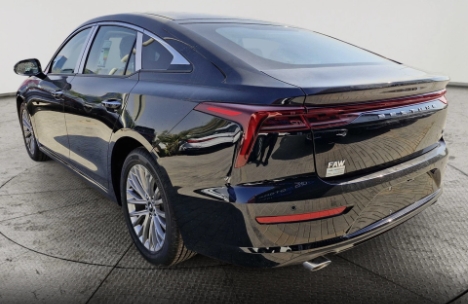
The third-generation B70 marked a major turning point. It abandoned Mazda-based platforms and became the first vehicle built on FAW’s proprietary FMA (FAW Modular Architecture).
It also adopted a fastback/liftback body style, aligning with modern global design trends.
2020–2022 Models (Pre-Facelift)
Trim Levels
The early third-generation lineup included:
- Elite Edition
- Luxury Edition
- Premium Edition
- Flagship Edition
Powertrain
- 1.5T turbocharged inline-4 – ~169 hp
- Transmission options:
- 6-speed manual
- 6-speed automatic
Features
- Large dual-screen infotainment system
- Advanced driver-assistance systems (ADAS)
- Modern fastback styling
2023 Facelift and Updated Lineup
The 2023 facelift significantly reworked the B70’s powertrain and positioning.
Key Changes
- Discontinuation of the 1.5T engine
- Introduction of a 2.0T turbocharged engine across all trims
- Adoption of an Aisin 6-speed automatic transmission
Updated Trim Levels
Post-facelift trims included:
- Comfort Edition
- Luxury Edition
- Premium Edition
- Flagship Edition
Performance
- Power output increased significantly
- Improved acceleration and highway performance
2024–2025 Models
The B70 continued largely unchanged after the facelift, with minor updates to:
- Infotainment software
- Interior materials
- Standard equipment
Sales Performance
- 2023: ~40,506 units
- 2024: ~41,699 units
- 2025: ~15,441 units
These figures indicate strong demand followed by a recent decline, likely due to increasing competition and market shifts.
Design Evolution
From Traditional Sedan to Fastback
- 2006–2014: Conventional three-box sedan
- 2014–2019: More refined but still traditional
- 2020–present: Sporty fastback/liftback
Interior Advancements
- Early models: Basic infotainment and analog gauges
- Modern models: Large digital displays and connected systems
Platform Shift
- Generations 1–2: Mazda/Ford-derived platforms
- Generation 3: Fully independent FAW architecture
Complete Timeline of the Bestune B70
2006
- First-generation B70 launched
- First model of Bestune brand
2012
- Major facelift with new engine
2014
- Second-generation introduced
- Addition of RS performance variant
2019
- End of second-generation production
2020
- Third-generation debuts (FMA platform)
2023
- Major facelift with 2.0T engine standardization
2025–Present
- Continued production with incremental updates
Global Presence and Market Position
The B70 has been sold primarily in China, with limited exports to:
- Russia
- Middle East
- Southeast Asia
Market Position
- Affordable mid-size sedan
- Positioned against models like Toyota Camry (lower price segment)
- Appeals to value-conscious buyers
Strengths and Weaknesses
Strengths
- Strong value proposition
- Modern design in latest generation
- Proven reliability from earlier Mazda-based models
Weaknesses
- Limited global brand recognition
- Historically dependent on foreign platforms
- Increasing competition from EVs and SUVs
Future Outlook
The future of the Bestune B70 is closely tied to broader trends within FAW and the global automotive industry.
1. Electrification
FAW is expanding into electric vehicles, suggesting future B70 iterations may include:
- Hybrid variants
- Fully electric versions
2. Platform Development
The FMA platform is expected to evolve further, enabling:
- Improved efficiency
- Advanced driver-assistance features
3. Market Adaptation
To remain competitive, future B70 models may:
- Emphasize technology and connectivity
- Incorporate autonomous driving features
- Expand into global markets
The Bestune B70 is more than just a mid-size sedan—it is the foundation upon which the Bestune brand was built. From its origins as a Mazda-based vehicle in 2006 to its current form as a modern fastback on a proprietary platform, the B70 encapsulates the evolution of China’s automotive industry.
Across three generations and nearly two decades, the model has offered a wide range of trims—from basic comfort-oriented editions to performance-focused RS variants—while continually adapting to changing consumer preferences.
As the industry shifts toward electrification and smart mobility, the B70’s next chapter will likely redefine its role once again. Whether as a hybrid, EV, or advanced connected sedan, the B70 remains a key indicator of where Bestune—and China’s automotive sector—are headed.