NEVS 9-3X EV: The Evolution of Saab’s Electric Wagon Successor
The NEVS 9-3X EV represents one of the most ambitious attempts to transform a beloved Swedish automobile into a modern electric vehicle. Developed by National Electric Vehicle Sweden (NEVS) after acquiring the assets of Saab Automobile, the 9-3X EV combined the familiar styling and practicality of the Saab 9-3X SportCombi with a battery-electric powertrain. Although it generated considerable interest among Saab enthusiasts and electric vehicle advocates, the model ultimately remained a limited-production vehicle intended primarily for the Chinese market before NEVS suspended operations.
Unlike an all-new design, the 9-3X EV evolved directly from the second-generation Saab 9-3 platform, demonstrating how an existing internal combustion vehicle could be adapted into a practical electric automobile. Despite its limited commercial success, it remains an important chapter in the history of both Saab’s legacy and the early development of modern electric vehicles.
Origins
The origins of the 9-3X EV date back to 2012, when NEVS purchased most of the assets of the bankrupt Saab Automobile. Rather than immediately developing an entirely new vehicle, NEVS chose to modernize Saab’s final-generation 9-3 platform and convert it into an electric vehicle.
The company initially resumed limited production of gasoline-powered Saab 9-3 sedans during 2013 and 2014 while replacing components that had previously been sourced from General Motors. Those efforts helped maintain engineering knowledge and production capability before NEVS shifted its attention entirely to electric vehicles.
.
You’ve got that cool car, but is it resting in its own cool place?
It’s visually pleasing for the surrounding areas outside of your home to look as awesome as what’s stored inside your garage! If you desire a truly inspirational environment for your landscape, you should check into these easy plans! You’ll happy with the end results!

.
Development of the 9-3X EV
The electric program culminated in 2017, when NEVS publicly introduced both the 9-3 EV sedan and the 9-3X EV wagon at CES Asia in Shanghai.
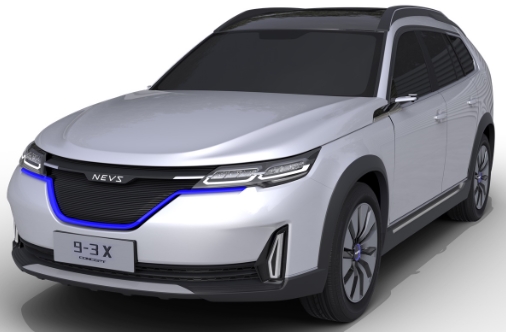
The 9-3X EV was essentially the station wagon version of the NEVS 9-3 EV. It retained much of the appearance of the earlier Saab 9-3X while receiving numerous exterior revisions to comply with newer safety standards and to distinguish it from its gasoline-powered predecessor.
Key styling changes included:
- A redesigned hood meeting updated pedestrian safety regulations
- Revised front grille
- New lighting elements
- Updated side mirrors with integrated turn signals
- Modernized front fascia
Although the vehicle clearly reflected its Saab heritage, the absence of Saab branding made it officially a NEVS product.
Production Years
Unlike the sedan, which entered limited production, the 9-3X EV never reached full-scale commercial production.
Development timeline:
- 2013–2016: Electric prototype development
- 2017: Public debut at CES Asia
- 2017–2018: Prototype and pre-production development
- Production: No confirmed series production
While the closely related NEVS 9-3 EV sedan entered production from 2017 through 2022 at NEVS’s Tianjin, China, factory, the wagon remained a prototype and demonstration vehicle. Publicly available records indicate that the 9-3X EV never became a regular production model available for customer purchase.
Models and Trim Levels
One consequence of the vehicle never entering commercial production is that there were no officially released trim levels.
Prototype Models
NEVS 9-3X EV Prototype (2017)
The only publicly revealed version was the fully electric station wagon prototype displayed during the vehicle’s introduction.
Production Models
None.
Trim Levels
None officially announced.
Because NEVS intended to sell the vehicle primarily in China, it is possible multiple trim levels were considered internally. However, no official production lineup, option packages, or trim names were ever published before the project was effectively canceled.
Powertrain
The 9-3X EV shared its electric drivetrain with the sedan version.
Major specifications included:
- Permanent magnet synchronous reluctance electric motor
- Approximately 174 horsepower (130 kW)
- Front-wheel drive
- CATL lithium-ion battery pack
Although detailed EPA-style performance testing was never conducted because the vehicle was not sold in North America, the drivetrain was designed to provide practical daily transportation with smooth, quiet operation.
The electric conversion retained much of the proven chassis architecture of the Saab 9-3 while replacing the gasoline engine and transmission with an electric propulsion system.
Interior
Inside, the 9-3X EV maintained much of the familiar Saab dashboard layout while incorporating modern digital technology.
Changes included:
- Fully digital instrument display
- Updated touchscreen infotainment system
- Revised center console
- Modern connectivity features
- New electronic controls replacing several traditional switches
The cabin remained spacious and practical, benefiting from the wagon body style that had long been popular among Saab customers.
Engineering Philosophy
Rather than creating an entirely new vehicle platform, NEVS chose to extend the life of Saab’s existing engineering.
This approach offered several advantages:
- Reduced development costs
- Proven vehicle dynamics
- Familiar driving characteristics
- Lower engineering risk
- Faster development schedule
Although the underlying GM Epsilon platform dated back to the early 2000s, it remained a capable foundation for an electric conversion.
The strategy also preserved many of the driving characteristics that had made Saab vehicles popular among loyal owners.
Manufacturing
Prototype development took place at NEVS’s engineering facilities in Trollhättan, Sweden, where former Saab engineers continued refining the vehicle.
Series production had originally been envisioned for NEVS’s manufacturing plant in Tianjin, China, alongside the electric sedan. However, only the sedan entered regular production, while the wagon remained in the prototype stage.
Public Reception
Among automotive journalists and Saab enthusiasts, the 9-3X EV received generally favorable attention.
Positive comments focused on:
- Preserving the Saab wagon tradition
- Clean Scandinavian styling
- Practical cargo space
- Quiet electric operation
- Modernized technology
Many enthusiasts viewed the vehicle as the spiritual successor to the Saab 9-3 SportCombi.
However, enthusiasm was tempered by uncertainty surrounding NEVS’s financial stability and its ability to bring the wagon into production.
Sales
Because the 9-3X EV never entered commercial production:
- U.S. sales: 0
- Global sales: 0 production vehicles
Only prototype and development vehicles are known to have been constructed. No verified customer deliveries have been documented.
Challenges
The greatest challenge facing the 9-3X EV was not engineering but business.
NEVS initially appeared poised to establish itself as a niche electric vehicle manufacturer. However, the company’s long-term plans were disrupted by financial instability, particularly after its owner, the Evergrande Group, encountered a severe debt crisis.
As funding declined, NEVS scaled back operations, and many development programs—including the 9-3X EV—were effectively halted. Production efforts increasingly focused on the sedan before vehicle manufacturing itself eventually ceased.
Legacy
Although it never reached production, the 9-3X EV demonstrated that the aging Saab 9-3 platform could be successfully adapted for electric propulsion.
The project also highlighted the skill of the former Saab engineering team, who managed to modernize a platform originally designed for gasoline engines into a credible battery-electric vehicle.
For Saab enthusiasts, the wagon remains one of the most intriguing “what might have been” vehicles in the company’s history.
Future Outlook
As of 2026, there are no announced plans to revive the NEVS 9-3X EV or place it into production. Following NEVS’s restructuring and the suspension of most vehicle development activities, the project has remained dormant.
Even so, the 9-3X EV retains historical significance as an early attempt to repurpose an established premium vehicle into a fully electric model. Its development demonstrated that legacy automotive platforms could serve as practical foundations for battery-electric vehicles, an approach later explored by several other manufacturers during the industry’s transition to electrification. While the 9-3X EV never became the production successor many Saab enthusiasts hoped for, it remains an important part of NEVS’s efforts to carry Saab’s engineering heritage into the electric era.