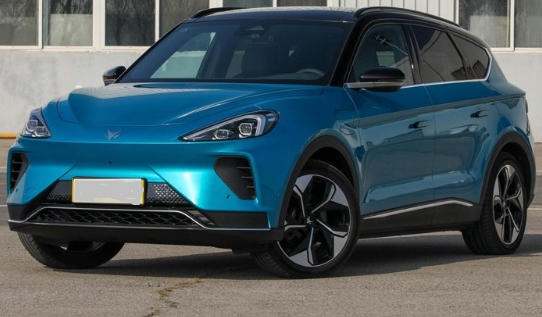
NEVS Emily GT: The Evolution of the Innovative Electric Sedan That Nearly Reached Production
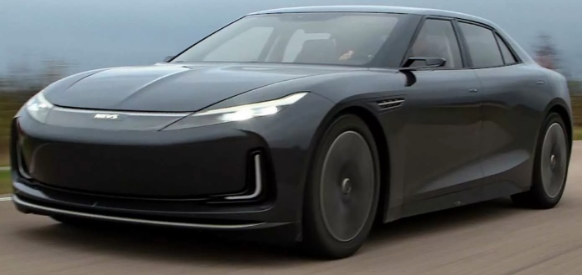
The NEVS Emily GT is one of the most intriguing “what could have been” stories in the modern automotive industry. Developed by National Electric Vehicle Sweden (NEVS), the Emily GT was designed to be a premium, long-range electric sedan capable of competing with vehicles such as the Tesla Model S, Lucid Air, Mercedes-Benz EQE, and BMW i5. Although it never entered series production, the Emily GT demonstrated advanced engineering solutions and showcased the expertise of the former Saab engineering team that developed it.
Unlike many concept cars that exist only as styling exercises, the Emily GT progressed to fully functional prototypes. The vehicle incorporated several innovative technologies, including in-wheel electric motors, a high-capacity battery, and an unusually spacious interior. However, financial difficulties at NEVS ultimately prevented the sedan from reaching the marketplace.
Origins of the Emily GT
The Emily GT traces its roots to the collapse of Saab Automobile in 2011. After Saab declared bankruptcy, National Electric Vehicle Sweden (NEVS) acquired most of Saab’s assets in 2012. Although NEVS initially intended to continue producing updated versions of the Saab 9-3 as electric vehicles, the company’s long-term objective gradually shifted toward developing an entirely new generation of electric automobiles.
Development of what would become the Emily GT reportedly began around 2019. The project was undertaken almost entirely by former Saab engineers at NEVS’s engineering center in Trollhättan, Sweden, the same facility where many classic Saab models had been developed.
The Emily GT was named after one of the engineers’ daughters, reflecting the project’s highly personal nature for the development team.
.
You’ve got that cool car, but is it resting in its own cool place?
It’s visually pleasing for the surrounding areas outside of your home to look as awesome as what’s stored inside your garage! If you desire a truly inspirational environment for your landscape, you should check into these easy plans! You’ll happy with the end results!

.
Development Years
- Development: Approximately 2019–2023
- Prototype unveiling: 2023
- Production: Never entered series production
Although the Emily GT reached the prototype stage, no customer production vehicles were ever manufactured.
Engineering Philosophy
Rather than simply building another battery-electric sedan, NEVS attempted to rethink how an EV should be engineered.
The Emily GT’s most distinctive feature was its use of four independently controlled in-wheel electric motors, one located inside each wheel. The motors were supplied by the Slovenian company Elaphe Propulsion Technologies.
This design eliminated the need for conventional drive shafts, differentials, and many other drivetrain components. The resulting packaging advantages allowed engineers to maximize interior space while also improving torque vectoring and all-wheel-drive capability.
Combined output was reported at approximately 480 horsepower, although the modular motor design theoretically allowed other power configurations.
Battery and Performance
The Emily GT utilized a large battery pack with a capacity of approximately 175 kWh, considerably larger than the battery packs found in most production electric vehicles.
NEVS projected:
- Driving range of approximately 620 miles (WLTP)
- Fast DC charging capability
- Four-wheel drive
- High-performance acceleration
- Advanced torque vectoring through individual wheel control
While EPA range estimates were never published because the vehicle was never certified for the U.S. market, the projected WLTP range placed the Emily GT among the longest-range electric vehicles ever proposed.
Exterior Design
Although NEVS owned many former Saab assets, the Emily GT was not intended to be a modern Saab.
Instead, the sedan featured clean Scandinavian styling with subtle nods to Saab’s design heritage.
Notable styling features included:
- Slim LED headlights
- Flush door handles
- Smooth aerodynamic bodywork
- Fastback roofline
- Wide rear light bar
- Large glass areas
- Minimal front grille
Its appearance emphasized efficiency rather than aggressive styling, helping achieve improved aerodynamic performance.
Interior
The interior reflected Scandinavian minimalism while emphasizing technology.
Features included:
- Large central touchscreen
- Digital instrument cluster
- Premium materials
- Spacious rear seating
- Flat floor enabled by the battery architecture
- Panoramic glass roof
- Modern software interface
Because the in-wheel motors required less mechanical packaging, engineers were able to maximize passenger space compared with similarly sized luxury sedans.
Models and Trim Levels
One unusual aspect of the Emily GT is that NEVS never officially announced a production model lineup or trim structure.
Since the vehicle remained in the prototype stage, there were no official production trim levels.
Prototype Model
Emily GT Prototype (2023)
This was the only publicly revealed version. It served as the engineering demonstrator and incorporated the complete four-motor drivetrain, premium interior, and long-range battery system.
Production Models
None.
Trim Levels
None officially announced.
Although reports occasionally speculated that multiple battery capacities or performance versions could eventually be offered, NEVS never confirmed any production trim names before development ceased.
Innovations
The Emily GT introduced several advanced engineering concepts.
In-Wheel Motors
The biggest innovation was the elimination of conventional electric drive units.
Each wheel contained its own motor, allowing:
- Independent torque control
- Excellent traction
- Simplified drivetrain
- Improved packaging
- Enhanced handling
Although in-wheel motors had existed previously in experimental vehicles, few full-size premium sedans had successfully integrated the technology into complete working prototypes.
Large Battery
The unusually large battery pack offered exceptional projected driving range while supporting high performance.
Efficient Packaging
Without large drive units occupying the front or rear of the vehicle, passenger and cargo space benefited significantly.
Production Plans
NEVS intended for the Emily GT to become its flagship production vehicle.
Initial manufacturing was expected to occur at the former Saab factory in Trollhättan.
However, those plans never materialized.
Financial Difficulties
The Emily GT’s greatest obstacle was not engineering but economics.
Beginning in 2022, NEVS experienced severe financial problems after changes in strategy by its owner, the Chinese property conglomerate Evergrande Group, which faced a major debt crisis.
Funding for NEVS became increasingly limited.
By 2023, despite the Emily GT being largely developed, the company significantly reduced operations and laid off much of its workforce.
As a result, the Emily GT never entered production.
Public Reception
When photographs and technical details of the Emily GT became public in 2023, the vehicle generated considerable enthusiasm among automotive journalists and Saab enthusiasts.
Reviewers praised:
- Attractive Scandinavian styling
- Innovative engineering
- Long projected range
- Premium interior
- Advanced drivetrain technology
Many observers considered it one of the most promising electric sedans that never reached production.
Sales
Because the Emily GT never entered production:
- U.S. sales: 0
- Global sales: 0
Only development prototypes were constructed.
Legacy
Although production never began, the Emily GT demonstrated that the former Saab engineering team remained capable of developing highly competitive automobiles more than a decade after Saab’s bankruptcy.
The project also showed that innovative ideas such as in-wheel motors could be successfully integrated into a practical luxury sedan.
Many enthusiasts consider the Emily GT to be the spiritual successor to Saab’s tradition of unconventional engineering.
Future Outlook
The future of the Emily GT remains uncertain.
Following NEVS’s financial difficulties, efforts have been made to preserve the project’s intellectual property, and there has been periodic industry speculation that another manufacturer or investor could acquire the Emily GT platform or its technology. As of 2026, however, no company has announced plans to place the Emily GT into series production, and there is no confirmed production schedule.
Even if the original Emily GT is never built, the engineering work completed during its development—particularly the integration of in-wheel motors into a premium electric sedan—may influence future electric vehicle designs. Several automotive suppliers and manufacturers continue to explore similar technologies as the industry seeks greater efficiency, improved packaging, and more sophisticated all-wheel-drive systems.
Although the Emily GT never became a production automobile, it remains one of the most fully realized electric vehicle prototypes of the 2020s. It stands as a testament to the creativity and engineering talent of the former Saab team at NEVS, demonstrating what might have been had the company secured the financial backing necessary to bring the sedan to market. Today, the Emily GT is remembered not as a failed concept, but as an ambitious and innovative electric sedan whose potential was ultimately limited by corporate finances rather than technical shortcomings.