The Evolution of the Baojun Yunduo: From Domestic EV Hatchback to Global Compact Electric Contender
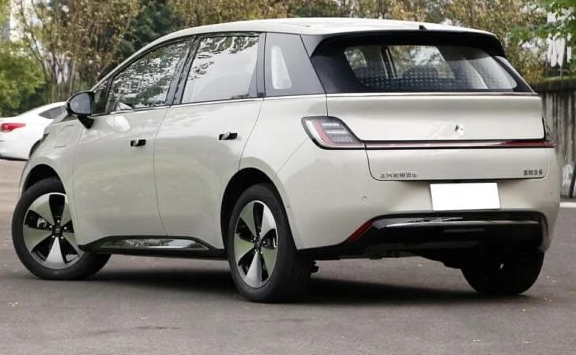
The Baojun Yunduo—also marketed internationally as the Wuling Cloud EV and MG Windsor EV—is a compact, fully electric hatchback developed by SAIC-GM-Wuling (SGMW). Introduced in 2023, the Yunduo represents Baojun’s push into the mainstream electric passenger car market, offering practical range, modern styling, and affordability.
Although still a relatively new model, the Yunduo has already established a clear evolutionary path through its trim structure, export expansion, and positioning within the global EV landscape. This article examines the vehicle’s development, production timeline, trim levels, and future outlook in detail.
Origins and Development
The Baojun Yunduo was conceived as part of Baojun’s transition from low-cost internal combustion vehicles to fully electric mobility solutions. Prior to the Yunduo, the brand was better known for budget MPVs and compact crossovers, but the success of ultra-low-cost EVs like the Hongguang Mini EV encouraged SGMW to expand upward into more refined electric cars.
The Yunduo debuted in May 2023 as Baojun’s first five-door electric hatchback, marking a significant shift toward family-oriented EVs.
Built on a dedicated electric platform, the car features:
- Front-wheel-drive layout
- Single electric motor producing 100 kW (134–136 hp)
- Lithium iron phosphate (LFP) battery technology
- A spacious interior enabled by EV packaging
Production began in 2023 in Liuzhou, China, with later expansion into overseas assembly plants.
.
MANY auto lovers not only spend time in their garages to tinker on their autos, but have other projects going on in there as well. Wood working is a popular pastime for the creative type of individual. Not sure what to make next? Or thinking about getting into this kind of hobby? There’s lots of possibilities… Here’s some of them…

.
2023: Launch Year and Initial Trim Structure
Production Start: 2023
Market Launch: August 2023 (China)
The Baojun Yunduo launched with a relatively broad range of trims for a new model, emphasizing affordability while offering multiple battery sizes and feature levels.
Core Powertrain Options
All 2023 models shared a common drivetrain:
- 100 kW front-mounted electric motor
- 200 Nm torque
- Front-wheel drive layout
- Top speed of approximately 150 km/h
Two battery configurations were offered:
- 37.9 kWh battery → 360 km CLTC range
- 50.6 kWh battery → 460 km CLTC range
2023 Trim Levels
The Yunduo debuted with seven distinct trim levels, all differentiated by range and equipment:
360 km Range Models
- Yunduo 360 Plus
- Yunduo 360 Pro
These entry-level trims featured:
- Smaller battery (37.9 kWh)
- Lower pricing (starting around 95,800 yuan)
- Essential comfort and safety features
460 km Range Models
- Yunduo 460 Pro
- Yunduo 460 Max
- Yunduo 460 Pro Master Mind Edition
- Yunduo 460 Max (Enhanced variant)
- Yunduo 460 Plus Exclusive Edition
These higher trims included:
- Larger 50.6 kWh battery
- Improved infotainment and comfort features
- Optional advanced driver-assistance branding (“Master Mind” / “Lingxi”)
Pricing ranged up to approximately 145,800 yuan for top-tier variants.
Feature Differentiation
Unlike many Western vehicles that use distinct trim names (e.g., “Sport” or “Luxury”), the Yunduo lineup was structured around:
- Battery range (360 vs 460 km)
- Technology packages (Pro, Max, Master Mind)
- Special editions (Exclusive variants)
Higher trims typically added:
- Larger infotainment screens
- Enhanced connectivity features
- Improved interior materials
- Additional driver-assistance technologies
Design and Packaging
The Baojun Yunduo stands out for its “cloud-inspired” design language, emphasizing soft curves and a clean, minimalist aesthetic.
Key dimensions:
- Length: 4,295 mm
- Wheelbase: 2,700 mm
- Width: 1,850 mm
The relatively long wheelbase for its size allows:
- Generous rear passenger space
- Flexible cargo capacity (520–1707 L)
This packaging positions the Yunduo closer to a small family car rather than a traditional subcompact hatchback.
2024: Expansion Beyond China
Start of Export Production: 2024
In 2024, the Baojun Yunduo began expanding internationally, marking a key step in its evolution.
Global Market Names
- Wuling Cloud EV (Indonesia)
- MG Windsor EV (India)
Assembly Locations
- China (Liuzhou)
- Indonesia (Cikarang)
- India (Halol)
This global rollout demonstrates the flexibility of the Yunduo platform and its suitability for emerging markets.
Trim Adjustments for Export
While exact trims varied by market, exported versions typically:
- Simplified the trim lineup
- Focused on mid- and high-range (460 km) variants
- Included localized infotainment systems
2025: Continued Production and Market Presence
Production Status: Ongoing through 2025 (China)
The Yunduo remained largely unchanged mechanically through 2025, with updates focusing on:
- Software improvements
- Feature packaging
- Market-specific adjustments
Notably, China production is listed as running from 2023 to 2025, while export production continues beyond that point.
Market Position
By 2025, the Yunduo occupied a key position:
- Above ultra-budget EVs
- Below premium compact EVs
It appealed to:
- Urban families
- First-time EV buyers
- Value-conscious consumers
Technology and Performance Evolution
Although the Yunduo has not undergone a full redesign, its technology reflects broader EV trends:
Battery and Charging
- LFP battery chemistry (cost-effective and durable)
- DC fast charging (30–80% in ~0.5–0.6 hours)
Efficiency
- Consumption around 12–13 kWh/100 km
Powertrain Consistency
- Single motor configuration across all trims
- No AWD or dual-motor variants introduced
This consistency has helped maintain affordability and simplify production.
Comparison of Trim Evolution
2023 (Launch Year)
- 7 trims
- Two battery sizes
- Broad price range
- Emphasis on choice and differentiation
2024 (Export Expansion)
- Trim simplification for global markets
- Focus on higher-range variants
2025 (Stabilization)
- No major new trims introduced
- Refinement of existing lineup
- Continued production and exports
Market Competitors
The Baojun Yunduo competes with a wide range of compact EVs, particularly in China and emerging markets.
Key competitors include:
- BYD Dolphin
- GAC Aion Y
- Geely Geometry series
Its competitive advantages include:
- Lower pricing
- Spacious interior
- Simple, proven powertrain
However, limitations include:
- Lack of high-performance variants
- Limited advanced driver assistance in early trims
- Brand perception compared to global competitors
Future Outlook
The future of the Baojun Yunduo is closely tied to Baojun’s broader electrification strategy.
1. Continued Global Expansion
With assembly already established in Indonesia and India, the Yunduo is likely to:
- Expand into additional developing markets
- Serve as a global “entry EV” platform
2. Potential Facelift or Second Generation
Given the rapid pace of EV development, a future update could include:
- Improved range (500+ km standard)
- Faster charging capabilities
- More advanced driver assistance systems
3. Platform Evolution
The Yunduo platform may:
- Support additional body styles
- Be shared across multiple brands within SGMW
4. Software and Connectivity Enhancements
Future versions will likely emphasize:
- Smart cockpit systems
- Over-the-air updates
- Integration with mobile ecosystems
The Baojun Yunduo represents a pivotal step in Baojun’s transformation into an electric-focused brand. Introduced in 2023, it quickly established itself as a practical and affordable compact EV with a wide range of trims and configurations.
Summary of Key Milestones
- 2023: Launch with seven trims (360 km and 460 km variants)
- 2024: Global expansion under multiple brand names
- 2025: Continued production and refinement
Despite its relatively short history, the Yunduo demonstrates how quickly modern EVs can scale across markets. Its combination of affordability, practicality, and adaptability makes it a strong contender in the global compact EV segment.
As Baojun continues to evolve, the Yunduo is likely to remain a cornerstone model—either in its current form or as the foundation for future electric vehicles aimed at mass-market adoption.