The Evolution of the Baojun Yunhai: A New-Age Compact SUV in China’s EV Revolution
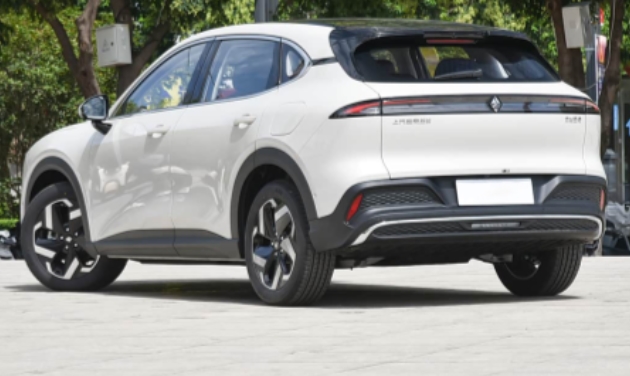
The Baojun Yunhai represents one of the newest entries in China’s rapidly expanding new-energy vehicle (NEV) market. Introduced in 2024, the Yunhai is a compact crossover SUV developed by SAIC-GM-Wuling (SGMW) under the Baojun brand. Designed to compete in the affordable electric and plug-in hybrid SUV segment, the Yunhai reflects broader industry trends toward electrification, intelligent driving systems, and value-oriented mobility.
Despite its short production history, the Yunhai has already undergone notable updates, introduced multiple variants, and expanded its trim lineup. This article explores the vehicle’s evolution, including production years, models, trim levels, and future outlook.
Origins and Development (Pre-2024 Context)
Baojun, a brand under the SAIC-GM-Wuling joint venture, has historically focused on budget-friendly vehicles tailored for the Chinese market. In the early 2020s, the brand pivoted heavily toward electrification, following the success of models like the Wuling Hongguang Mini EV.
The Yunhai was developed as part of this transition. Built on the Tianyu D platform, it was engineered to support both battery electric (EV) and plug-in hybrid (PHEV) powertrains, allowing flexibility in a rapidly evolving market.
The model was first unveiled in May 2024 and targeted young families and urban consumers seeking affordable, technologically advanced SUVs.
.
MANY auto lovers not only spend time in their garages to tinker on their autos, but have other projects going on in there as well. Wood working is a popular pastime for the creative type of individual. Not sure what to make next? Or thinking about getting into this kind of hobby? There’s lots of possibilities… Here’s some of them…

.
2024: Initial Launch and First Model Range
Production Start: August 2024
Market Launch: September 2024
The Baojun Yunhai officially entered production in August 2024, with sales beginning shortly after. At launch, it was offered in four primary variants, split between plug-in hybrid and fully electric configurations.
2024 Model Variants
Plug-in Hybrid (PHEV)
- Yunhai PHEV 60 km version
- Yunhai PHEV 140 km version
These models differed primarily in battery capacity and electric-only range:
- 9.5 kWh battery (≈45–60 km range)
- 20.5 kWh battery (≈100–140 km range)
Both variants used:
- 1.5L naturally aspirated engine (106 hp)
- Combined system output: 150 kW (204 hp)
- E-CVT transmission
- Front-wheel drive layout
Battery Electric (EV)
- Yunhai EV 500 km
- Yunhai EV 600 km
These models featured:
- Single front-mounted electric motor (150 kW)
- LFP battery packs (56.7 kWh or 69.2 kWh)
- CLTC range of 500–600 km
Key Features at Launch
- Lingmou Intelligent Driving 2.0 Max system (ADAS)
- Drag coefficient of 0.259 Cd
- 2,750 mm wheelbase
- Five-seat configuration
The Yunhai was positioned as a technology-rich yet affordable SUV, targeting the 100,000–150,000 yuan price range.
Trim Levels and Equipment (2024)
While Baojun did not use traditional Western-style trim naming (e.g., “LX” or “Sport”), the Yunhai’s trims were largely defined by range and feature packages.
PHEV Trim Levels (2024)
- 60 km Base Variant
- Smaller battery (9.5 kWh)
- Lower price point (~95,800 yuan)
- 140 km Extended Range Variant
- Larger battery (20.5 kWh)
- Higher efficiency and longer electric driving range (~110,800–123,800 yuan)
EV Trim Levels (2024)
- 500 km Standard Range
- 600 km Long Range
These trims differed mainly in battery capacity and driving range, with otherwise similar performance specifications.
2025: Expansion and Special Editions
By 2025, Baojun expanded the Yunhai lineup to maintain competitiveness in China’s crowded EV market.
New Additions
Yunhai EV Travel Edition (2025)
- 600 km range
- 69.2 kWh battery
- Enhanced practicality and cargo space (up to 1570 L)
Junya Edition (Special Edition – 2025)
In August 2025, Baojun launched the “Junya Edition”, a design-focused variant co-created with customers.
Key features included:
- Exclusive “Junya Blue” paint
- Upgraded interior materials
- Enhanced infotainment and cockpit system
- Available in both 500 km and 600 km EV versions
This marked Baojun’s effort to introduce lifestyle-oriented trims, moving beyond purely functional differentiation.
2026: Major Update and Lineup Restructuring
Model Year Update: 2026
The Yunhai received a significant refresh for 2026, including both technological and lineup changes.
Key Changes
- Reduction of PHEV variants (only one retained)
- Expansion of EV lineup to four variants
- Introduction of next-generation AI infotainment
- Improved interior comfort and materials
- Standardized advanced driver assistance systems
2026 Trim Levels
Plug-in Hybrid
- Yunhai PHEV (140 km range only)
The base 60 km PHEV variant was discontinued, signaling a shift toward higher electric capability.
Battery Electric (EV)
- Yunhai EV 500
- Yunhai EV 600
- Yunhai EV 500+
- Yunhai EV 600+
These trims introduced finer gradation in features and equipment, rather than just range differences.
Performance and Technology Updates
- Up to 600 km CLTC range (EV)
- Combined PHEV range up to 1,100 km
- 2C fast charging capability
- Enhanced Lingmou intelligent driving system
This update reflected a broader industry trend: phasing out short-range PHEVs and emphasizing long-range electrification.
Design and Platform Evolution
The Yunhai has maintained a consistent design language since launch, characterized by:
- Aerodynamic profile (0.259 Cd)
- Minimalist front fascia typical of EVs
- Integrated lighting systems
- Spacious interior enabled by EV architecture
The Tianyu D platform has proven adaptable, supporting:
- PHEV and EV drivetrains
- Different battery sizes
- Software-defined vehicle systems
This flexibility has allowed Baojun to rapidly iterate the Yunhai lineup without major structural redesigns.
Sales Performance
Although still new, the Yunhai has shown steady growth:
- 2024 sales: 10,017 units
- 2025 sales: 13,280 units
The majority of sales have come from EV variants, indicating stronger consumer demand for fully electric models over plug-in hybrids.
Market Position and Competitors
The Baojun Yunhai competes in China’s highly competitive compact electric SUV segment, alongside models from BYD, Geely, and other domestic brands.
Its key competitive advantages include:
- Affordable pricing
- Dual powertrain options (EV and PHEV)
- Advanced driver assistance systems at a low cost
- Strong backing from SAIC and General Motors
However, it faces challenges such as:
- Intense competition
- Rapid technological obsolescence
- Limited international presence
Future Outlook
The Baojun Yunhai is expected to continue evolving in several ways:
1. Electrification Focus
The discontinuation of the base PHEV variant suggests Baojun may:
- Further reduce hybrid offerings
- Transition toward a fully electric lineup
2. Software and AI Integration
Future models will likely emphasize:
- AI-powered infotainment
- Enhanced autonomous driving features
- Over-the-air (OTA) updates
3. Global Expansion Potential
While currently sold only in China, Baojun models have historically been rebadged for international markets. The Yunhai could:
- Appear under Chevrolet or other GM brands
- Enter emerging markets as a budget EV option
4. Expanded Trim Strategy
Expect:
- More special editions (like Junya)
- Greater personalization options
- Subscription-based features
The Baojun Yunhai is a clear example of how quickly modern vehicles can evolve in the electric era. Since its debut in 2024, it has progressed from a straightforward dual-powertrain SUV into a more refined and diversified product line.
Summary of Evolution
- 2024: Launch with 4 variants (2 PHEV, 2 EV)
- 2025: Expansion with special editions and new EV trims
- 2026: Major update with 5 variants, reduced PHEV lineup, and enhanced technology
With its combination of affordability, flexibility, and advanced features, the Yunhai is well-positioned within China’s domestic market. Its future success will depend on Baojun’s ability to keep pace with rapid technological change and increasing competition.
As the automotive industry continues its shift toward electrification, the Yunhai stands as a symbol of the new generation of smart, accessible electric SUVs emerging from China.