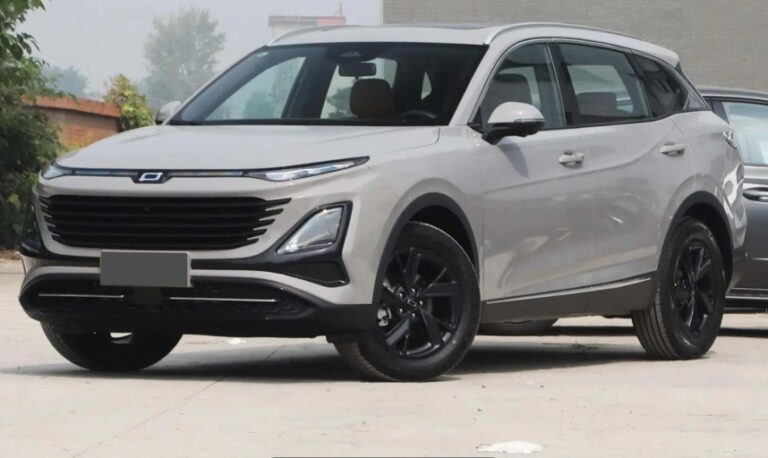
The Evolution of the BAW Jiabao E7 Bagel: Beijing Auto Works’ Practical Urban Electric Hatchback
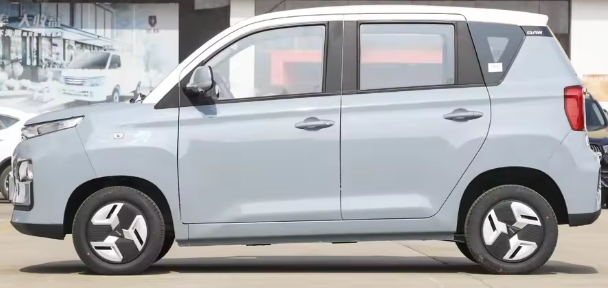
The BAW Jiabao E7 Bagel is a modern compact electric vehicle developed by Beijing Automobile Works (BAW), a Chinese automaker that has increasingly shifted toward affordable new-energy vehicles in the 2020s. Positioned in the entry-level urban EV segment, the E7 Bagel is designed as a small five-door hatchback with practical interior space, low running costs, and a simple but functional electric drivetrain. It reflects BAW’s broader strategy of expanding beyond traditional utility vehicles into mainstream passenger EVs for domestic and export markets.
The model is closely related to other BAW Jiabao-branded vehicles and shares design and engineering philosophies with other compact EVs in the company’s lineup, focusing on affordability, simplicity, and urban usability.
Origins and Development
The BAW Jiabao E7 Bagel emerged during a period when China’s micro and compact electric vehicle market was expanding rapidly. Following the success of ultra-compact EVs from other manufacturers, BAW developed its own small EV lineup aimed at city commuters and low-cost mobility users.
The Jiabao E7 Bagel was engineered as a step above the smallest A00-class microcars, offering:
- A larger five-door hatchback body
- Seating for four passengers
- A more substantial chassis than ultra-compact EVs
- Improved safety structure and ride stability
It was built to serve both domestic Chinese buyers and export markets looking for affordable electric mobility solutions.
.
MANY auto lovers not only spend time in their garages to tinker on their autos, but have other projects going on in there as well. Wood working is a popular pastime for the creative type of individual. Not sure what to make next? Or thinking about getting into this kind of hobby? There’s lots of possibilities… Here’s some of them…

.
Production Timeline (Years Produced)
Based on manufacturer listings and export documentation, the BAW Jiabao E7 Bagel has the following production timeline:
| Year | Status |
|---|---|
| 2023 | Model introduced and production begins |
| 2024 | Expanded production and export versions appear |
| 2025 | Continued production with minor updates |
| 2026 | Ongoing production |
The model remains in active production as of 2026, with no official announcement of discontinuation or replacement.
Platform and Technical Foundation
The E7 Bagel uses a compact electric vehicle architecture developed by BAW’s new-energy vehicle division. It is a rear-wheel-drive layout, which is somewhat unusual in the ultra-compact EV segment, where front-wheel drive is more common.
Key engineering characteristics include:
- Rear-mounted electric motor (RWD layout)
- Lithium iron phosphate (LFP) battery technology
- Unibody construction
- Lightweight structure for urban efficiency
This configuration is intended to improve durability, reduce manufacturing costs, and maintain stable handling in city driving conditions.
Dimensions and Core Specifications
Across all versions, the E7 Bagel maintains consistent dimensions:
- Length: 3,475 mm (136.8 inches)
- Width: 1,585 mm (62.4 inches)
- Height: 1,575 mm (62 inches)
- Wheelbase: 2,240 mm (88.2 inches)
- Seating capacity: 4 passengers
The compact footprint allows easy navigation in dense urban environments while still providing a usable cabin layout.
Powertrain Evolution
Early Production Models (2023–2024)
Initial versions of the E7 Bagel used a modest electric drivetrain designed for efficiency rather than performance:
- Motor output: approximately 30 kilowatts (about 40 horsepower)
- Rated motor output: 15 kilowatts
- Battery: 18.72 kilowatt-hour LFP pack
- Range: approximately 220 kilometers (about 137 miles, CLTC cycle)
- Top speed: 62 miles per hour (100 km/h)
This configuration made the vehicle suitable for daily commuting and short-distance urban travel.
Charging and Efficiency
The E7 Bagel is designed for simple home and low-cost charging infrastructure:
- Standard AC charging time: approximately 6 hours
- Charging voltage: 220V household-compatible systems
- Efficiency focus: low-energy urban driving
Its relatively small battery size helps reduce charging time and operating costs, making it suitable for users without access to fast-charging networks.
Models and Trim Levels
Unlike premium EVs with highly complex trim structures, the BAW Jiabao E7 Bagel follows a simplified trim strategy. Available sources show that BAW markets the vehicle primarily through configuration packages rather than traditional luxury trim naming.
Documented configurations include:
Standard LHD (Left-Hand Drive) Version
- Core domestic and export model
- 220 km range
- Basic comfort and safety equipment
RHD (Right-Hand Drive) Version
- Designed for export markets
- Same mechanical specifications as LHD version
Premium Version (Market Variant)
- Enhanced interior features depending on region
- Improved infotainment or convenience features in some markets
Across 2023–2026 production, no consistent evidence shows multiple formally named trims like “Base,” “Luxury,” or “Sport.” Instead, differences are mainly regional configurations and equipment packages rather than distinct mechanical variants.
Interior and Features
The interior of the E7 Bagel is designed for practicality rather than luxury. Typical features include:
- Five-door access layout
- Four-seat configuration
- Basic digital instrument cluster
- Central infotainment screen (market-dependent)
- Air conditioning
- Power windows and central locking
Higher-spec export versions may include additional convenience features depending on regulatory and market requirements.
Market Position
The BAW Jiabao E7 Bagel competes in China’s highly competitive entry-level EV segment. Its primary rivals include other compact electric hatchbacks designed for urban transportation.
Its positioning is defined by:
- Low purchase price
- Minimal operating costs
- Compact footprint
- Simple maintenance requirements
Unlike larger BAW vehicles such as the E-M7 MPV or Kaluli pickup lineup, the E7 Bagel is strictly a city-focused passenger EV.
Export Strategy
BAW has increasingly promoted the E7 Bagel in international markets under generic export listings. These versions may vary slightly in:
- Steering orientation (left-hand or right-hand drive)
- Equipment packages
- Safety compliance features
Export documentation shows that the model is actively marketed in regions requiring low-cost electric mobility solutions.
Future Outlook
The future of the BAW Jiabao E7 Bagel will likely follow broader trends in the compact EV market:
Likely developments include:
- Increased battery capacity for extended range
- Improved infotainment and connectivity systems
- Enhanced safety features (airbags, driver assistance systems)
- Possible fast-charging compatibility upgrades
- Mild facelift updates rather than full redesign
Given its role as an entry-level EV, BAW is expected to maintain affordability as a priority, meaning major mechanical changes are unlikely in the short term.
If BAW continues expanding its Jiabao EV lineup, the E7 Bagel may eventually be replaced or supplemented by a next-generation compact EV with improved efficiency and updated styling.
The BAW Jiabao E7 Bagel represents a clear example of China’s evolving compact electric vehicle market. Introduced in 2023 and continuing production through 2026, it serves as a practical, low-cost urban EV built around simplicity and efficiency. With a 220-kilometer range, rear-wheel-drive layout, and minimal trim complexity, it prioritizes function over luxury.
As BAW continues to expand its electric vehicle portfolio, the E7 Bagel remains an important entry-level model that demonstrates the company’s shift toward accessible urban mobility solutions and global EV participation.