The Evolution of the Brilliance BS6: China’s Ambitious Executive Sedan
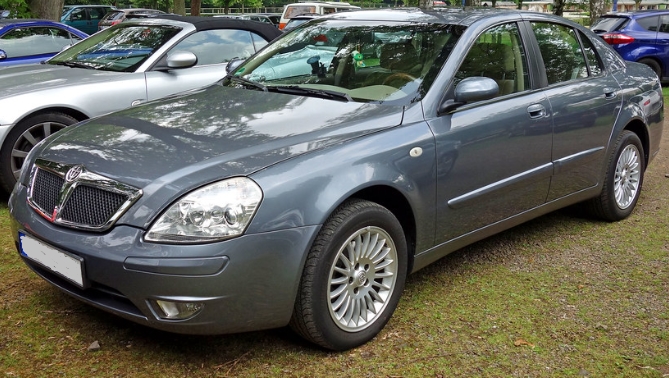
The Brilliance BS6 was one of the most ambitious vehicles ever produced by Brilliance Auto. Introduced at a time when Chinese automakers were beginning to challenge established global manufacturers, the BS6 was designed to compete in the mid-size and executive sedan segments. Featuring Italian styling, generous dimensions, multiple engine options, and aspirations for international success, the BS6 became one of the most recognizable Chinese passenger cars of the 2000s.
Known in China as the Zhonghua Zunchi and later marketed internationally as the Brilliance BS6, Brilliance M1, Brilliance Grandeur, and Brilliance Galena in certain markets, the sedan remained in production from 2000 through 2010, with some sources citing production continuing into 2011 for select markets and final variants. The BS6 represented a major milestone for Brilliance Auto and helped establish the company’s reputation both at home and abroad.
Origins and Development
The origins of the BS6 date back to the late 1990s, when Brilliance Auto sought to develop a flagship sedan capable of competing with established Japanese, European, and American models. To achieve this goal, the company enlisted the services of the renowned Italian design firm Italdesign Giugiaro.
The resulting vehicle debuted in December 2000 as the Zhonghua Zunchi. Unlike many Chinese vehicles of the era, the BS6 was designed from the outset as a relatively sophisticated executive sedan. Its styling, proportions, and spacious interior reflected European influences, while its engineering emphasized comfort and practicality.
The BS6 was built at Brilliance’s facilities in Shenyang, China, and rode on a front-engine, front-wheel-drive platform. Measuring approximately 192 inches long with a wheelbase of nearly 110 inches, it offered dimensions comparable to many established mid-size and executive sedans sold internationally.
.
NO MORE dead batteries with this:

.
First Generation (2000–2006)
The original BS6 entered Chinese showrooms in late 2000 and quickly became one of Brilliance’s flagship products. Early versions emphasized space, comfort, and value rather than outright performance.
During its initial years, several gasoline engines were offered, including:
- 1.8-liter four-cylinder engine
- 2.0-liter four-cylinder engine
- 2.4-liter four-cylinder engine
Transmission choices included five-speed manual gearboxes and automatic transmissions depending on engine and market. The vehicle’s large dimensions, roomy cabin, and upscale appearance helped distinguish it from many domestic competitors.
Early Trim Levels
Official trim names varied significantly between China and export markets. However, the most common configurations included:
Standard
The base model generally included:
- Power steering
- Air conditioning
- Power windows
- Central locking
- Driver and passenger airbags
Comfort
The Comfort trim added:
- Improved interior materials
- Alloy wheels
- Enhanced audio system
- Additional convenience features
Deluxe
The Deluxe trim typically included:
- Automatic climate control
- Leather seating surfaces
- Wood-grain interior trim
- Upgraded sound system
Luxury
The top-specification model featured:
- Premium upholstery
- Power-adjustable seats
- Sunroof
- Additional comfort equipment
- Expanded convenience features
Equipment levels varied by year and market, but these trim categories formed the core of the BS6 lineup during its early years.
International Expansion
One of Brilliance’s primary goals for the BS6 was international expansion. By the mid-2000s, the company began exporting the sedan to Europe, where it was marketed as the Brilliance BS6.
The vehicle attracted considerable attention because it was among the first Chinese-developed passenger cars to be sold in Western Europe. Buyers were offered a large sedan at a price comparable to compact and mid-size mainstream competitors. In Germany and several other European markets, the BS6 was positioned as a value-oriented alternative to vehicles such as the Ford Mondeo and Volkswagen Passat.
The 2006 Facelift
In 2006, Brilliance introduced the first major facelift for the BS6. The update was developed with assistance from Pininfarina and included numerous visual and equipment improvements.
Changes included:
- Revised front grille
- Updated headlights
- Redesigned bumpers
- Improved interior materials
- Enhanced safety equipment
- Updated trim packages
The facelift modernized the sedan and helped maintain its competitiveness in both domestic and export markets.
2006–2007 Export Trim Levels
European-market BS6 models were commonly offered in the following trims:
2.0 Comfort
Features included:
- 2.0-liter engine producing approximately 122 horsepower
- Manual transmission
- Air conditioning
- Power accessories
- Standard safety equipment
2.0 Deluxe
This version added:
- Alloy wheels
- Enhanced interior trim
- Upgraded audio system
- Additional convenience features
2.4 Deluxe
The premium export model featured:
- 2.4-liter engine producing approximately 129 horsepower
- Additional comfort features
- Luxury-oriented equipment
- Enhanced interior appointments
These trims became the best-known BS6 variants sold in Europe.
Safety Challenges and Reputation
The BS6 became widely known outside China following highly publicized crash tests conducted in Europe during 2006 and 2007. Initial crash-test results were extremely poor, generating significant media attention and raising concerns about vehicle safety.
In response, Brilliance strengthened the vehicle’s structure and implemented additional safety improvements. Revised versions demonstrated measurable improvements, although the early crash-test results continued to affect the model’s reputation in Europe. The situation became one of the most significant lessons for Chinese automakers seeking international expansion and highlighted the growing importance of meeting global safety standards.
The 2007 and 2009 Facelifts
Brilliance continued refining the BS6 throughout its production run.
2007 Update
A second facelift introduced:
- Updated front fascia
- Revised grille design
- New lighting elements
- Improved interior appointments
2009 Update
The final major facelift included:
- Further styling revisions
- Modernized bumpers
- Updated trim materials
- Enhanced technology features
- Refined equipment packages
These updates helped extend the vehicle’s market life despite increasing competition from newer domestic and international rivals.
Expanded Powertrain Range
As the BS6 evolved, its engine lineup expanded to include:
1.8-Liter Engine
- Naturally aspirated gasoline engine
- Manual transmission availability
- Designed for affordability and efficiency
1.8-Liter Turbocharged Engine
- Improved performance
- Six-speed manual transmission availability
- Enhanced acceleration
2.0-Liter Engine
- Approximately 122 horsepower
- Manual and automatic transmission options
2.4-Liter Engine
- Approximately 129 horsepower
- Available in higher trim levels
- Improved highway performance
Transmission options throughout production included:
- Five-speed manual
- Four-speed automatic
- Five-speed automatic
- Six-speed manual on certain turbocharged models
These powertrains allowed the BS6 to appeal to a wide range of buyers across different markets.
International Production
In addition to Chinese production, the BS6 was assembled in Egypt through a partnership with the Bavarian Auto Group. This arrangement allowed Brilliance to expand its presence in North Africa and the Middle East while reducing import costs. The sedan gained a modest following in these markets due to its size, equipment levels, and affordability.
End of Production
By the late 2000s, consumer preferences were shifting toward crossover SUVs and more technologically advanced sedans. Competition in China intensified as domestic manufacturers improved their products and international brands expanded their local operations.
Production of the BS6 gradually wound down between 2010 and 2011, depending on market and source. By that point, Brilliance was increasingly focusing on newer models and crossover vehicles. The BS6 was eventually succeeded by more modern products within the Zhonghua lineup.
Legacy and Future Outlook
The Brilliance BS6 occupies a unique place in automotive history. It was among the first Chinese-developed passenger cars to make a serious attempt at entering Western European markets. While its export success was limited, the vehicle demonstrated the growing ambitions of China’s automotive industry during the early 2000s.
The BS6 also helped establish important relationships with international design and engineering firms, including Italdesign Giugiaro and Pininfarina. These collaborations improved Brilliance’s design capabilities and influenced many of the company’s later vehicles.
Today, the BS6 remains an important milestone in the evolution of Chinese automobiles. Although Brilliance Auto has faced significant financial and organizational challenges in recent years, the BS6 continues to be remembered as one of the company’s most ambitious projects. Its combination of executive-car styling, international aspirations, and continuous development makes it a notable chapter in the history of China’s modern automotive industry and a key vehicle in the evolution of the Brilliance brand.