The Evolution of the Brilliance H530: Brilliance Auto’s Ambitious Mid-Size Sedan
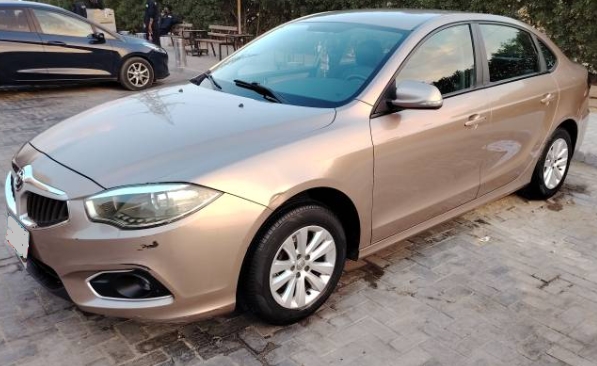
The Brilliance H530 was one of the most important passenger cars produced by Chinese automaker Brilliance Auto during the 2010s. Positioned as a mid-size sedan above the smaller H330, the H530 represented the company’s effort to compete in a market segment traditionally dominated by established international brands. Combining European-inspired styling, practical dimensions, and competitive pricing, the H530 became one of Brilliance’s flagship passenger cars and remained in production from 2011 through 2020. During its lifespan, the model underwent multiple updates and facelifts, helping it remain relevant in an increasingly competitive Chinese automotive market.
Origins and Development
The origins of the H530 can be traced to the 530 Concept, which was unveiled at the 2011 Shanghai Auto Show. Brilliance Auto developed the vehicle as a larger, more refined sedan designed to appeal to buyers seeking a spacious family car with modern styling and upscale features. The production version, renamed H530, officially entered the Chinese market on August 29, 2011.
The H530 was built on a front-wheel-drive platform developed by Brilliance and later shared with the company’s V5 crossover. The vehicle was designed to offer a balance of comfort, practicality, and affordability, targeting customers who wanted a larger sedan without paying the premium prices associated with foreign brands.
From the beginning, the H530 featured styling influenced by European design trends. Many observers noted similarities between certain exterior elements and contemporary BMW sedans, a connection that attracted attention because of Brilliance’s long-standing joint venture partnership with BMW in China. Despite these comparisons, the H530 remained a distinct Brilliance product aimed at value-conscious buyers.
.
NO MORE dead batteries with this:

.
First Generation (2011–2014)
The original Brilliance H530 entered production in 2011 as a four-door mid-size sedan. It measured approximately 185 inches in length and rode on a 106.3-inch wheelbase, giving it generous passenger space and a sizable trunk. The sedan was positioned above the H330 in Brilliance’s lineup and served as one of the brand’s flagship passenger vehicles.
Early models were powered primarily by a 1.6-liter Mitsubishi-derived four-cylinder gasoline engine producing approximately 110 horsepower. Buyers could choose between a five-speed manual transmission and a five-speed automatic transmission supplied through Hyundai-related technology. In some markets, a turbocharged 1.5-liter engine would later become available.
Early Trim Levels
Brilliance offered several trim levels during the initial production years. Depending on market and model year, these generally included:
Comfort
The entry-level Comfort model featured:
- Air conditioning
- Anti-lock brakes (ABS)
- Electronic brake-force distribution (EBD)
- Front airbags
- Power windows
- Power mirrors
- Central locking
Deluxe
The Deluxe trim added:
- Alloy wheels
- Enhanced interior materials
- Multifunction steering wheel
- Rear parking sensors
- Improved audio system
Luxury
In certain markets, a Luxury trim was offered that included:
- Automatic climate control
- Leather-trimmed interior
- Sunroof
- Additional convenience features
- Upgraded infotainment equipment
Equipment availability varied by country and production year, but these trim levels formed the foundation of the early H530 lineup.
The 2014 Facelift
Brilliance introduced the first major facelift for the H530 at the 2014 Beijing Auto Show. The update was intended to modernize the vehicle’s appearance and improve its competitiveness against newer rivals entering the Chinese market.
The facelift included:
- A redesigned front grille
- New headlights
- Updated front bumper
- Revised rear bumper
- New rear lighting elements
- Interior improvements
- Enhanced equipment offerings
The refreshed styling adopted Brilliance’s evolving design language and gave the sedan a more upscale appearance. Sales of the updated model began during the spring of 2014.
2014–2016 Trim Levels
Following the facelift, the H530 lineup expanded and included several configurations.
Common trim levels included:
1.6 MT Comfort
- Five-speed manual transmission
- Standard comfort and safety equipment
- Front-wheel drive
1.6 MT Deluxe
- Additional convenience features
- Enhanced interior trim
- Alloy wheels
1.6 AT Comfort
- Five-speed automatic transmission
- Improved driving convenience
- Expanded equipment package
1.6 AT Deluxe
- Premium interior appointments
- Additional technology features
- Upgraded exterior styling elements
These trim levels became particularly common in export markets, including Russia.
The 2016 Update
A second facelift was introduced during 2016 and debuted at the Chengdu Auto Show before entering production later that year. While less extensive than the 2014 update, the changes were significant enough to give the H530 a more contemporary appearance.
Key changes included:
- Revised grille design
- Updated lighting systems
- Redesigned front bumper
- New fog-light arrangement
- Updated center console controls
- Enhanced cabin technology
The 2016 update helped extend the vehicle’s production life and improved its appeal to younger buyers.
Powertrain Expansion
As the model evolved, Brilliance expanded the H530’s engine lineup. While the 1.6-liter naturally aspirated engine remained the primary powerplant in many markets, Chinese buyers also gained access to a turbocharged 1.5-liter four-cylinder engine producing approximately 150 horsepower. This engine provided improved performance while maintaining competitive fuel economy.
Available powertrains during the later years included:
1.6-Liter Naturally Aspirated Engine
- Approximately 110–118 horsepower
- Five-speed manual transmission
- Five-speed automatic transmission
1.5-Liter Turbocharged Engine
- Approximately 148–150 horsepower
- Manual transmission availability
- Automatic transmission availability
These options allowed the H530 to appeal to both budget-conscious buyers and customers seeking improved performance.
International Markets
The H530 was sold in several markets outside China, including Russia, Egypt, and parts of Eastern Europe, South America, and the Middle East. In Russia, local assembly was carried out by Derways, helping reduce costs and improve market competitiveness. Export versions generally retained the same overall design and mechanical specifications while receiving market-specific equipment and regulatory modifications.
The vehicle earned praise for its spacious interior, comfortable ride quality, and extensive standard equipment relative to its price. Critics, however, sometimes pointed to modest engine performance and strong styling similarities to European competitors.
Sales Performance
The H530 achieved its strongest sales during the early years of production. Chinese sales exceeded 21,000 units in 2012 and remained relatively healthy through the first half of the decade. Following the 2014 facelift and 2016 update, sales experienced periodic improvements, including a notable rebound in 2017. However, increasing competition from both domestic and international manufacturers eventually led to declining demand.
End of Production
Production of the Brilliance H530 continued until 2020. By that time, consumer preferences in China had shifted dramatically toward crossover SUVs, reducing demand for traditional mid-size sedans. Brilliance also faced broader financial challenges and restructuring efforts, which contributed to the discontinuation of several models, including the H530.
Legacy and Future Outlook
The Brilliance H530 remains one of the most significant sedans ever produced by Brilliance Auto. It represented the company’s ambition to move beyond entry-level transportation and compete in a higher-value segment. Throughout its nine-year production run, the H530 demonstrated Brilliance’s ability to develop a spacious, well-equipped family sedan that appealed to buyers in China and several export markets.
Although the H530 is no longer in production, its influence can be seen in later Brilliance vehicles that continued the company’s emphasis on modern styling, practical engineering, and value-oriented pricing. The future of the Brilliance brand remains uncertain following years of restructuring and changing market conditions, but the H530 remains an important chapter in the company’s history. For many buyers, it represented one of the most ambitious and refined passenger cars the manufacturer ever produced, helping establish Brilliance as a recognizable name in China’s rapidly evolving automotive industry.