The Evolution of the BYD Han: From Flagship Debut to Modern Electric Luxury
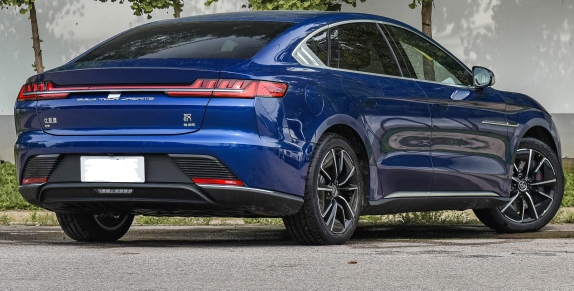
The BYD Han represents one of the most significant milestones in the rise of modern Chinese electric and hybrid vehicles. Introduced as a flagship sedan by BYD Auto, the Han has evolved rapidly since its debut, reflecting advancements in battery technology, performance engineering, and intelligent driving systems. Since 2020, the model has undergone multiple updates, introduced new trims and variants, and expanded its role in BYD’s global ambitions.
This article explores the full evolution of the BYD Han, including production years, trim levels, major updates, and its future outlook.
Origins and Background
The BYD Han is a full-size (E-segment) sedan that entered production in 2020 and continues to the present. It replaced earlier BYD sedans such as the G6 and became the flagship of the company’s “Dynasty Series,” named after the Han Dynasty of ancient China.
The Han was previewed by the E-SEED GT concept shown in 2019, signaling BYD’s ambition to compete with global luxury sedans using electrified powertrains.
From the beginning, the Han stood out for combining:
- High-performance electric drivetrains
- Plug-in hybrid flexibility
- Advanced battery technology (notably BYD’s Blade Battery)
- Premium interior design and technology
First Generation (2020–Present)
Initial Launch (2020 Model Year)
The BYD Han officially went on sale in July 2020, following early previews earlier that year.
At launch, the lineup consisted of two main variants:
1. Han EV (Battery Electric Vehicle)
- Fully electric sedan
- Available in single-motor (FWD) and dual-motor (AWD) configurations
- Performance-focused AWD version capable of 0–62 mph in about 3 seconds
- Long driving range depending on battery configuration
2. Han DM (Plug-in Hybrid)
- “Dual Mode” (DM) plug-in hybrid system
- 2.0-liter turbocharged gasoline engine + electric motor
- AWD capability
- 0–62 mph in ~4.7 seconds
- Electric-only range of about 50 miles (NEDC equivalent)
Han DM Trim Levels (2020–2021)
- Luxury (Base trim)
- Majestic (Higher-spec trim) with upgraded comfort and audio systems
These early trims emphasized premium features, positioning the Han as a luxury competitor.
.

.
Expansion and Early Success (2021)
In 2021, BYD expanded the Han lineup and market reach:
Key Developments:
- Strong sales growth in China
- Introduction of the BYD e9, a fleet-oriented version based on the Han EV
- Continued refinement of battery and software systems
The BYD e9 (2021–present):
- Designed for ride-hailing services
- Single-motor, front-wheel-drive configuration
- Range of over 300 miles (NEDC)
- Simplified features compared to retail Han models
The Han EV also received international recognition, including a 2021 iF Design Award, highlighting its styling and innovation.
Major Update and New Variants (2022 Refresh)
The 2022 model year marked a significant turning point in the evolution of the BYD Han.
Replacement of Han DM
BYD discontinued the original Han DM and replaced it with two new plug-in hybrid variants:
1. Han DM-i (Efficiency-Oriented)
- Focus on fuel economy and long combined range
- Uses BYD’s advanced hybrid system
- Lower cost and higher efficiency
2. Han DM-p (Performance-Oriented)
- Higher power output
- AWD performance tuning
- Positioned as the sporty hybrid option
Updated EV Lineup
The Han EV also received upgrades, including:
- Increased driving range (up to ~715 km NEDC in some variants)
- Improved battery systems
- Enhanced driver assistance features
Notable 2022 Trim Levels
Across global and Chinese markets, the Han lineup expanded to include trims such as:
- Standard Range / Long Range (EV)
- Performance AWD (EV)
- DM-i base and premium trims
- DM-p performance trim (single high-end variant)
Special editions (market-dependent):
- Founding Edition
- Green Edition
These updates significantly broadened the Han’s appeal, offering both efficiency-focused and performance-focused buyers tailored options.
Continued Refinement and Sales Growth (2023–2024)
Between 2023 and 2024, the BYD Han maintained strong sales and incremental improvements.
Sales Performance
- 2022: ~272,000 units sold
- 2023: ~227,000 units
- 2024: ~228,000 units
Key Enhancements:
- Software updates and infotainment improvements
- Incremental battery and efficiency upgrades
- Price adjustments to stay competitive in China’s EV market
2024–2025 Facelift (Introduced September 2024)
A major refresh was introduced for the 2025 model year, including:
Design Changes:
- Unified front-end design across EV and hybrid variants
- Updated lighting and styling elements
Technology Upgrades:
- DiPilot 300 advanced driver assistance system
- LiDAR integration
- Nvidia Orin-X computing platform
- DiSus-C intelligent suspension system
Powertrain Updates:
- New DM-i 5.0 hybrid system
- Improved efficiency and performance
These upgrades positioned the Han as a technologically competitive sedan globally.
New Generation Direction: BYD Han L (2025–Present)
In 2025, BYD introduced the Han L, representing a new phase in the model’s evolution.
Key Characteristics:
- Slightly larger dimensions
- Redesigned exterior and interior
- More powerful powertrains
Available Variants:
- Han L EV
- Han L DM-i
- Han L DM-p
The Han L signals BYD’s shift toward a more premium, next-generation architecture, incorporating newer platforms and technologies.
Global Market and Trim Structure
While trim names vary by region, especially outside China, the Han has typically been offered in simplified trims internationally:
Common Global Trims:
- Premium
- Flagship
These trims generally correspond to:
- Premium: single-motor, luxury-focused
- Flagship: dual-motor AWD, performance-focused
Technology and Innovation
The BYD Han has served as a showcase for several of BYD’s key innovations:
Blade Battery
- Lithium iron phosphate (LFP) design
- Improved safety and durability
Performance Capabilities
- Among the first Chinese EVs to achieve supercar-like acceleration (~3 seconds to 62 mph)
Intelligent Systems
- Advanced driver assistance (DiPilot)
- Large rotating touchscreen infotainment system
- OTA software updates
Platform Evolution
- Early models used BYD’s DM3 platform
- Later models integrate newer hybrid and EV architectures
Role in BYD’s Growth
The Han has played a crucial role in establishing BYD as a global EV leader:
- Flagship model for brand prestige
- Demonstrates in-house battery and drivetrain expertise
- Competes with established luxury EV sedans
Its success has helped BYD expand into:
- Europe
- Southeast Asia
- Latin America
Future Outlook
The future of the BYD Han appears closely tied to BYD’s broader electrification strategy.
Expected Developments:
- Further Electrification
- Continued focus on EV variants over hybrids
- Expansion of 800V architectures
- Advanced Autonomous Features
- Expansion of LiDAR-based driver assistance
- Improved AI-based driving systems
- Global Expansion
- Wider availability in North America and Europe (pending regulations)
- Platform Integration
- Adoption of next-generation BYD EV platforms
- Shared architecture with other flagship models
- Continued Evolution of Han L
- Likely to become the primary flagship variant
Since its introduction in 2020, the BYD Han has evolved from a promising electric sedan into a technologically advanced flagship vehicle. With multiple powertrain options—ranging from fully electric to plug-in hybrid—the Han has consistently adapted to market demands while showcasing BYD’s engineering capabilities.
From the original Han EV and DM models to the newer DM-i, DM-p, and Han L variants, the vehicle’s evolution reflects broader trends in the automotive industry: electrification, intelligent systems, and performance innovation.
As BYD continues to expand globally and invest in next-generation technologies, the Han is expected to remain a central figure in its lineup—bridging luxury, performance, and sustainability in an increasingly competitive EV market.