The Evolution of the Changhe A6: BAIC’s Compact Sedan Experiment
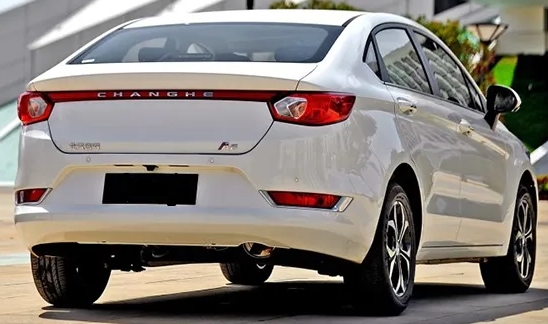
The Changhe A6 was a compact four-door sedan developed by the Chinese automaker Changhe under the ownership of Beijing Automotive Industry Corporation (BAIC). Produced from 2018 through 2021, the A6 represented Changhe’s attempt to strengthen its presence in China’s competitive compact sedan market. Although the model had a relatively short production life, it reflected broader trends in the Chinese automotive industry, including platform sharing, cost-efficient engineering, and the growing influence of state-owned automotive groups.
Changhe itself has a long history in China’s automotive sector. Originally associated with aviation manufacturing, the company later became known for producing compact commercial vehicles and small passenger cars. Over the years, Changhe worked closely with Suzuki and eventually became part of BAIC after ownership restructuring in the early 2010s.
The Changhe A6 emerged during a period when Chinese automakers were rapidly modernizing their product lineups to compete with domestic rivals such as Geely, Changan, Roewe, and Great Wall. While the A6 never became a major sales success, it remains an interesting example of how smaller Chinese brands attempted to reposition themselves in the passenger car market.
Origins and Development
The Changhe A6 was officially introduced in late 2017 before entering production for the 2018 model year. The sedan was built on the same platform as the second-generation Senova D50, another BAIC-developed compact sedan. Sharing platforms and powertrains allowed BAIC to reduce development costs while giving Changhe access to more modern engineering and styling.
From a design standpoint, the A6 featured a contemporary appearance for its time. The front fascia incorporated a large chrome grille, swept-back headlights, and a profile intended to resemble larger midsize sedans. The car’s proportions and styling reflected the growing influence of European and Korean design trends on Chinese vehicles during the late 2010s.
Inside, the A6 offered a relatively modern cabin with a touchscreen infotainment system, digital controls, and a multi-function steering wheel. Compared to many earlier Changhe vehicles, the A6 represented a substantial improvement in quality, technology, and refinement.
.
NO MORE dead batteries with this:

.
Production Years and Model Evolution
2018 Changhe A6
The first production year of the Changhe A6 began in 2018. The vehicle entered the Chinese market as a compact front-wheel-drive sedan powered by a naturally aspirated 1.5-liter four-cylinder gasoline engine. This Mitsubishi-derived A151 engine produced approximately 116 horsepower and 142 Nm of torque. Buyers could choose between a five-speed manual transmission or a continuously variable transmission (CVT).
The launch lineup included several trim configurations, although official English-language documentation for all Chinese-market trims remains limited. Available versions generally included:
- Base manual trim
- Mid-level manual trim
- Mid-level CVT trim
- Higher-spec CVT trim
Some automotive databases and sales reports also identify trim categories such as Standard, Luxury, and Elite. These versions primarily differed in convenience and technology equipment.
Standard features on entry-level models included:
- Cloth upholstery
- Manual climate controls
- Basic infotainment system
- Power windows
- Rear parking sensors
Higher trims added features such as:
- Larger touchscreen displays
- Leather-trimmed seats
- Sunroof
- Rearview camera
- Upgraded audio system
- Chrome exterior trim
- Additional driver-assistance features
Pricing reportedly ranged from approximately 69,800 yuan to 99,800 yuan, placing the A6 in the affordable compact sedan segment.
2019 Changhe A6
For 2019, the Changhe A6 continued largely unchanged mechanically. The model remained positioned as an affordable family sedan aimed at younger urban buyers seeking a modern-looking vehicle at a competitive price.
Minor updates focused mainly on equipment packaging and market adjustments rather than significant redesigns. Chinese automakers frequently revised trim structures and available technology packages annually to remain competitive, and the A6 followed this industry pattern.
The sedan’s sales remained modest but relatively stable during this period. According to available sales figures, Changhe sold more than 6,700 units in both 2018 and 2019.
Despite acceptable initial demand, the A6 faced intense competition from larger and more established domestic brands. Models from Geely, Changan, and SAIC often offered stronger dealer networks, better brand recognition, and more advanced technology.
2020 Changhe A6
The 2020 model year marked a significant decline in sales for the Changhe A6. Like many automakers worldwide, Chinese manufacturers faced disruptions caused by the COVID-19 pandemic and changing consumer preferences.
By this stage, Chinese buyers were increasingly moving away from compact sedans and toward crossover SUVs. Changhe’s sedan lineup struggled to maintain relevance in a market that favored sport utility vehicles and electrified products.
The A6 itself remained fundamentally unchanged. It still used the same 1.5-liter engine and front-wheel-drive layout introduced at launch. However, the model increasingly appeared outdated compared to newer competitors offering turbocharged engines, larger infotainment screens, advanced safety systems, and partially electrified powertrains.
Sales dropped sharply during 2020, with fewer than 1,500 units reportedly sold.
2021 and End of Production
Production of the Changhe A6 effectively ended during 2021. Only a very small number of units were reportedly sold that year, indicating the model had largely disappeared from active production and dealership inventories.
The discontinuation reflected broader challenges facing Changhe as a passenger-car brand. While BAIC continued investing in certain Changhe commercial and utility vehicle programs, the company struggled to establish a strong foothold in the mainstream sedan segment.
The A6 never received a full second generation, facelift, or major powertrain update during its production run. Its relatively short lifespan of approximately three years made it one of the shorter-lived compact sedans in modern Chinese automotive history.
Engineering and Technical Characteristics
Throughout its production life, the Changhe A6 maintained the same core engineering package. Important specifications included:
- Layout: Front-engine, front-wheel drive
- Body style: Four-door sedan
- Engine: 1.5-liter naturally aspirated inline-four
- Power output: Approximately 116 horsepower
- Torque: 142 Nm
- Transmission choices: Five-speed manual or CVT
- Platform sharing: BAIC Senova D50 platform
The use of Mitsubishi-sourced engine technology was common among Chinese automakers during this period. Many manufacturers relied on licensed or derived Mitsubishi engines because of their affordability, durability, and ease of maintenance.
Although the A6 was not considered a high-performance vehicle, it was designed to provide economical transportation and reasonable fuel efficiency for urban and suburban driving.
Market Position and Reception
The Changhe A6 entered a highly crowded market segment. Compact sedans in China faced pressure not only from domestic rivals but also from international joint-venture brands such as Volkswagen, Nissan, Hyundai, and Toyota.
One challenge for Changhe was brand perception. While companies like Geely and Changan successfully modernized their public image during the late 2010s, Changhe remained more closely associated with inexpensive utility vehicles and older commercial products.
Still, the A6 demonstrated that Changhe could produce a modern passenger sedan with respectable styling and contemporary features. Automotive observers frequently noted that the car looked more upscale than many earlier Changhe products.
Future Outlook and Legacy
Although the Changhe A6 is no longer in production, it represents an important chapter in Changhe’s transition under BAIC ownership. The sedan showed how smaller Chinese manufacturers increasingly relied on platform sharing and centralized engineering to compete in the rapidly evolving automotive market.
The future of Changhe-branded passenger sedans remains uncertain. In recent years, Chinese automakers have shifted aggressively toward electric vehicles, plug-in hybrids, and crossover SUVs. BAIC itself has invested heavily in electric mobility through brands such as BJEV and Arcfox.
Interestingly, some references connect the A6 platform to later electric vehicle developments, including the Ruixiang C5 EV. This reflects the growing trend of adapting older internal-combustion platforms for electrified applications in China.
Today, the Changhe A6 is remembered primarily as a transitional model. It was modern enough to demonstrate Changhe’s ambitions yet ultimately unable to secure a lasting place in China’s highly competitive sedan market. Even so, the A6 remains a noteworthy example of the rapid evolution of the Chinese automotive industry during the late 2010s, when domestic manufacturers were striving to modernize, consolidate, and prepare for an increasingly electric future.