The Evolution of the Hongqi H5: From Mazda-Based Origins to a Modern Chinese Luxury Sedan
The Hongqi H5 is one of the most important models in the modern revival of China’s historic Hongqi brand. Since its introduction in 2017, the H5 has evolved from a relatively conventional, platform-shared sedan into a technologically advanced and stylistically distinctive executive car. It has played a central role in Hongqi’s transition from a state-focused manufacturer into a competitive player in the global premium automotive market.
This article explores the full evolution of the Hongqi H5, including its development, production timeline, models, trim levels, and future outlook.
Origins and Historical Context (Pre-2017)
Hongqi, meaning “Red Flag,” has long been associated with China’s political elite, producing limousines such as the Hongqi H7 for government officials. However, by the mid-2010s, FAW Group sought to transform Hongqi into a mainstream luxury brand.
The H5 was conceived as an entry-level executive sedan positioned below the H7, designed to attract private buyers. It was part of a broader strategy to increase sales volume and modernize the brand’s image.
First Generation Development and Launch (2017–2019)
Concept and Debut
The H5 was first previewed as a concept at the 2017 Shanghai Auto Show and entered production later that year, with its official debut at the Guangzhou Auto Show.
- Production start: 2017
- Market launch: 2018 model year
- Generation: First generation (H5 I)
The first-generation H5 was based on the same platform as the third-generation Mazda 6 (known as the Atenza in China), reflecting FAW’s joint venture with Mazda.
.

.
Powertrain and Specifications (2018–2019)
At launch, the H5 featured a single engine:
- 1.8-liter turbocharged inline-four
- Output: ~180 hp
- Transmission: 6-speed automatic
- Drivetrain: Front-wheel drive
This configuration emphasized comfort and efficiency rather than performance.
Early Trim Levels (2018–2019)
While exact naming varied by market, the H5 was typically offered in three main trims:
- Base / Comfort
- Standard infotainment system
- Fabric or synthetic upholstery
- Deluxe / Luxury
- Leather seating
- Upgraded infotainment and connectivity
- Flagship / Premium
- Panoramic sunroof
- Advanced safety systems
- Premium audio
These trims positioned the H5 as a value-oriented alternative to established luxury sedans.
First Generation Expansion and Facelift (2020–2022)
2020 Facelift and Updates
In 2020, Hongqi introduced a significant update to the H5 lineup, improving both performance and efficiency.
Key Changes:
- Addition of a 1.5-liter turbocharged engine
- Introduction of a 48V mild hybrid system for the 1.8T engine
- Updated transmissions (including a 7-speed dual-clutch gearbox)
Updated Powertrain Lineup
- 1.5T (169 hp, DCT)
- 1.8T mild hybrid (197 hp, automatic)
These updates expanded the H5’s appeal by offering better fuel efficiency and a broader range of options.
Additional Variants
Hongqi H5 Sports (2020–2022)
A sport-oriented styling package was introduced, featuring:
- Aggressive bumpers
- Black exterior accents
- Rear spoiler and quad exhaust tips
Mechanically, the car remained unchanged.
Trim Levels (2020–2022)
During this phase, trims became more diversified:
- Comfort
- Deluxe
- Flagship
- Sports Edition
These trims could be combined with different engines, creating a wider range of configurations.
Market Performance
The first-generation H5 achieved strong sales success, with over 268,000 units sold in China between 2018 and 2023.
It became one of Hongqi’s most important volume models and helped establish the brand among private buyers.
Second Generation Introduction (2022–Present)
Full Redesign (2022)
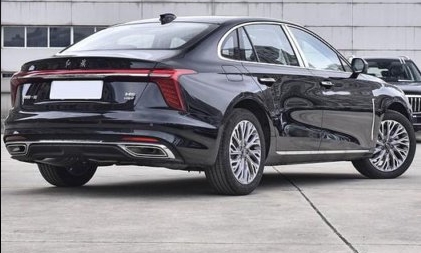
The second-generation Hongqi H5 debuted in March 2022, marking a major shift in design and engineering.
- Production: 2022–present
- Platform: New FAW-developed architecture
- Design inspiration: Hongqi H9
The new model adopted Hongqi’s latest design language, featuring a larger grille, vertical chrome elements, and a more imposing stance.
Dimensions and Design Changes
- Length increased to ~4988 mm
- Wider and more premium proportions
- Improved interior space and materials
The second-generation H5 moved closer to the premium segment, competing more directly with established luxury brands.
Powertrain Evolution (2022–Present)
The second-generation H5 introduced a more advanced engine lineup:
- 1.5T (169 hp, DCT)
- 2.0T (224 hp, automatic)
These engines provided improved performance and efficiency compared to the first generation.
Introduction of Electrification (2025–Present)
By 2025, Hongqi introduced a plug-in hybrid (PHEV) variant of the H5, reflecting broader industry trends.
- H5 PHEV (2025–present)
- Combines gasoline engine with electric motor
- Improved fuel economy and reduced emissions
Sales data indicate that PHEV variants contributed to increased total sales in 2025.
Trim Levels and Model Structure (2022–Present)
The second-generation H5 features a more refined trim hierarchy.
Core Trim Levels
1. Comfort (Base)
- Entry-level model
- Dual-screen dashboard
- Standard driver assistance systems
2. Deluxe / Luxury
- Mid-range trim
- Adds:
- Leather upholstery
- Enhanced infotainment
- Additional safety features
3. Flagship / Premium
- High-end trim
- Includes:
- Premium audio system
- Ventilated seats
- Advanced ADAS systems
Special Editions and Variants
- Sports Edition (continued in some markets)
- Black styling packages (regional)
- PHEV variants (2025–present)
These variations allow the H5 to cater to a wide range of customers.
Technology and Interior Evolution
First Generation (2018–2022)
- Dual-screen layout
- Basic connectivity features
- Standard driver assistance systems
Second Generation (2022–Present)
- Larger digital displays
- Improved infotainment system
- Enhanced connectivity and OTA updates
The interior of the second-generation H5 reflects Hongqi’s shift toward a more technology-driven approach.
Driving Characteristics and Engineering
The H5 has consistently prioritized comfort and refinement:
- Smooth ride quality
- Quiet cabin
- Balanced handling
The introduction of more powerful engines in the second generation improved performance without compromising comfort.
Market Position and Competitors
The Hongqi H5 competes in the compact executive sedan segment.
Key Competitors
- Toyota Camry
- Honda Accord
- BMW 3 Series
- Audi A4
Its main advantages include:
- Competitive pricing
- High level of standard equipment
- Strong domestic brand recognition
Production Timeline Summary
Generations
- 2017–2022: First generation (H5 I)
- 2020–2022: Facelifted first generation
- 2022–present: Second generation (H5 II)
Powertrain Evolution
- 1.8T (2018–2022)
- 1.5T (2020–present)
- 2.0T (2022–present)
- PHEV (2025–present)
Trim Levels (Overall)
- Comfort / Base
- Deluxe / Luxury
- Flagship / Premium
- Sports Edition
- Special editions (regional)
Global Expansion and Sales Growth
The H5 has been sold primarily in China but has gradually expanded into international markets, including:
- Middle East
- Eastern Europe
- Southeast Asia
Sales have grown significantly in recent years:
- 2023: ~99,773 units
- 2024: ~147,034 units
- 2025: ~155,712 units (including PHEV)
This growth reflects increasing demand for Hongqi vehicles both domestically and abroad.
Future Outlook (2026 and Beyond)
The Hongqi H5 is expected to remain a key model in the brand’s lineup.
Anticipated Developments
- Expansion of hybrid and electrified variants
- Improved autonomous driving features
- Continued refinement of design and materials
- Potential introduction of a fully electric variant
As Hongqi continues its global expansion, the H5 will likely play a central role in attracting new customers.
The Hongqi H5 has evolved significantly since its debut in 2017. What began as a Mazda-based sedan has transformed into a sophisticated, independently developed luxury vehicle with modern technology and a strong market presence.
Through multiple generations, expanded powertrain options, and a wide range of trim levels, the H5 has become a cornerstone of Hongqi’s success. Its continued evolution reflects both the rapid development of China’s automotive industry and Hongqi’s ambition to compete on a global stage.