The Evolution of the JAC Refine M5: JAC’s Executive MPV and Its Development Through the Years
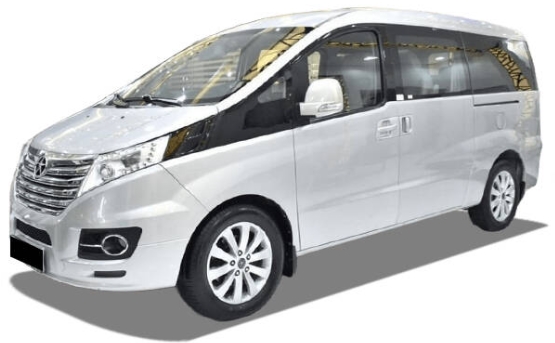
The JAC Refine M5 is one of the longest-running and most important vehicles produced by JAC Motors. As the model that effectively launched the Refine sub-brand, the M5 has played a significant role in the development of China’s multi-purpose vehicle (MPV) market. Over more than two decades, the vehicle evolved from a licensed derivative of the Hyundai Starex into a modern executive-oriented MPV with its own identity, multiple powertrain options, and a broad range of trim levels aimed at both business and family users. Production began in 2002 and, despite numerous updates and name changes, continues in various forms today.
Origins of the Refine M5
The story of the Refine M5 begins in 2002 when JAC Motors entered into a licensing arrangement that allowed it to build a version of the first-generation Hyundai Starex. Initially sold simply as the JAC Refine MPV, the vehicle quickly became one of the company’s most successful products. It was also the vehicle that established the “Refine” name, which later expanded into a complete lineup of MPVs, vans, and passenger vehicles.
The early Refine was designed primarily as a practical people mover. It offered generous passenger capacity, simple mechanical components, and competitive pricing. These qualities made it popular with commercial operators, government agencies, hotels, and large families throughout China.
.
NO MORE dead batteries with this:

.
First Generation (2002–2015)
Initial Launch: 2002–2006
The original Refine MPV entered production in March 2002. Visually, it closely resembled the Hyundai Starex upon which it was based. The vehicle featured a front-engine, rear-wheel-drive layout, sliding side doors, and seating configurations capable of carrying between seven and eleven passengers depending on specification.
During these early years, trim-level information was relatively limited. Most models were differentiated by seating arrangements, equipment packages, and engine choices rather than formal trim names.
Engine offerings included:
- 2.0-liter gasoline four-cylinder
- 2.4-liter gasoline four-cylinder
- 2.8-liter diesel four-cylinder
Transmission options included five-speed manual and four-speed automatic gearboxes depending on engine selection.
Mid-Cycle Updates: 2007–2012
As competition increased, JAC gradually upgraded the Refine with improved equipment and styling revisions. Interior quality improved, and new convenience features became available.
The company also began differentiating the lineup through named series. By this period, the Refine MPV was commonly offered in three primary model lines:
- Chuansuo
- Xianghe
- M5 Series
The M5 Series represented the most upscale version and eventually evolved into a separate model designation. The higher-end variants featured upgraded interiors, improved seating materials, enhanced audio systems, and additional comfort features aimed at executive transportation customers.
Facelift Models
A substantial facelift arrived during the later years of the first generation. While the front styling remained somewhat similar to the updated Hyundai Starex, JAC developed a more distinctive rear design featuring new taillights, a revised tailgate, and updated bumpers.
This facelift marked the beginning of the vehicle’s transition from a licensed copy into a more independent product.
Second Generation Development (2011–Present)
Refine II Hechang (2011–2012)
JAC unveiled an all-new MPV concept known as the Refine IV at the 2010 Beijing Auto Show. The production version debuted at the 2011 Shanghai Auto Show and represented a major departure from the original vehicle.
Initially marketed as the Refine II Hechang, the new model featured:
- Completely redesigned bodywork
- More aerodynamic styling
- Improved passenger accommodations
- Greater emphasis on executive transportation
- Modernized suspension and chassis tuning
This new generation moved the Refine brand upmarket and established the foundation for the modern Refine M5.
Renaming to Refine M5 (Late 2012)
In late 2012, JAC reorganized its MPV lineup and officially renamed the second-generation model as the Refine M5.
This change positioned the vehicle between the later Refine M4 and Refine M6 models within the company’s expanding MPV portfolio. The M5 was marketed as an executive MPV offering premium comfort while maintaining competitive pricing.
2012–2015 Trim Levels
The earliest documented trim structure for the second-generation M5 included:
Business Edition
The entry-level model emphasized practicality and value. Standard equipment typically included:
- Manual air conditioning
- Cloth seating
- Power windows
- Central locking
- Basic audio system
Business Navigation Edition
This trim added:
- Navigation system
- Enhanced multimedia features
- Additional interior convenience equipment
Documented versions included:
- 1.8T MT 2WD Business Edition
- 1.8T MT 2WD Business Navigation Edition
These models were among the earliest officially cataloged M5 trims.
Powertrain Evolution
Throughout its lifespan, the M5 has offered a wide range of engines.
Early Engines
The first generation utilized:
- 2.0-liter HFC4GA3-1B gasoline engine
- 2.0-liter HFC4GA3-B gasoline engine
- 2.0-liter HFC4GA1-2B gasoline engine
- 2.4-liter HFC4GA1-B gasoline engine
- 2.8-liter HFC4DA1-2B1 diesel engine
Most were paired with five-speed manual transmissions, although some 2.0-liter models were available with four-speed automatic gearboxes.
Second-Generation Engines
The redesigned M5 introduced a more modern turbocharged engine lineup.
A notable engine was the:
- 2.0-liter turbocharged gasoline engine
- 177 horsepower
- 192 lb-ft of torque
This engine significantly improved performance and refinement while maintaining acceptable fuel economy.
2016–2020 Model Development
As the Chinese MPV market became increasingly sophisticated, JAC continually updated the M5.
Common trim levels during this period included:
- Business
- Business Plus
- Luxury
- Executive
- Premium Executive
- VIP
Equipment upgrades introduced during these years included:
- Leather seating
- Power sliding doors
- Touchscreen infotainment systems
- Rear entertainment systems
- Automatic climate control
- Multifunction steering wheels
- Rearview cameras
- Parking sensors
The M5 increasingly targeted executive shuttle services and premium family transportation rather than purely commercial users. While exact trim names occasionally varied by model year and region, these grades represented the general hierarchy used throughout the period.
2021 Name Change and Later Years
In August 2021, JAC renamed the vehicle as the Refine L5 in certain markets as part of a broader restructuring of the Refine lineup.
Despite the name change, the vehicle remained fundamentally based on the long-running M5 platform and continued serving the same market segment. The move reflected JAC’s desire to modernize its product naming strategy while preserving the model’s established reputation.
Market Position
Throughout its production history, the Refine M5 competed against:
- Hyundai Starex
- Buick GL8
- Maxus G10
- GAC Trumpchi GM8
Its primary advantages included affordability, spaciousness, mechanical simplicity, and strong fleet appeal.
Legacy
The Refine M5 occupies a unique place in Chinese automotive history. It was not only one of JAC’s longest-running products but also the vehicle that launched the Refine brand itself. Over more than twenty years, the M5 evolved from a licensed Hyundai derivative into an independently developed executive MPV with its own identity.
Future Outlook
Although newer vehicles such as the Refine RF8 now represent the technological future of JAC’s MPV lineup, the influence of the M5 remains evident. The model established JAC’s reputation in the people-mover segment and provided the foundation upon which later premium MPVs were developed.
As China’s automotive market continues shifting toward electrification and intelligent mobility systems, the long-running M5 demonstrates how a practical commercial vehicle can successfully evolve into a modern passenger-focused MPV. Whether marketed as the M5 or under later naming conventions, its legacy as one of JAC’s most important vehicles is secure.