The Evolution of the Jinbei F50: Jinbei’s Modern Family-Oriented MPV
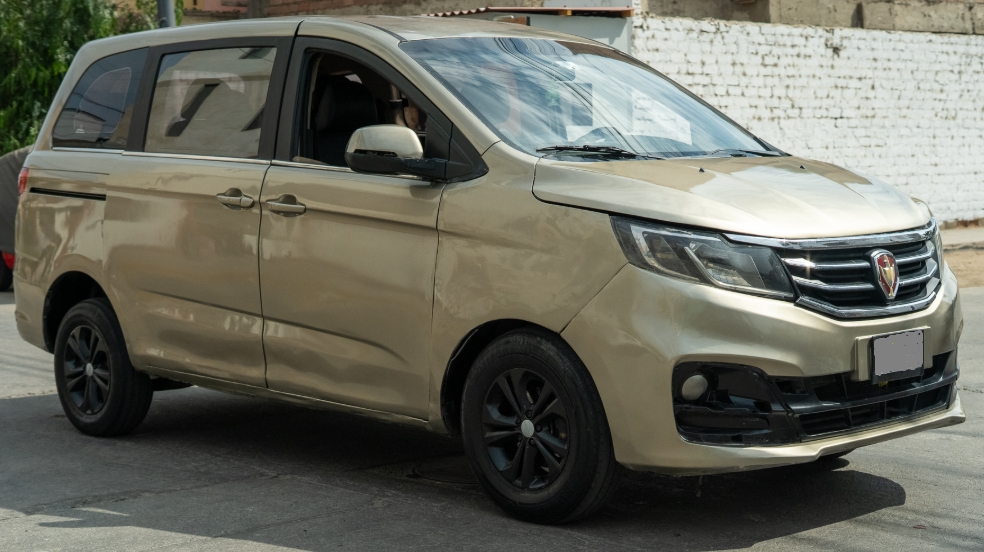
The Jinbei F50 represented a significant departure from the commercial vans and utility vehicles that had long defined the Jinbei brand. Introduced in 2017, the F50 was developed as a compact multi-purpose vehicle (MPV) aimed at families, private buyers, and small-business owners seeking a practical seven-seat vehicle with modern styling and passenger-car-like driving characteristics. Unlike many previous Jinbei products, which were derived from commercial van platforms, the F50 was designed specifically to compete in China’s growing affordable MPV segment.
Although its production run was relatively short compared with some of Jinbei’s long-lived commercial vehicles, the F50 marked an important chapter in the company’s history. It demonstrated Jinbei’s efforts to diversify beyond commercial transportation and enter the increasingly competitive family vehicle market. During its years in production, the F50 evolved through multiple trim levels, engine options, and equipment upgrades while maintaining its core mission of providing affordable seven-passenger transportation.
Origins of the Jinbei F50
By the mid-2010s, China’s automotive market was experiencing rapid growth in demand for compact MPVs. Families wanted vehicles that offered more passenger space than traditional sedans while remaining more affordable than larger sport utility vehicles. Manufacturers across China responded by introducing a wide variety of seven-seat MPVs.
Jinbei, historically known for commercial vehicles such as the Haise, Granse, and various cargo vans, recognized the opportunity to expand into this growing segment. The company began development of a front-wheel-drive family MPV that would combine passenger comfort with the practicality expected from a seven-seat vehicle.
The result was the Jinbei F50.
The vehicle made its public debut at the 2017 Shanghai Auto Show before entering the Chinese market later that year. The F50 immediately stood out from Jinbei’s traditional offerings thanks to its modern styling, front-wheel-drive layout, and passenger-focused design.
.
NO MORE dead batteries with this:

.
Production Years
The Jinbei F50 entered production in 2017.
Production timeline:
- 2017: Official debut and market launch
- 2018: Expansion of trim offerings and equipment updates
- 2019: Introduction of additional powertrain availability and EV-related variants in some market references
- 2020: Continued production with minor updates
- 2021: Final production year in most markets
Most automotive references identify the F50’s primary production run as spanning from 2017 through 2021. The vehicle remained largely unchanged mechanically during this period, receiving only modest updates rather than major redesigns.
Design and Development
The F50 was significantly different from earlier Jinbei products.
Key dimensions included:
- Wheelbase: 112.6 inches (2,860 mm)
- Length: 186.8 inches (4,745 mm)
- Width: 71.3 inches (1,810 mm)
- Height: 72.6 inches (1,845 mm)
These dimensions placed the vehicle firmly within the compact MPV category while providing generous interior space for seven passengers. The body featured a conventional five-door minivan design with a relatively upright profile intended to maximize headroom and cargo flexibility.
Unlike Jinbei’s traditional rear-wheel-drive commercial vans, the F50 utilized a front-engine, front-wheel-drive configuration. This layout improved interior packaging and made the vehicle more suitable for family use.
2017 Launch Models
The initial 2017 lineup was introduced with five trim levels, allowing buyers to choose between affordability and additional comfort features. Contemporary Chinese market information indicated that the vehicle was available in a range of equipment packages spanning from basic transportation to relatively well-equipped family models.
Standard
The entry-level Standard model focused on affordability.
Typical equipment included:
- Seven-passenger seating
- Cloth upholstery
- Manual air conditioning
- Power steering
- Basic audio system
- Steel wheels
Comfort
The Comfort trim added convenience-oriented features.
Common upgrades included:
- Improved interior materials
- Enhanced seating fabrics
- Additional storage compartments
- Upgraded audio equipment
Deluxe
The Deluxe version targeted families seeking additional comfort.
Features generally included:
- Improved interior trim
- Enhanced climate controls
- Additional convenience equipment
- Exterior styling enhancements
Luxury
The Luxury trim introduced higher-end features.
Equipment often included:
- Premium upholstery materials
- Enhanced infotainment systems
- Additional passenger comfort features
Premium
The Premium model represented the highest specification available at launch.
Features typically included:
- Comprehensive equipment package
- Enhanced appearance elements
- Additional convenience and safety technologies
The launch pricing ranged from approximately 59,900 yuan to 80,900 yuan, positioning the F50 as an affordable alternative to more expensive MPVs from larger manufacturers.
Powertrain Evolution
1.6-Liter BM16LB Engine
At launch, the primary engine was a naturally aspirated 1.6-liter four-cylinder gasoline engine.
Specifications included:
- 118 horsepower
- 154 lb-ft (209 Nm) of torque
- Five-speed manual transmission
- Front-wheel drive
This engine provided adequate performance for family transportation while maintaining reasonable operating costs. Official fuel consumption was reported at approximately 6.7 liters per 100 kilometers.
1.5-Liter BM15LC Engine
By 2018 and 2019, documentation also showed availability of a 1.5-liter gasoline engine in some versions of the F50 lineup.
Key specifications included:
- Approximately 111 horsepower
- Four-cylinder configuration
- Five-speed manual transmission
This powerplant served as a lower-cost alternative to the larger 1.6-liter engine.
Electric Vehicle References
Some market references listed EV derivatives or electric-related versions associated with the F50 platform during later production years. While these variants remained relatively uncommon compared with the gasoline-powered models, they reflected broader industry trends toward electrification within China’s automotive market.
2018 Model Year
The 2018 F50 largely carried over the successful formula established during the launch year.
Changes were relatively minor and focused on:
- Equipment packaging adjustments
- Interior refinements
- Availability of additional engine choices
- Expanded dealer options
The core design and mechanical specifications remained unchanged, reflecting Jinbei’s emphasis on affordability and reliability.
2019 Model Year
For 2019, the F50 continued with a familiar lineup structure.
Available models generally included:
- Standard
- Comfort
- Deluxe
- Luxury
- Premium
Engine choices expanded in certain markets to include both 1.5-liter and 1.6-liter gasoline options. The company also continued refining equipment levels to remain competitive in the crowded MPV segment.
2020 Model Year
The 2020 F50 represented one of the final stages of the model’s evolution.
By this point, the vehicle had established itself as a practical seven-seat MPV offering:
- Flexible seating arrangements
- Low ownership costs
- Modern styling
- Efficient gasoline engines
Sales continued through 2020 despite increasing competition from newer MPVs and crossover vehicles entering the Chinese market.
Interior and Practicality
One of the F50’s greatest strengths was its interior packaging.
Key advantages included:
- Seven-passenger seating capacity
- Three-row seating arrangement
- Flexible cargo space
- Elevated driving position
- Family-oriented cabin design
The vehicle’s MPV architecture allowed it to provide substantially more passenger room than similarly priced sedans while maintaining manageable exterior dimensions.
Market Position
The F50 competed against a variety of affordable Chinese MPVs.
Its primary strengths included:
- Competitive pricing
- Spacious interior
- Simple mechanical design
- Low operating costs
- Established Jinbei dealer network
For many buyers, these attributes made the F50 an attractive alternative to more expensive domestic and foreign competitors.
Legacy and Future Outlook
Although the Jinbei F50 never achieved the sales volume or longevity of some of Jinbei’s commercial vans, it remains an important vehicle in the company’s history. The model demonstrated Jinbei’s ability to move beyond traditional commercial transportation and compete in the passenger-vehicle market.
Its significance lies in several areas:
- One of Jinbei’s most family-focused vehicles
- Adoption of front-wheel-drive MPV architecture
- Expansion into the growing compact MPV segment
- Modernization of the Jinbei brand image
As China’s automotive market continues shifting toward crossovers, electrified vehicles, and advanced connectivity technologies, direct successors to vehicles such as the F50 are likely to incorporate hybrid or fully electric powertrains, enhanced safety systems, and greater digital integration.
Looking back, the Jinbei F50 represented a transitional vehicle for the company. It combined the practicality and value that had long characterized Jinbei products with the comfort and versatility increasingly demanded by modern families. While its production run was relatively brief, the F50 remains a noteworthy example of Jinbei’s efforts to evolve beyond its commercial-vehicle roots and participate in one of the fastest-growing segments of China’s automotive industry.