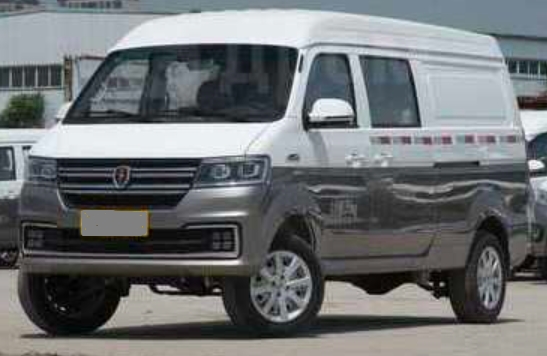
The Evolution of the Jinbei Haixing X30L: From Commercial Microvan to Global Utility Platform
The Jinbei Haixing X30L occupies an interesting place in the history of China’s commercial vehicle industry. Developed by Brilliance Auto under the Jinbei brand, the X30L was designed as an affordable, practical, and versatile microvan for small businesses, cargo operators, and family transportation. While it never achieved international recognition on the level of larger Chinese commercial vehicles, the model became notable for its adaptability, spawning numerous derivatives, electric variants, pickup trucks, and export models.
Introduced during a period of rapid growth in China’s light commercial vehicle market, the Jinbei Haixing X30L represented the evolution of the earlier Jinbei Haixing X30. With increased dimensions, improved passenger capacity, and expanded cargo capabilities, the X30L became one of the most versatile vehicles in the Jinbei lineup.
Origins of the Haixing Series
The Haixing family was developed by Brilliance Xinyuan Chongqing Auto, a subsidiary of Brilliance Auto. During the early 2010s, China’s demand for inexpensive commercial transportation grew rapidly as small businesses expanded throughout urban and rural markets.
To address this demand, Jinbei introduced the Haixing series of compact vans. The original Jinbei Haixing X30 debuted in August 2013 as the flagship model of the Haixing commercial vehicle range. Built on a rear-wheel-drive platform with a mid-mounted engine layout, the vehicle was designed to maximize cargo capacity while keeping manufacturing costs low.
As market demand shifted toward larger and more versatile vans, Jinbei began developing an extended version of the X30. This project would eventually become the Jinbei Haixing X30L, also marketed in some regions as the Jinbei Haise X30L or Jinbei New Haise.
.
NO MORE dead batteries with this:

.
Development of the Jinbei Haixing X30L
The Jinbei Haixing X30L was introduced during 2014 and entered the market as a 2015 model. It shared its basic architecture with the smaller Haixing X30 but featured a significantly longer wheelbase and larger body dimensions. The vehicle was intended to provide improved passenger space and greater cargo volume while retaining the affordability that had made the original X30 successful.
One of the most distinctive styling elements of the X30L was its front grille, which drew comparisons to BMW’s signature kidney grille design. This styling cue attracted attention because Brilliance Auto maintained a long-standing joint venture with BMW in China. Although the vehicle had no direct engineering connection to BMW passenger cars, the visual resemblance became a frequent talking point among automotive observers.
The X30L was designed primarily as a seven-seat passenger van but was also offered in cargo and utility configurations. Its flexibility made it attractive to small businesses, delivery operators, and fleet customers.
Production Years
The Jinbei Haixing X30L was produced from 2014 through 2018 in its original form. Sales officially began for the 2015 model year and continued until the vehicle was replaced by the facelifted Jinbei Haise S.
Production timeline:
- 2014: Initial production begins.
- 2015: Full market launch.
- 2016: Expanded engine lineup and commercial variants.
- 2017: Continued production with minor equipment updates.
- 2018: Final year before replacement by the facelifted Haise S.
Although production of the original X30L ended in 2018, its platform continued to live on through numerous derivative vehicles sold under Jinbei, SRM Shineray, Dongfeng, Farizon, and other brands.
Models and Trim Levels
One challenge when documenting the X30L is that Jinbei frequently adjusted equipment packages based on regional markets and commercial requirements. However, the principal trims and configurations remained relatively consistent.
2015 Jinbei Haixing X30L
The launch-year lineup consisted primarily of passenger-oriented models.
Available trims generally included:
- Standard
- Comfort
These models featured basic commercial-vehicle equipment with seating for up to seven occupants. The Comfort trim added upgraded interior materials, improved convenience features, and additional passenger amenities.
2016 Jinbei Haixing X30L
The 2016 lineup expanded significantly.
Available variants included:
- Standard Passenger Van
- Comfort Passenger Van
- Cargo Van Standard
- Cargo Van Comfort
Cargo-oriented models prioritized storage capacity and fleet utility, while passenger models focused on transporting families and business customers. A fully enclosed panel-van version also entered production during this period.
2017 Jinbei Haixing X30L
For 2017, Jinbei expanded engine availability.
Trim levels generally included:
- 1.3 Standard
- 1.3 Comfort
- 1.5 Standard
- 1.5 Comfort
The addition of a 1.5-liter engine provided improved performance and load-carrying capability for commercial operators.
2018 Jinbei Haixing X30L
The final production year largely carried over the previous lineup.
Available configurations included:
- Passenger Van Standard
- Passenger Van Comfort
- Cargo Van Standard
- Cargo Van Comfort
The vehicle remained competitively priced and continued serving commercial customers until the introduction of the successor model.
Powertrain Evolution
Throughout its production life, the X30L was offered with several gasoline engine options.
1.3-Liter DLCG12 Engine
The most common engine was a 1.3-liter inline-four gasoline unit producing approximately 86 horsepower.
Key features included:
- Four-cylinder configuration
- Five-speed manual transmission
- Rear-wheel drive
- Low operating costs
This engine became the foundation of the X30L lineup.
1.5-Liter SWC15M Engine
Introduced to improve performance, this engine provided additional power and torque for heavier loads and passenger applications.
1.5-Liter DLCG14 Engine
The most powerful factory engine offered approximately 109 horsepower and improved highway performance compared with the standard 1.3-liter engine.
All engines were paired with a five-speed manual transmission, reflecting the vehicle’s focus on affordability and simplicity.
Design and Practicality
The X30L was significantly larger than the original Haixing X30.
Major dimensions included:
- Wheelbase: 115.2 inches (2,925 mm)
- Length: 177.0 inches (4,495 mm)
- Width: 66.1 inches (1,680 mm)
- Height: 78.3 inches (1,990 mm)
The extended wheelbase improved passenger comfort while providing substantial cargo space. The vehicle’s boxy shape maximized interior volume, making it suitable for commercial transport, deliveries, and shuttle services.
A seven-seat layout was standard in passenger versions, while cargo variants removed rear seating to increase storage capacity.
Derivatives and Global Influence
One of the most remarkable aspects of the X30L was the number of derivative vehicles created from its platform.
These included:
- Jinbei Haise S
- Jinbei T30 pickup
- Jinbei T32 crew-cab pickup
- Jinbei T50 heavy-duty pickup
- Jinbei T52 heavy-duty pickup
- SRM Shineray X30L
- Dongfeng EM13 electric van
- Farizon E5L electric van
- Ankai T3 electric van
- Esemka Bima pickup (Indonesia)
- Jeis Mobility ET Van (South Korea)
The platform’s adaptability helped extend its life far beyond the production run of the original X30L.
Market Performance
The X30L competed in China’s highly competitive microvan segment, facing rivals from Wuling, Changan, and Dongfeng.
Its strengths included:
- Low purchase price
- Flexible interior configurations
- Proven mechanical components
- Large cargo capacity
- Simple maintenance requirements
These qualities made it popular among small businesses and independent operators throughout China. While it never dominated the market, it achieved steady sales and became a familiar sight in commercial fleets.
Legacy and Future Outlook
The original Jinbei Haixing X30L ended production in 2018, but its influence remains visible today. The platform evolved into newer products under Jinbei and SRM branding, while electric versions continue to be produced in various forms.
The vehicle’s greatest achievement may be its versatility. Few Chinese commercial vehicles have generated as many derivatives across passenger, cargo, pickup, and electric segments. This adaptability allowed the platform to remain relevant long after the original model left production.
Looking back, the Jinbei Haixing X30L represents an important chapter in China’s commercial vehicle development. It successfully bridged the gap between basic microvans and more sophisticated utility vehicles, helping establish a foundation for later generations of commercial and electric transportation. While the original X30L is no longer in production, its engineering legacy continues through numerous descendants still operating around the world today.