The Evolution of the Kuayue Xinbao T3: Development, Variants, and Commercial Expansion
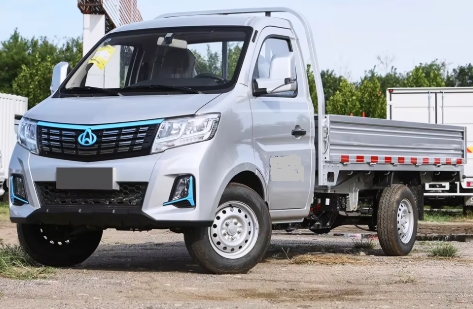
The Kuayue Xinbao T3 is a Chinese light commercial vehicle (LCV) developed and produced by Chongqing Kuayue Automobile, a subsidiary under the Changan Automobile commercial vehicle ecosystem. Introduced in the late 2010s, the Xinbao T3 was designed as a practical, low-cost work truck aimed at small businesses, rural logistics operators, and municipal transport users.
Unlike passenger vehicles that evolve through clearly defined generations, the Xinbao T3 follows a continuously updated commercial platform strategy. This means that body styles, engines, and trims are frequently revised without a full redesign, allowing the model to remain competitive in China’s highly price-sensitive micro-truck and light-duty pickup market.
Production of the Xinbao T3 is generally documented beginning in 2018, continuing through the present day with ongoing updates in gasoline and electric versions.
Origins and Development Background (2018 Launch)
The Kuayue Xinbao T3 was introduced around 2018 as part of Changan Kuayue’s expansion into modular light trucks. It was developed from a simple ladder-frame utility architecture shared across several Kuayue commercial products.
At launch, the Xinbao T3 emphasized:
- Low purchase cost
- Easy maintenance
- High payload flexibility
- Multiple cargo body configurations
Early production models were closely aligned with China’s “micro-truck” category, which serves small-scale logistics, construction, and agricultural transport needs.
.
MANY auto lovers not only spend time in their garages to tinker on their autos, but have other projects going on in there as well. Wood working is a popular pastime for the creative type of individual. Not sure what to make next? Or thinking about getting into this kind of hobby? There’s lots of possibilities… Here’s some of them…

.
Early Production Phase (2018–2020): Foundational Variants
The first generation of Xinbao T3 models (2018–2020) established the basic structure of the lineup. These vehicles were typically powered by small-displacement naturally aspirated gasoline engines.
Common early engines included:
- 1.2-liter inline-four gasoline engine (DK12 family)
- Later 1.2-liter variants using LJ469Q-based engines
These engines were paired almost exclusively with:
- Five-speed manual transmissions
Body and configuration types (early phase):
- Single-cab pickup (basic cargo transport)
- Double-cab pickup (mixed passenger and cargo use)
- Flatbed stake truck
- Enclosed cargo box variants
Wheelbase and cargo length varied depending on configuration, with extended versions designed for higher payload capacity.
Early trim structure:
Instead of luxury trims, early Xinbao T3 models used functional classifications:
- Base utility trim (fleet-focused, minimal equipment)
- Standard cargo trim (slightly improved comfort)
- Reinforced payload trim (heavy-duty suspension and chassis tuning)
Expansion Phase (2021–2022): Diversification of Configurations
By 2021, the Xinbao T3 lineup expanded significantly, reflecting increased demand for flexible commercial vehicles in China’s regional logistics sector.
New configurations introduced during this period included:
- Longer cargo box variants (over 2.7 to 3.0 meters depending on configuration)
- More double-cab options for mixed-use operators
- Improved payload capacity versions with reinforced frames
Engine expansion:
A key update during this phase was the introduction of:
- 1.6-liter naturally aspirated gasoline engine (DAM16KR)
This engine delivered higher torque output than the earlier 1.2-liter units, improving performance under load.
Updated trim structure (2021–2022):
While still utility-focused, trims became more formally structured:
- Foundation Edition: Entry-level fleet model
- Comfort Edition: Improved seating and cabin features
- Luxury Edition (commercial use only): Higher-spec cargo configurations with reinforced suspension
Despite the naming, “luxury” in this context refers to improved utility features rather than consumer luxury amenities.
Electrification and Modern Updates (2023–2025)
By the mid-2020s, Kuayue began introducing electrified versions of the Xinbao T3 to align with China’s broader commercial vehicle electrification policies.
Battery Electric (EV) Variant (Introduced 2024)
In 2024, an all-electric Xinbao T3 variant was launched.
Key characteristics include:
- Battery electric drivetrain (BEV)
- Single-speed transmission
- Stake-bed and van-style cargo bodies
The EV version is primarily aimed at:
- Urban delivery fleets
- Municipal service vehicles
- Short-distance logistics operators
2024–2025 ICE Updates
Even with electrification, gasoline versions continued to evolve.
By 2025, newer gasoline models included:
- 1.4-liter naturally aspirated engine (JL473Q3)
- Continued availability of 1.2-liter base engines
- Five-speed manual transmission across nearly all trims
These updates focused on:
- Improved fuel efficiency
- Compliance with stricter emissions regulations
- Slight increases in torque and drivability
2025 trim structure:
The modern Xinbao T3 lineup is generally divided into:
- Super Value Edition: Entry-level cost-focused configuration
- Comfort Edition: Mid-tier usability upgrades
- Flagship / Plus Edition: Higher-capacity cargo or van variants
These trims vary mainly by cargo body length, suspension strength, and interior refinement rather than luxury features.
Vehicle Architecture and Engineering Philosophy
The Xinbao T3 follows a traditional light-truck layout:
- Front-mounted engine
- Rear-wheel drive
- Ladder-frame chassis
This architecture is chosen for:
- Durability under heavy loads
- Easy repair in rural environments
- Compatibility with multiple body types
The design philosophy prioritizes:
- Function over comfort
- Low-cost ownership
- Modular adaptability
Unlike passenger vehicles, infotainment and interior refinement are secondary to payload capacity and structural strength.
Market Role and Usage
The Xinbao T3 occupies a critical role in China’s lower-cost commercial transport sector. Its primary use cases include:
- Agricultural goods transport
- Small business logistics
- Construction material hauling
- Urban last-mile delivery
- Municipal utility fleets
Its popularity is driven by:
- Low purchase price
- Simple mechanical design
- Wide availability of spare parts
- High adaptability to local modifications
In many rural and semi-urban regions, vehicles like the Xinbao T3 function as essential economic tools rather than consumer goods.
Relationship to Other Kuayue Models
The Xinbao T3 is part of a broader Kuayue commercial ecosystem that includes microvans, pickups, and EV utility vehicles. It shares engineering philosophy with other Kuayue platforms that emphasize:
- Shared chassis designs
- Modular cargo bodies
- Cross-compatibility of engines and transmissions
This platform-sharing strategy allows Kuayue to rapidly update models without full generational redesigns.
Future Outlook
The future of the Kuayue Xinbao T3 is expected to follow three major trends:
1. Increased Electrification
The EV version introduced in 2024 is likely the beginning of a broader transition. Future updates may include:
- Higher-range battery systems
- Faster charging capability
- Expanded EV-only trim availability
2. Gradual Phase-Out of Older Engines
Smaller displacement gasoline engines (especially 1.2-liter variants) may gradually be replaced by:
- 1.4-liter or 1.6-liter standardized engines
- More efficient emissions-compliant designs
3. Platform Simplification
As the model matures, Kuayue may:
- Reduce overlapping trim names
- Consolidate body styles into fewer standardized modules
- Streamline production for export markets
4. Export Potential
Like many Chinese light commercial vehicles, the Xinbao T3 may expand into:
- Southeast Asian markets
- African logistics fleets
- Latin American small business transport sectors
Its simplicity and low operating cost make it attractive in developing commercial vehicle markets.
The Kuayue Xinbao T3 has evolved from a basic 2018-era micro-truck into a diversified light commercial platform with gasoline and electric powertrains, multiple cargo body styles, and expanding trim structures. While it does not follow traditional generational redesigns, its continuous updates reflect a flexible engineering strategy aimed at meeting the practical needs of China’s vast small-business and logistics economy.
From its early 1.2-liter gasoline workhorses to its modern EV variants, the Xinbao T3 remains focused on a consistent mission: providing affordable, durable, and adaptable transport for commercial users across rapidly changing markets.