The Evolution of the Kuayue Kuayuewang X1 Through X5: Development, Variants, and Commercial Utility
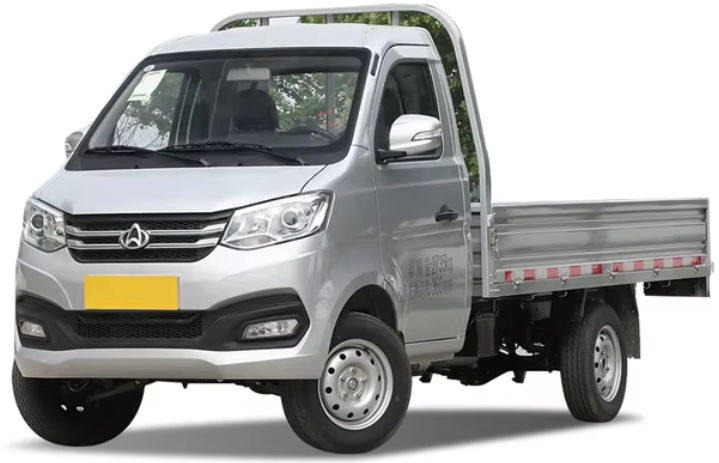
The Kuayue Kuayuewang X1 through X5 lineup is part of China’s rapidly expanding light commercial vehicle (LCV) segment, produced under the Kuayue sub-brand of Changan-affiliated Chongqing Kuayue Automobile. These vehicles are designed primarily for cost-effective cargo transport, rural logistics, small business operations, and light-duty construction use rather than personal passenger comfort.
Unlike global SUV nameplates with clearly defined generations, the Kuayuewang series evolves in a more modular and utilitarian way. The “X1 through X5” naming convention generally reflects body style, payload capacity, and configuration differences rather than strict generational redesigns. The most consistent and widely documented members of this family are the Kuayuewang X5 and related variants, while the X1–X4 designations are used more loosely across microvan and pickup-based derivatives in domestic markets.
Origins and Brand Background (Early 2010s)
The Kuayue brand traces its commercial identity to Chongqing Kuayue Automobile Co., Ltd., a Changan Automobile affiliate focused on small commercial vehicles. The company originally developed vehicles under earlier “Chana” and “Xinbao” naming structures before transitioning into the Kuayue identity in the mid-2010s.
One of the foundational vehicles tied to the X-series lineup is the Kuayue Chana V5, which began production in the early 2010s and later served as the basis for the Kuayuewang X5 truck variant. This platform-sharing approach became central to the entire X-series philosophy, where multiple body styles—van, pickup, and chassis cab—are derived from shared architecture.
.
MANY auto lovers not only spend time in their garages to tinker on their autos, but have other projects going on in there as well. Wood working is a popular pastime for the creative type of individual. Not sure what to make next? Or thinking about getting into this kind of hobby? There’s lots of possibilities… Here’s some of them…

.
Kuayuewang X1–X4: Light Commercial Variants (Approximate Development Era: Mid-2010s–Present)
While the X5 is the most clearly documented model, the Kuayuewang X1 through X4 designations are generally used in China’s light truck ecosystem to describe smaller or less heavily equipped derivatives of the same platform family.
Kuayuewang X1 (Entry-Level Micro Utility Model)
The X1 typically represents the most basic configuration in the lineup. It is generally associated with:
- Compact cargo van layouts
- Simplified interior and minimal comfort features
- Short wheelbase variants of the Kuayue commercial platform
Production timing is not always independently listed, but it is generally grouped within the broader Kuayue microvan production era beginning in the early-to-mid 2010s, evolving alongside the Chana V5 platform.
Kuayuewang X2 (Light Cargo Expansion Variant)
The X2 designation is typically used for:
- Slightly extended wheelbase configurations
- Improved payload capacity over the X1
- Optional double-cab or small pickup conversions in some regional listings
This version reflects growing demand in China’s rural logistics sector, where vehicles must balance cargo space with affordability.
Kuayuewang X3 (Multi-Purpose Commercial Variant)
The X3 is commonly associated with:
- More flexible cargo-body configurations
- Flatbed pickup or box truck conversions
- Optional reinforced suspension for heavier loads
This tier reflects the expansion of Kuayue’s modular approach, where a single chassis supports multiple commercial needs.
Kuayuewang X4 (Heavy-Light Hybrid Utility Variant)
The X4 generally sits just below the X5 in capability and is often described as:
- Heavy-duty light truck configuration
- Long-wheelbase cargo bed options
- Increased gross vehicle weight capacity compared to X1–X3
Across the X1–X4 range, trim levels are typically not luxury-based but instead functional tiers such as:
- Base utility trim (minimal equipment, manual-only configurations)
- Standard commercial trim (basic comfort upgrades like improved seating and ventilation)
- Heavy-duty or reinforced trim (suspension and chassis upgrades for load capacity)
Because these vehicles are designed for commercial use, “trim levels” are more accurately defined by mechanical configuration rather than infotainment or interior differentiation.
Kuayuewang X5: The Core Documented Model (2013–Present)
The Kuayuewang X5 is the most clearly defined and widely documented model in the X-series family. It is a truck variant derived from the Kuayue Chana V5 platform and has been in production since approximately 2013, continuing to the present day.
Early Production (2013–2016)
The initial version of the Kuayuewang X5 was closely tied to the Chana V5 microvan architecture and featured:
- Single cab pickup configuration
- Double cab pickup configuration
- Multiple cargo bed types including drop-side and enclosed box variants
Engine options typically included:
- 1.2-liter inline-four gasoline engine
- 1.5-liter inline-four gasoline engine
Transmission was primarily:
- Five-speed manual
These early models were designed for affordability and ease of maintenance, targeting small business owners and rural transport operators.
Mid-Cycle Refresh (2017 Facelift)
In 2017, the Kuayuewang X5 received a significant facelift. This update introduced:
- Redesigned front grille and bumper
- Simplified, more modern exterior styling
- Improved cargo bed durability options
The facelift did not fundamentally change the mechanical platform but helped the model remain competitive in China’s rapidly evolving micro-truck market.
Late 2010s–Present Evolution (2018–2026)
From the late 2010s onward, the Kuayuewang X5 continued in production with incremental improvements rather than full redesigns. Key developments include:
- Expanded availability of long-wheelbase “heavy-duty” variants
- Continued refinement of gasoline engines for fuel efficiency and durability
- Broader adoption of dual-cab layouts for mixed passenger-cargo use
- Increased export-style marketing under simplified naming conventions
Unlike passenger vehicles, updates are typically introduced gradually and may vary by region or dealership specification.
Trim Levels and Configurations (X1–X5 Family Overview)
Across the entire Kuayuewang X-series, trim levels are functionally structured rather than luxury-oriented. The most consistent categories include:
Base Utility Trim
- Manual transmission standard
- Minimal interior features
- Focus on low purchase cost and durability
Standard Commercial Trim
- Slight interior comfort improvements
- Optional infotainment or upgraded instrument cluster (depending on year)
- Wider availability across X2–X5 variants
Heavy-Duty / Reinforced Trim
- Strengthened suspension
- Higher payload ratings
- Long-wheelbase configurations
- Most commonly associated with X4 and X5 models
Body Style Variants Across the Series
- Single cab pickup (most common in X5)
- Double cab pickup
- Enclosed cargo box truck
- Flatbed / drop-side cargo bed configurations
This modular approach allows Kuayue to serve multiple commercial sectors without developing entirely separate vehicle platforms.
Market Position and Role in China’s Economy
The Kuayuewang X-series occupies a crucial position in China’s lower-cost logistics ecosystem. These vehicles are widely used for:
- Rural agricultural transport
- Small business deliveries
- Construction material hauling
- Municipal utility fleets
Their appeal comes from:
- Low purchase cost
- Simple mechanical systems
- Easy repairability
- Flexible cargo configurations
Unlike passenger-oriented SUVs or MPVs, the X-series prioritizes function over comfort, making it a backbone vehicle in lower-tier cities and rural regions.
Future Outlook
The future of the Kuayuewang X1–X5 lineup is expected to follow broader trends in China’s commercial vehicle industry:
1. Gradual Electrification
Smaller commercial vehicles are increasingly shifting toward:
- Electric microtrucks
- Battery-assisted logistics vans
- CNG and hybrid commercial variants
Future X-series models may adopt electrified versions of the existing platform rather than full redesigns.
2. Platform Consolidation
Changan and Kuayue are likely to:
- Reduce overlapping X1–X4 naming complexity
- Consolidate models into fewer but more configurable platforms
- Standardize cab and cargo modules
3. Export Expansion
There is growing potential for:
- Southeast Asian export markets
- African utility vehicle markets
- Latin American small business fleets
The simplicity and affordability of the X5 platform in particular make it suitable for international emerging markets.
The Kuayue Kuayuewang X1 through X5 series represents a practical and evolving family of Chinese light commercial vehicles designed for utility rather than luxury. While the X5 is the most clearly defined and long-running model—produced since approximately 2013—the broader X1–X4 designations reflect a flexible system of body styles, payload capacities, and commercial configurations rather than strict generational changes.
Across more than a decade of development, the X-series has remained consistent in its mission: providing affordable, durable, and adaptable transport solutions for China’s vast small-business and logistics economy. As electrification and platform consolidation advance, the series is expected to evolve further while maintaining its core identity as a work-focused vehicle family.