The Evolution of the Linktour M8 and E-M8: From Traditional MPV to Electric Family Transport
The Linktour M8 and its electric counterpart, the E-M8, represent an important chapter in the development of China’s modern multi-purpose vehicle (MPV) market. Developed under the Linktour brand, the M8 was designed to provide affordable transportation for large families, commercial operators, shuttle services, and fleet customers. Over time, the model evolved from a conventional internal-combustion MPV into a battery-electric vehicle that reflects the rapid electrification of China’s automotive industry.
Although the Linktour M8 remains a relatively recent addition to the Chinese vehicle market, its development demonstrates how manufacturers have adapted traditional passenger van concepts to meet changing consumer expectations and government policies favoring new-energy vehicles.
Origins of the Linktour Brand
Linktour was established as a Chinese automotive brand focused on practical family vehicles and MPVs. The company sought to compete in a market dominated by affordable transportation solutions, particularly vehicles capable of carrying seven to nine passengers.
During the late 2010s and early 2020s, China’s MPV market experienced significant growth as consumers increasingly sought spacious vehicles that could accommodate larger families and commercial transportation needs. Linktour responded by developing the M8, a full-size MPV designed to maximize interior space while maintaining competitive pricing.
The M8 became one of the brand’s flagship products and laid the foundation for the future E-M8 electric variant. The two vehicles share a common body structure and design philosophy, although their powertrains differ significantly.
.
MANY auto lovers not only spend time in their garages to tinker on their autos, but have other projects going on in there as well. Wood working is a popular pastime for the creative type of individual. Not sure what to make next? Or thinking about getting into this kind of hobby? There’s lots of possibilities… Here’s some of them…

.
Development of the Linktour M8
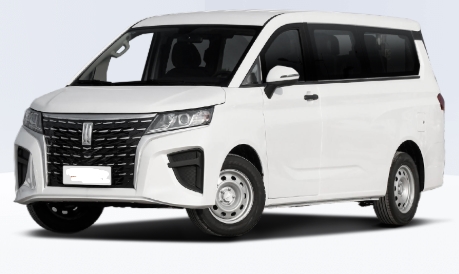
The original Linktour M8 was introduced as a conventionally powered MPV intended for both passenger and commercial applications. The vehicle utilized a large van-like body with a high roofline, long wheelbase, and multiple seating configurations.
The M8 was designed to compete in China’s growing market for affordable people movers. Key priorities included:
- Large passenger capacity
- Flexible seating arrangements
- Low operating costs
- Practical cargo capability
- Commercial usability
The vehicle’s overall dimensions placed it among the larger MPVs available in the domestic market, making it suitable for family transportation, hotel shuttles, airport services, and municipal fleet use.
Throughout its production life, the M8 remained focused on practicality rather than luxury, emphasizing value and interior room over premium features.
Early M8 Models and Configurations
The gasoline-powered M8 was offered in several seating layouts depending on market requirements and customer needs.
Common configurations included:
- Seven-seat versions
- Eight-seat versions
- Nine-seat versions
Commercial operators often favored higher-capacity seating arrangements, while private buyers tended to select configurations prioritizing passenger comfort.
Trim structures varied by region and production year, but most M8 variants followed a traditional hierarchy consisting of:
Standard Model
The entry-level version emphasized affordability and functionality.
Features generally included:
- Manual climate control
- Basic infotainment system
- Fabric seating
- Commercial-grade interior materials
Comfort Model
Mid-level trims added additional convenience features and improved cabin materials.
Typical upgrades included:
- Enhanced audio systems
- Improved interior finishes
- Additional storage solutions
- Passenger comfort enhancements
Premium Model
The highest specifications focused on family buyers and shuttle operators seeking greater comfort.
Available features often included:
- Improved seating materials
- Larger infotainment displays
- Enhanced climate-control systems
- Additional convenience equipment
Specific trim names varied according to production year and market destination.
The Shift Toward Electrification
By the early 2020s, China’s automotive industry was undergoing a major transformation as government incentives and environmental regulations encouraged manufacturers to develop electric vehicles.
Like many Chinese brands, Linktour recognized that electrification would play a central role in the future of passenger transportation. As a result, development began on an electric version of the M8.
The goal was straightforward: retain the practicality and spaciousness of the conventional M8 while eliminating tailpipe emissions and reducing operating costs.
The resulting vehicle became known as the Linktour E-M8.
Introduction of the Linktour E-M8 (2025)
The Linktour E-M8 entered the market for the 2025 model year as a fully electric MPV. Unlike the gasoline-powered M8, the E-M8 utilized a dedicated battery-electric powertrain designed for urban and regional transportation.
The E-M8 retained much of the original M8’s body structure and dimensions.
Key measurements included:
- Length: 206.3 inches (5,240 mm)
- Width: 73.6 inches (1,870 mm)
- Height: 76.8 inches (1,950 mm)
- Wheelbase: 126.0 inches (3,200 mm)
These dimensions allowed the E-M8 to offer substantial passenger and cargo capacity while maintaining the familiar proportions of a traditional MPV.
2025 E-M8 Trim Levels
For its launch year, the E-M8 was offered in two primary configurations.
E-M8 320 km RWD
This version served as the entry-level model within the electric lineup.
Specifications included:
- Rear-wheel drive
- Permanent magnet synchronous electric motor
- 60 kW (80 horsepower)
- 220 Nm (162 lb-ft) of torque
- 50 kWh lithium iron phosphate battery
- CLTC driving range of 199 miles (320 kilometers)
- Seating for eight passengers
The 320 km model was aimed at urban transportation operators and customers seeking a lower purchase price.
E-M8 401 km RWD
The higher-specification E-M8 expanded the vehicle’s capability through a larger battery and more powerful motor.
Specifications included:
- Rear-wheel drive
- Permanent magnet synchronous electric motor
- 90 kW (121 horsepower)
- 270 Nm (199 lb-ft) of torque
- 65 kWh lithium iron phosphate battery
- CLTC driving range of 249 miles (401 kilometers)
- Seating for eight passengers
This version was intended for operators requiring greater daily range and improved performance.
Design Philosophy
One of the defining characteristics of both the M8 and E-M8 has been their focus on interior space. Unlike crossover SUVs that prioritize styling, the M8 family emphasizes maximum usability.
Design features include:
- Tall roofline
- Large side-opening doors
- Flexible passenger accommodation
- Flat load floor
- High seating position
- Spacious cargo area
These attributes make the vehicles particularly attractive to shuttle operators, transportation companies, and large families.
The E-M8 additionally benefits from the packaging advantages of an electric drivetrain, which reduces mechanical complexity and improves overall efficiency.
Market Performance
The E-M8 gradually gained visibility during 2025 as demand for affordable electric MPVs increased. Industry sales data indicate that the model achieved measurable success within China’s competitive MPV sector, particularly among fleet and commercial buyers.
Its combination of low operating costs, large passenger capacity, and relatively simple engineering allowed it to compete against both traditional gasoline-powered MPVs and newer electric alternatives.
The vehicle’s lithium iron phosphate battery technology also appealed to fleet operators due to its durability, thermal stability, and lower cost compared with some alternative battery chemistries.
Production Timeline
Linktour M8
- Production began during the early 2020s
- Conventional internal-combustion MPV
- Multiple passenger configurations
- Standard, Comfort, and Premium equipment grades depending on market
Linktour E-M8
- Introduced for the 2025 model year
- Fully electric MPV
- Available in 320 km RWD and 401 km RWD variants
- Eight-passenger seating configuration
- Lithium iron phosphate battery technology
Future Outlook
As of 2026, the future of the M8 family appears increasingly tied to electrification. Market trends suggest that the E-M8 will likely become the centerpiece of the lineup as governments and fleet operators continue transitioning toward electric transportation.
Potential future developments may include:
- Larger battery packs
- Faster charging systems
- Increased driving range
- Additional seating configurations
- Enhanced driver-assistance technologies
- Expanded export availability
The growing popularity of electric commercial and family transportation vehicles in China suggests that future generations of the E-M8 could receive substantial technological upgrades while maintaining the spacious and practical character that defines the model.
The Linktour M8 and E-M8 illustrate the evolution of China’s MPV market from traditional gasoline-powered transportation toward modern electric mobility. The original M8 established itself as a practical people mover focused on affordability and passenger capacity. The introduction of the E-M8 in 2025 marked a significant milestone, bringing electric propulsion to the platform while preserving the spacious interior and versatile design that made the M8 attractive to families and fleet operators.
Although still early in its lifecycle, the E-M8 demonstrates how Chinese manufacturers are adapting established vehicle concepts to meet the demands of an increasingly electrified automotive landscape. With continued development and expanding market acceptance, the M8 and E-M8 are likely to remain important members of the Linktour product portfolio for years to come.