The Evolution of the Trumpchi S7: GAC’s Intelligent Hybrid SUV Platform
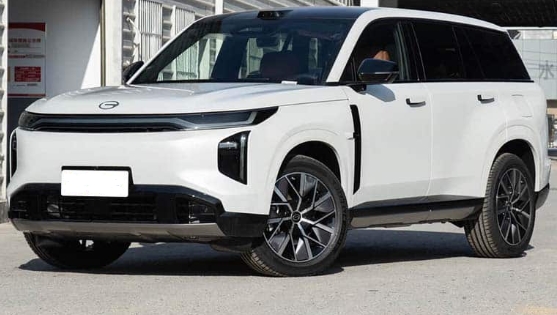
The Trumpchi S7 is one of the newest additions to GAC Motor’s rapidly expanding lineup of electrified SUVs under the Trumpchi brand. Introduced in the mid-2020s, the S7 reflects the company’s strategic shift toward intelligent plug-in hybrid vehicles that combine long electric range, advanced driver assistance systems, and premium mid-size SUV practicality.
Positioned between mainstream family SUVs and high-end intelligent electric vehicles, the S7 plays an important role in GAC’s “Xiangwang” (literally “Aspiration” or “Desire”) product family, which emphasizes smart driving technologies and premium electrification. Since its debut, the S7 has been marketed primarily in China, where it competes in one of the world’s most competitive new-energy SUV segments.
Origins and Development
The Trumpchi brand, a division of the GAC Group, has been active since 2010 and initially focused on gasoline-powered sedans and SUVs. Over time, it expanded into hybrid and electric models, especially as China’s automotive market shifted rapidly toward new-energy vehicles.
The S7 was developed as part of GAC’s new EV+ platform strategy, which integrates:
- plug-in hybrid systems,
- advanced electronic architecture,
- and high-level driver assistance technology.
The model was officially unveiled at the Guangzhou Auto Show in November 2024 and entered pre-sales shortly afterward. Full market launch followed in March 2025.
Production began in 2025 and continues today.
Production years:
- 2025–present
The S7 effectively replaces or evolves from earlier mid-size Trumpchi SUVs such as the GS7, bringing a major leap in electrification and software integration.
.

.
Platform and Engineering
The Trumpchi S7 is built on GAC’s EV+ hybrid architecture, designed specifically for plug-in hybrid SUVs with advanced electronic systems.
Key engineering features include:
- front-engine layout
- front-wheel drive or all-wheel drive configurations
- dual-motor hybrid capability in higher trims
- lithium iron phosphate battery packs (LFP)
- high-efficiency turbocharged gasoline engine
The powertrain typically combines a 1.5-liter turbocharged internal combustion engine with one or two electric motors depending on trim level.
This setup prioritizes:
- fuel efficiency in hybrid mode
- strong electric-only driving capability
- and smooth long-distance performance
Dimensions and Market Position
The S7 is classified as a mid-size crossover SUV with proportions that place it near the upper end of its category.
Key dimensions:
- Length: about 193 inches (4,900 mm)
- Width: about 76.8 inches (1,950 mm)
- Height: about 70 inches (1,780 mm)
- Wheelbase: about 113.4 inches (2,880 mm)
It is designed as a five-seat SUV with a focus on rear passenger comfort and cargo versatility.
This size positions the S7 directly against other Chinese plug-in hybrid SUVs that emphasize family usability and long driving range.
Powertrain and Performance Evolution
The Trumpchi S7 is primarily offered as a plug-in hybrid electric vehicle (PHEV). Across its variants, it uses different combinations of battery capacity, motor output, and drivetrain configuration.
Core Hybrid System
All versions share a similar foundation:
- 1.5-liter turbocharged gasoline engine
- electric motor(s)
- hybrid transmission system
- large traction battery pack
Battery capacity varies by configuration, with packs around 21.3 kWh and 36.3 kWh being used in production models.
Performance Outputs
Depending on trim, the S7 offers:
- combined output up to roughly 335–500 horsepower in higher configurations (market-dependent tuning)
- torque figures exceeding 600 Nm in top all-wheel-drive versions
- 0–60 mph acceleration in the mid–five-second range for performance variants
Range Capability
One of the S7’s strongest selling points is its long range:
- electric-only range up to about 127 miles (205 km) under CLTC testing
- total combined range exceeding 620 miles (1,000 km+) depending on configuration
This makes it particularly competitive for buyers seeking EV-like driving with gasoline backup for long trips.
Trim Levels and Model Variants
Since its launch in 2025, the Trumpchi S7 has been offered in a wide range of trims focusing on battery range, drivetrain type, and intelligent driving hardware.
2025 Launch Trim Structure
The initial lineup included multiple versions under two main configurations (Max and Ultra), along with advanced driver-assistance packages.
Common trims include:
- Pro+ Edition
- Max Edition
- Max Intelligent Driver Edition
- Pro+ LiDAR Edition
- Ultra All-Wheel Drive
- Max LiDAR Edition
- Ultra AWD LiDAR Edition
These trims differ mainly in:
- electric range calibration
- sensor and LiDAR equipment
- drivetrain (front-wheel drive vs. all-wheel drive)
- software-enabled driver assistance capabilities
Technology and Intelligent Driving Systems
One of the defining features of the S7 is its integration of advanced driver assistance and digital cockpit technology.
Key systems include:
- ADiGO intelligent driving suite
- LiDAR-based autonomous driving hardware (in selected trims)
- NVIDIA-based computing platform for assisted driving functions
These systems enable:
- adaptive cruise control
- lane centering
- highway assisted driving
- automated parking features
- semi-autonomous navigation support in select environments
The S7 reflects GAC’s broader push toward “software-defined vehicles,” where driving experience is heavily influenced by AI systems and over-the-air updates.
Interior and Comfort Features
The S7’s interior is designed around a modern digital cockpit philosophy. Across most trims, it includes:
- large central infotainment display
- fully digital instrument cluster
- head-up display (HUD)
- wireless smartphone integration
- voice-controlled AI assistant
Higher trims add:
- premium audio systems with Dolby Atmos support
- multi-zone climate control
- enhanced ambient lighting systems
- leather upholstery and upgraded seating materials
- advanced rear-seat comfort configurations
The design emphasizes a minimalist dashboard layout, reflecting broader trends in Chinese new-energy vehicle design.
Market Reception and Sales Performance
The S7 entered a highly competitive segment in China, where plug-in hybrid SUVs are rapidly growing in popularity.
Early market performance has been strong, with reported sales exceeding 13,000 units in China in its first full year of production.
Consumer response has generally highlighted:
- strong electric range for a mid-size SUV
- competitive pricing relative to rivals
- advanced technology offerings
- spacious interior layout
At the same time, buyers in this segment often compare the S7 with other technology-heavy SUVs from domestic competitors, making software performance and brand perception key factors in long-term success.
Relationship to Other GAC Models
The S7 is closely related to:
- the larger Trumpchi S9 flagship SUV
- GAC’s EV+ hybrid platform family
- earlier GS7 mid-size SUV architecture
It acts as a technological bridge between mainstream Trumpchi SUVs and the brand’s more premium intelligent models.
Future Outlook
The future of the Trumpchi S7 is likely to follow broader trends in China’s electrified SUV market. Expected developments include:
- expanded all-electric driving range through battery upgrades
- improved autonomous driving capabilities with enhanced LiDAR systems
- additional trim differentiation focused on software features
- potential export versions under the GAC brand name
As China continues to lead global adoption of plug-in hybrid SUVs, the S7 is positioned as part of a long-term strategy where hybrid vehicles serve as a transition technology between combustion engines and fully electric platforms.
The Trumpchi S7 represents a significant step in GAC’s evolution from a traditional automaker into a software-driven, electrified mobility company. Introduced in 2025 and still in its early production cycle, it combines long-range hybrid performance, advanced driver assistance systems, and modern SUV practicality.
While still new to the market, the S7 already reflects the direction of China’s automotive industry: intelligent, electrified, and increasingly focused on integrated software ecosystems rather than purely mechanical performance.