The Evolution of the Xiaohu FEV: An Affordable Electric City Car for a New Generation
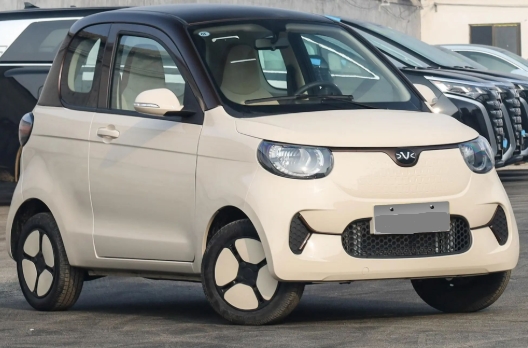
The Xiaohu FEV (Family Electric Vehicle) is a battery-electric city car produced by Beijing Henrey Automobile Technology. Introduced in late 2021 for the 2022 model year, the Xiaohu FEV was developed as an affordable urban electric vehicle aimed at first-time buyers, commuters, and families seeking inexpensive zero-emission transportation. Designed with simplicity, practicality, and low operating costs in mind, the vehicle entered one of China’s fastest-growing automotive segments, competing against popular micro EVs such as the Wuling Hongguang Mini EV and Chery QQ Ice Cream.
Although still early in its production life, the Xiaohu FEV has undergone several updates, including expanded body styles, improved battery options, and new equipment levels. It has also been exported to several international markets under different brand names, demonstrating the flexibility of its design and the growing global demand for affordable electric vehicles.
Company Background
Beijing Henrey Automobile Technology developed the Xiaohu FEV as part of a collaboration involving Dongfeng Motor Corporation, Zhengzhou Nissan, and Beijing Henrey Automobile Technology. The project was created to address increasing demand for compact electric vehicles capable of serving urban transportation needs while remaining affordable for a wide range of consumers.
The name “FEV” stands for “Family Electric Vehicle,” reflecting the company’s intention to create a practical city car rather than a performance-oriented electric vehicle. The Xiaohu brand itself translates to “Little Tiger,” emphasizing the vehicle’s youthful character and compact dimensions.
.
You’ve got that cool car, but is it resting in its own cool place?
It’s visually pleasing for the surrounding areas outside of your home to look as awesome as what’s stored inside your garage! If you desire a truly inspirational environment for your landscape, you should check into these easy plans! You’ll happy with the end results!

.
2021: Public Debut
The Xiaohu FEV made its public debut during 2021 and entered production in November of that year. From the outset, the vehicle was available in two distinct body configurations:
- FOR-Two, a three-door, two-seat hatchback.
- FOR-Four, a five-door, four-seat hatchback.
Both versions shared the same basic engineering but targeted different buyers. The FOR-Two emphasized affordability and maneuverability, while the FOR-Four offered greater practicality for small families. Production officially began in November 2021 and has continued without interruption.
Design Philosophy
Unlike many larger electric vehicles, the Xiaohu FEV was engineered primarily for city use. Its compact dimensions make parking and navigating congested streets easy, while the rear-mounted electric motor and rear-wheel-drive layout maximize interior space.
The exterior features rounded styling, large headlights, and simple body lines intended to appeal to younger buyers. The FOR-Four version incorporates two additional passenger doors and a significantly longer wheelbase, making rear-seat access much easier than in the smaller FOR-Two.
Inside, the cabin focuses on practicality. Higher-specification models include a touchscreen infotainment display, digital instrumentation, air conditioning, Bluetooth connectivity, and smartphone integration, while entry-level versions provide the basic amenities expected in an affordable commuter vehicle.
Powertrain
Throughout production, the Xiaohu FEV has utilized a rear-mounted permanent-magnet synchronous electric motor driving the rear wheels through a single-speed direct-drive transmission.
Early FOR-Two models were equipped with a 41-horsepower (30-kW) motor, while later FOR-Four versions received a more powerful 46-horsepower (34-kW) motor. Battery capacity has remained relatively modest, reflecting the vehicle’s intended role as an urban commuter.
Depending on the model and battery package, driving range has varied from approximately 106 to 134 miles (170 to 215 kilometers) for early versions, while updated models in some markets have claimed up to 236 miles (380 kilometers) under the optimistic NEDC testing cycle. Actual driving range depends on driving conditions, weather, and speed.
Model Years and Trim Levels
Because the Xiaohu FEV remains a relatively new vehicle, its production history is straightforward. Publicly available manufacturer information identifies the following models and trim levels.
2021 Model Year
Production began in November 2021, with vehicles marketed as 2022 models.
Available body styles included:
- FOR-Two
- FOR-Four
Initial equipment centered on affordability, with simple interiors and basic convenience features.
2022 Model Year
The 2022 model year marked the first full year of sales and introduced several trim levels.
FOR-Two lineup:
- FOR-Two Xiaoguaihu (Little Tiger)
- FOR-Two Xiaoguaihu Long Range
FOR-Four lineup:
- FOR-Four Guaiguaihu (Good Tiger)
- FOR-Four Guaiguaihu (Lithium Iron Phosphate battery version)
The Long Range FOR-Two received a larger battery pack and increased driving range, while higher-specification models gained a 7-inch touchscreen, improved infotainment, and smartphone connectivity. Battery chemistry varied between ternary lithium-ion and lithium iron phosphate depending on the version.
2023 Model Year
For 2023, Beijing Henrey continued production with only minor revisions. Rather than introducing a major facelift, the company concentrated on software refinements, improved equipment availability, and export expansion.
The model lineup remained largely unchanged:
- FOR-Two
- FOR-Two Long Range
- FOR-Four
Additional color choices and optional comfort features became available in selected markets.
2024–Present
Production has continued with incremental improvements rather than a complete redesign. Export markets have become increasingly important, with the vehicle sold under several different names, including:
- Mullen Go (Europe)
- Lojo T300
- Henrey Little Tiger
- Henrey Mincar (Nepal)
- Volt City EV (Thailand, 2022–2024)
- Rinco Aria (Pakistan)
- Apatech Ohkuma (Japan)
Despite the different branding, these vehicles are fundamentally based on the Xiaohu FEV platform with market-specific equipment and regulatory changes.
Specifications
Throughout production, the Xiaohu FEV has retained a consistent engineering layout.
Key specifications include:
- Production: November 2021–present
- Manufacturer: Beijing Henrey Automobile Technology
- Vehicle class: City car
- Body styles:
- Three-door, two-seat hatchback (FOR-Two)
- Five-door, four-seat hatchback (FOR-Four)
- Drive layout: Rear-motor, rear-wheel drive
- Transmission: Single-speed direct drive
- Electric motor output: 41–46 horsepower (30–34 kW)
- Battery: Approximately 16.5-kWh lithium-ion (with market-specific variations)
- Top speed: Approximately 62 mph (100 km/h)
These specifications make the Xiaohu FEV well suited to urban commuting rather than long-distance highway travel.
Market Reception
The Xiaohu FEV entered a highly competitive market segment dominated by inexpensive electric city cars. While it has not matched the sales success of some larger competitors, the vehicle has attracted buyers looking for an affordable alternative with available four-seat practicality.
Its combination of low purchase price, simple mechanical design, and compact dimensions has also made it attractive for export. Several international distributors have rebadged the vehicle to meet local regulations and marketing strategies, allowing the Xiaohu FEV to reach customers outside China. Sales in China peaked during 2022 before declining as competition intensified, although the model has remained in production.
Future Outlook
As of 2026, the Xiaohu FEV remains in production. Beijing Henrey has not announced a second-generation model, but continued improvements are likely as battery technology evolves and consumer expectations increase.
Future updates may include larger battery packs, faster charging capability, expanded driver-assistance features, improved infotainment systems, and greater driving range. Given the vehicle’s growing presence in export markets, additional market-specific versions are also possible.
Although still a relatively young model, the Xiaohu FEV has established itself as a practical and affordable electric city car. By offering both two-seat and four-seat body styles, maintaining low operating costs, and expanding internationally through multiple rebadged variants, it has become an important part of the rapidly growing global market for compact battery-electric vehicles.