The Evolution of the Joylong EM–EW Series: Joylong’s Electric Commercial Vehicle Family
The Joylong EM–EW Series represents Jiangsu Joylong Automobile’s growing lineup of battery-electric passenger and commercial vehicles. Introduced during the late 2010s, the EM and EW models were developed as part of the company’s transition toward new-energy vehicles while retaining the practicality that had made Joylong’s conventional vans successful. Designed primarily for urban transportation, logistics, and commercial fleets, the EM–EW Series includes compact electric MPVs and full-size electric cargo vans that share technology with Joylong’s established gasoline-powered models.
Rather than representing a single vehicle, the EM–EW Series encompasses several related electric models, including the EM3 city MPV, the EM5 compact MPV, the EW4 electric cargo van, the EW5 long-wheelbase electric cargo van, and the E6 electric passenger van. Together, these vehicles demonstrate Joylong’s strategy of electrifying existing platforms while expanding into new commercial markets.
Company Background
Jiangsu Joylong Automobile was founded in 2007 in Yangzhou, Jiangsu Province, China. Initially known for producing vans, minibuses, and commercial vehicles, the company expanded rapidly throughout Asia, Africa, the Middle East, and South America. During the 2010s, increasing government support for battery-electric vehicles encouraged Joylong to develop an entirely new family of zero-emission models. These electric vehicles complemented the company’s existing A-Series vans and iFly MPVs rather than replacing them outright.
.
You’ve got that cool car, but is it resting in its own cool place?
It’s visually pleasing for the surrounding areas outside of your home to look as awesome as what’s stored inside your garage! If you desire a truly inspirational environment for your landscape, you should check into these easy plans! You’ll happy with the end results!

.
Origins of the EM–EW Series
The first members of the EM–EW family appeared during the late 2010s as China accelerated the adoption of electric commercial vehicles. Joylong recognized that urban delivery services, municipal fleets, and shuttle operators required vehicles with lower operating costs and zero tailpipe emissions.
Instead of designing completely new platforms, Joylong adapted its proven commercial vehicle architecture for electric powertrains. This approach reduced development costs while allowing customers familiar with the company’s gasoline and diesel vehicles to transition easily to electric models.
2019: Introduction of the EM3
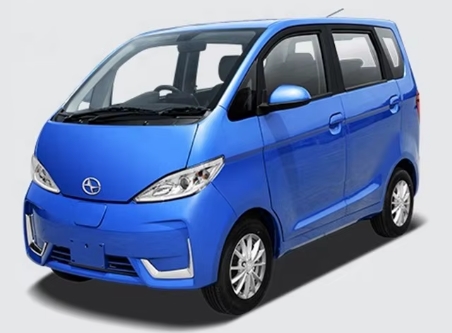
The first notable passenger vehicle in the EM family was the Joylong EM3, introduced in 2019.
Unlike Joylong’s larger vans, the EM3 is a compact five-door electric city vehicle intended primarily for urban transportation. It features seating for five passengers and is powered by a 40-horsepower electric motor producing approximately 111 lb-ft (150 Nm) of torque. Top speed is approximately 50 mph (80 km/h), while the claimed driving range reaches approximately 236 miles (380 km) under the NEDC testing cycle.
The EM3 was marketed as an affordable urban electric vehicle suitable for city commuting, ride-sharing services, and local government fleets. Publicly available information indicates that Joylong primarily offered the EM3 as a single model rather than multiple named trim levels. Equipment differences generally depended on market requirements rather than distinct trim designations.
EM5 Compact MPV
Joylong later expanded its electric passenger lineup with the EM5.
Unlike the EM3, the EM5 is a compact multi-purpose vehicle based on the Keyton EX80 platform. The vehicle offers three rows of seating, making it suitable for family transportation and commercial passenger services. Depending on the market, the EM5 has been sold as a rebadged version of the Keyton EX80 while carrying Joylong branding.
As with the EM3, Joylong has not published a comprehensive hierarchy of named trim levels. Instead, the EM5 has generally been distinguished by equipment packages and market-specific specifications.
EW4 Electric Cargo Van
One of the most important vehicles in the EM–EW Series is the Joylong EW4.
Introduced as the electric counterpart to the Joylong A4 van, the EW4 is designed primarily for commercial cargo transportation. It retains the familiar box-shaped body of the A-Series while replacing the gasoline or diesel engine with an electric drivetrain.
Early production models featured:
- 64.8-kWh lithium-ion battery
- 50-kW electric motor
- Rear-wheel drive
- Approximately 162 miles (260 km) of driving range
- DC fast charging capability
Later versions received significant improvements, including:
- 86.1-kWh battery
- Maximum output of 100 kW
- Up to 249 miles (400 km) of driving range
- Improved charging performance
- Payload capacity of approximately 3,748 pounds (1,700 kg)
The EW4 has become popular among logistics companies, municipal fleets, and last-mile delivery operators seeking lower operating costs and reduced emissions.
EW5 Long-Wheelbase Cargo Van
The Joylong EW5 followed as a larger version of the EW4.
Based on the long-wheelbase Joylong A5 platform, the EW5 offers greater cargo capacity while using a similar electric powertrain. It is designed for businesses requiring additional interior volume without sacrificing the benefits of an electric drivetrain.
Documented specifications include:
- 86.1-kWh lithium iron phosphate battery
- Rear-wheel drive
- Permanent-magnet synchronous motor
- Maximum motor output of 100 kW
- Approximately 249 miles (400 km) of NEDC range
- Cargo volume approaching 340 cubic feet (9.6 cubic meters)
The EW5 has been exported to several international markets, including parts of Europe, where it has been marketed as an affordable electric commercial van.
E6 Passenger Van
Another member of the electric lineup is the Joylong E6.
The E6 is derived from the larger Joylong A6 passenger van and is intended for shuttle operators, airport transportation, hotels, and commercial passenger services. It combines the spacious interior of the A6 with an electric drivetrain, allowing operators to reduce fuel expenses while complying with increasingly strict emissions regulations.
Although detailed specifications vary by market, the E6 shares much of its underlying engineering with the company’s larger electric commercial vehicles.
Production Years and Models
Based on publicly available manufacturer and industry information, the EM–EW Series includes the following documented production models:
2019–Present
- Joylong EM3
Late 2010s–Present
- Joylong EM5
2019–Present
- Joylong EW4
2019–Present
- Joylong EW5
Late 2010s–Present
- Joylong E6
Unlike many global manufacturers, Joylong has not published a complete list of named trim levels for these vehicles. Most production variants are identified by model designation, battery specification, wheelbase, seating configuration, or cargo configuration rather than trims such as Base, Deluxe, Premium, or Limited. Public records do document evolving variants such as the EW4-A, EW4-B, and EW4-C for certain markets, reflecting technical and regulatory differences rather than traditional consumer trim levels.
Design Philosophy
Across the EM–EW Series, Joylong emphasized practicality over styling. The vehicles feature upright body designs that maximize passenger or cargo space while minimizing operating costs. Electric powertrains provide quiet operation, simplified maintenance, and lower energy expenses compared with conventional gasoline or diesel engines.
The commercial vans include wide-opening rear doors, sliding side doors, durable cargo areas, and heavy-duty suspension systems suited to frequent commercial use. Passenger models focus on spacious interiors, flexible seating arrangements, and modern infotainment systems.
Market Position
The EM–EW Series competes with numerous Chinese electric commercial vehicles, including products from BYD, SAIC Maxus, Foton, and Dongfeng. Joylong’s advantage lies in adapting proven van platforms into electric vehicles, allowing customers to purchase familiar designs with lower operating costs.
The company’s vehicles have also found export success in several overseas markets where affordable electric commercial vehicles remain in demand. Fleet operators, municipal governments, and logistics providers have become key customers for the EW models.
Future Outlook
As of 2026, the Joylong EM–EW Series remains in production and continues to evolve alongside China’s rapidly growing electric commercial vehicle market. Future improvements are expected to include higher-capacity batteries, greater driving range, faster DC charging, enhanced driver-assistance systems, and expanded connectivity features.
Because many cities are adopting stricter emissions regulations for commercial transportation, demand for battery-electric cargo vans and passenger shuttles is expected to continue increasing. Joylong’s strategy of gradually improving its established electric platforms rather than replacing them entirely should allow the EM–EW Series to remain competitive for years to come. Although the company has not announced an all-new generation, ongoing battery and software upgrades are likely to ensure that the EM3, EM5, EW4, EW5, and E6 continue serving commercial and passenger transportation markets both within China and internationally.