The Evolution of the Zotye Z100: From Budget City Car to Electric Pioneer
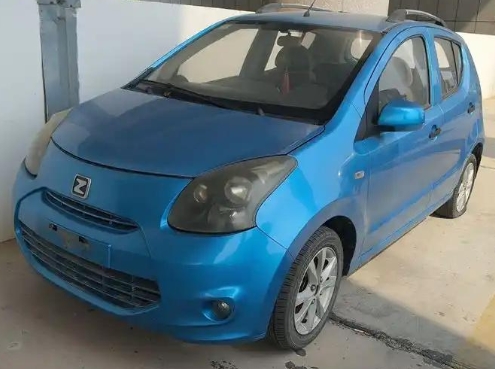
The Zotye Z100 was one of the smallest and most affordable passenger cars produced by Chinese automaker Zotye Auto. Introduced during a period of rapid expansion in China’s automotive industry, the Z100 was designed to provide inexpensive personal transportation for urban drivers and first-time car buyers. Despite its modest size and budget-oriented positioning, the Z100 became an important model in Zotye’s lineup and eventually served as the foundation for one of the company’s earliest electric vehicles.
Produced from 2013 through 2017 as a gasoline-powered hatchback, the Z100 helped Zotye establish itself in China’s entry-level vehicle market. The model’s platform later evolved into the electric-powered Zotye Cloud 100, extending the vehicle’s influence well beyond the end of traditional Z100 production. Although never intended to compete with premium automobiles, the Z100 remains a noteworthy example of China’s growing automotive capabilities during the early 2010s.
Origins of the Z100
The origins of the Z100 can be traced to Jiangnan Auto, a company acquired by Zotye Auto in 2008. Prior to the acquisition, Jiangnan produced the Jiangnan TT, a tiny city car based on the licensed design of the second-generation Suzuki Alto. The Jiangnan TT gained international attention for being one of the least expensive production cars in the world.
Recognizing the continuing demand for low-cost urban transportation, Zotye decided to modernize the concept. The result was the Zotye Z100, a significantly updated vehicle that retained the compact dimensions of its predecessor while introducing contemporary styling, improved safety equipment, and a more modern interior.
The Z100 debuted in 2013 as Zotye’s newest entry-level model and quickly became one of the company’s most affordable offerings.
.
NO MORE dead batteries with this:

.
Production Years
The Zotye Z100 was produced from 2013 through 2017.
Production took place in China and focused primarily on the domestic market, although some vehicles were exported to selected international regions. During its production run, the Z100 remained largely unchanged mechanically, with updates focusing on equipment levels, styling refinements, and special editions.
Production Timeline
| Year | Development |
|---|---|
| 2013 | Z100 introduced and production begins |
| 2014 | Expanded trim lineup |
| 2015 | Minor equipment revisions |
| 2016 | Continued production with updated features |
| 2017 | Final year of gasoline-powered production |
| 2015–2019+ | Electric Cloud 100 derivative continues |
Design and Engineering
The Z100 was developed as a five-door hatchback intended primarily for urban use. Its compact dimensions made it ideal for crowded city environments where parking space and maneuverability were important considerations.
Key dimensions included:
- Length: 140.7 inches (3,577 mm)
- Width: 63.1 inches (1,620 mm)
- Height: 58.2 inches (1,476 mm)
- Wheelbase: 92.5 inches (2,360 mm)
Despite its small footprint, the Z100 offered seating for five occupants and a practical cargo area suitable for everyday transportation needs.
The exterior styling represented a significant departure from the older Jiangnan TT. Rounded body panels, larger headlamps, and a more modern front fascia helped the Z100 appear contemporary while remaining inexpensive to manufacture.
Powertrain
Throughout its production run, the Zotye Z100 was powered by a single gasoline engine.
1.0-Liter Three-Cylinder Engine
The Z100 utilized a 1.0-liter three-cylinder gasoline engine producing approximately 56 horsepower and 66 lb-ft (90 Nm) of torque.
The engine was paired with a five-speed manual transmission, which remained the only transmission offered during production.
While performance was modest, the powertrain delivered excellent fuel economy and low operating costs. These characteristics aligned perfectly with the vehicle’s intended purpose as a practical city car.
The lightweight construction of the Z100 helped maximize efficiency while keeping manufacturing costs low.
Launch Models for 2013
When introduced in 2013, the Z100 was offered in several trim levels designed to appeal to budget-conscious consumers.
Pricing started at approximately 29,999 yuan, making the vehicle one of the most affordable new cars available in China at the time.
The initial lineup included multiple equipment grades that varied primarily in comfort and convenience features rather than mechanical specifications.
Standard Trim
The entry-level Z100 typically included:
- 1.0-liter engine
- Five-speed manual transmission
- Steel wheels
- Manual windows
- Basic heating and ventilation system
- Cloth upholstery
- Rear window defroster
This trim targeted buyers seeking the lowest possible purchase price.
Comfort Trim
The mid-level Comfort model added:
- Air conditioning
- Power steering
- Improved audio system
- Power windows
- Body-colored exterior components
This version proved popular among urban drivers who wanted additional convenience without a substantial increase in cost.
Luxury Trim
The top-level Luxury trim featured:
- Alloy wheels
- Enhanced interior trim materials
- Central locking system
- Upgraded infotainment features
- Additional convenience equipment
Although still inexpensive by industry standards, the Luxury trim gave the Z100 a more upscale feel.
2014 Model Year
For 2014, Zotye expanded the availability of equipment packages and refined several interior components.
Additional features became available depending on trim level, including:
- Improved seat materials
- Enhanced audio systems
- Updated instrument cluster design
- Additional storage solutions
The company’s goal was to maintain competitiveness in China’s increasingly crowded entry-level vehicle segment.
Sales remained strong due to the Z100’s affordability and low ownership costs.
2015 Model Year
The 2015 model year marked an important turning point because Zotye began expanding its efforts in the electric vehicle market.
While the gasoline-powered Z100 continued largely unchanged, development of an electric derivative accelerated.
The standard gasoline lineup remained available in multiple trims, including entry-level, mid-range, and premium variants. Minor improvements focused on interior quality and convenience features.
At the same time, Zotye introduced the first versions of what would become the Cloud 100 electric vehicle.
The Birth of the Cloud 100
One of the most significant developments in the Z100’s history was the creation of the Zotye Cloud 100.
The Cloud 100 was based heavily on the Z100 platform and body structure but utilized a fully electric powertrain. Introduced during the mid-2010s, the Cloud 100 represented Zotye’s effort to capitalize on China’s rapidly growing electric vehicle market.
The electric version featured:
- Battery-electric propulsion
- Regenerative braking
- Improved energy efficiency
- Zero tailpipe emissions
Although technically marketed under a separate name, the Cloud 100 was fundamentally an evolution of the Z100 architecture.
2016 Model Year
By 2016, the Z100 remained one of Zotye’s most affordable gasoline-powered vehicles.
Available trims continued to include:
Standard
Featuring basic transportation-focused equipment.
Comfort
Adding convenience features such as air conditioning and power accessories.
Luxury
Offering alloy wheels, upgraded interior materials, and enhanced technology.
Equipment levels were refined to better match consumer expectations, although the overall formula remained unchanged.
The vehicle’s reputation for affordability continued to drive sales among first-time buyers.
2017 Final Year
The 2017 model year marked the conclusion of gasoline-powered Z100 production.
By this time, consumer preferences in China were shifting rapidly toward crossover SUVs and electric vehicles. Demand for traditional city cars had begun to decline, leading Zotye to focus on newer products and electrification initiatives.
The final Z100 models retained the same 1.0-liter engine and trim structure that had characterized the vehicle throughout most of its production life.
Following 2017, the gasoline-powered Z100 was discontinued.
Market Reception
The Z100 earned recognition primarily for its value.
Owners appreciated:
- Extremely low purchase price
- Excellent fuel economy
- Compact dimensions
- Easy urban maneuverability
- Low maintenance costs
Critics generally viewed the vehicle as basic but practical. While it lacked the refinement and performance of larger competitors, it fulfilled its intended mission effectively.
For many buyers, the Z100 represented an affordable entry point into vehicle ownership.
Legacy and Influence
The Z100’s greatest legacy may be its role as the foundation for the Cloud 100 electric vehicle.
As China’s automotive market shifted toward electrification, Zotye leveraged the Z100 platform to create one of its earliest battery-electric models. This transition demonstrated how traditional budget vehicles could evolve into modern electric transportation solutions.
The Z100 also reflected broader trends within China’s automotive industry, where manufacturers increasingly moved from licensed designs and low-cost transportation toward more advanced engineering and alternative-energy vehicles.
Future Outlook
As of 2026, the Zotye Z100 remains discontinued, and there have been no announced plans for a direct successor. Zotye Auto’s financial challenges during the early 2020s significantly affected the company’s product development activities.
However, the influence of the Z100 continues through its contribution to Zotye’s early electric vehicle efforts. The model represents an important stepping stone in the company’s history and serves as an example of how China’s automotive industry evolved during the 2010s.
Today, the Zotye Z100 is remembered as an affordable, practical city car that provided transportation to thousands of drivers while helping pave the way for Zotye’s entry into the electric vehicle market. Although simple in design and modest in performance, the Z100 occupies an important place in the history of both Zotye Auto and China’s rapidly developing automotive sector.