The Evolution of the ZX Auto Grand Tiger and Grand Lion: ZX Auto’s Global Pickup Lineage
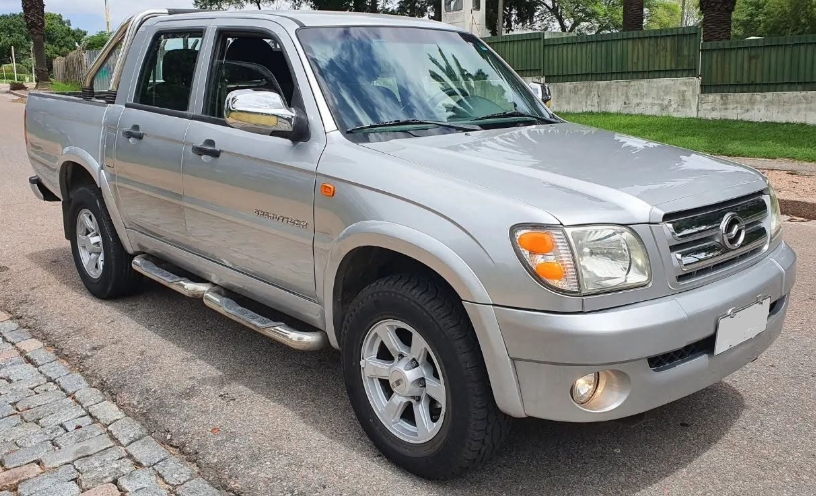
The ZX Grand Tiger and its related Grand Lion nameplate represent one of the most important and long-running pickup truck families produced by ZX Auto (Hebei Zhongxing Automobile Co., Ltd.). Introduced in the early 2000s, the Grand Tiger became the company’s foundational midsize pickup platform and a key driver of its early export success. Over time, the model evolved through multiple updates, regional naming strategies, and market-specific configurations, eventually expanding into more refined variants sometimes referred to as the Grand Lion in certain export markets.
Built on traditional body-on-frame construction and powered primarily by Mitsubishi-sourced gasoline and diesel engines, the Grand Tiger family helped establish ZX Auto as one of the earliest Chinese automakers to gain traction in international pickup markets. It was sold in Asia, Africa, the Middle East, South America, and parts of Europe, often competing on affordability and durability rather than luxury or advanced technology.
Origins of the Grand Tiger Project
ZX Auto was founded in 1999 in Baoding, Hebei Province, and quickly focused on producing pickup trucks and utility vehicles. During the early 2000s, the company identified strong global demand for midsize pickups, especially in developing markets where rugged, affordable vehicles were essential for both commercial and personal use.
The Grand Tiger was developed as a modernized successor to ZX Auto’s earlier pickup models, including the Admiral series. It was designed to meet international expectations for styling and comfort while retaining the durability and simplicity expected from a work-focused truck.
The platform relied heavily on established Japanese engineering influences, particularly Mitsubishi-based powertrains, which helped improve reliability and global acceptance.
.
You’ve got that cool car, but is it resting in its own cool place?
It’s visually pleasing for the surrounding areas outside of your home to look as awesome as what’s stored inside your garage! If you desire a truly inspirational environment for your landscape, you should check into these easy plans! You’ll happy with the end results!

.
Launch and Early Production (2003–2005)
The ZX Grand Tiger entered production in the early 2000s, with most sources placing its initial rollout around 2003. Early versions were exported under various names depending on the market, sometimes simply labeled as ZX pickups or ZX Auto Grand Tiger.
From the beginning, the vehicle was offered in multiple body styles, including:
- Single cab
- Extended cab
- Double cab
The double-cab configuration became the most popular in export markets due to its balance of passenger space and utility.
Production Years
| Model | Production Years |
|---|---|
| ZX Grand Tiger | 2003–Present (select markets) |
| Updated Grand Tiger variants | 2008–Present (regional updates) |
| Grand Lion (export naming variant) | Mid-2000s–Present (market-specific branding) |
While the original Grand Tiger name has persisted in some regions, later updates and export branding introduced variations such as “Grand Lion” in select markets, typically referring to facelifted or upgraded trims rather than a completely separate vehicle.
Design and Engineering
The Grand Tiger was built using a traditional ladder-frame chassis, a common feature in pickup trucks designed for heavy-duty use.
Key engineering characteristics included:
- Body-on-frame construction
- Rear-wheel drive with optional four-wheel drive
- Solid rear axle with leaf springs
- Independent front suspension
- High ground clearance
- Heavy-duty payload capability
The design prioritized durability and ease of maintenance, making the truck suitable for rough terrain and commercial applications.
Styling evolved gradually over time, with early models featuring simple, utilitarian bodywork and later versions adopting more modern headlights, grilles, and interior upgrades.
Dimensions and Capability
The Grand Tiger was classified as a midsize pickup truck, comparable in size to global competitors in the Toyota Hilux and Isuzu D-Max segment.
Typical dimensions included:
- Length: approximately 204.7 inches (5,200 mm)
- Width: approximately 70.9 inches (1,800 mm)
- Height: approximately 68.9 inches (1,750 mm)
- Wheelbase: approximately 126.0 inches (3,200 mm)
Payload capacity varied by configuration but typically ranged from 1,100 to 1,500 pounds depending on drivetrain and suspension setup.
The truck’s relatively simple mechanical layout contributed to its reputation for low maintenance costs and strong field durability.
Engine Evolution
One of the defining aspects of the Grand Tiger family was its use of Mitsubishi-sourced engines, which were widely recognized for reliability.
2003–2008: Early Gasoline Engines
The most common early engine was:
2.4-Liter Mitsubishi Gasoline Engine
- Displacement: 2.4 liters
- Power: approximately 125 to 130 horsepower
- Torque: approximately 143 lb-ft (194 Nm)
This engine became the standard choice in many export markets due to its simplicity and availability of parts.
Diesel Variants
To expand its global appeal, ZX Auto also introduced diesel engines.
2.8-Liter Turbo Diesel
- Power: approximately 100 to 110 horsepower
- Strong low-end torque for hauling and towing
- Better fuel efficiency for commercial use
Later updates introduced additional diesel calibrations depending on emissions requirements in export regions.
Later Engine Updates (2010s and Beyond)
In later years, some markets received updated 2.4-liter gasoline engines with improved emissions compliance and slightly enhanced efficiency. However, the overall engine lineup remained relatively consistent throughout the vehicle’s lifecycle.
Transmission Options
The Grand Tiger was offered with several transmission configurations:
Manual Transmission
- 5-speed manual (standard across most years)
The manual gearbox remained the dominant choice due to its durability and lower cost.
Automatic Transmission
- 4-speed automatic (select trims and export markets)
Automatic versions were less common but helped broaden the vehicle’s appeal in urban and passenger-focused markets.
Trim Levels Throughout the Years
Trim levels for the Grand Tiger and Grand Lion varied significantly depending on region and importer specifications. However, several consistent tiers can be identified across its production history.
Early Production Trims (2003–2008)
- Base
- Standard
- Comfort
- Luxury
Base
- Vinyl or cloth seats
- Manual windows
- Steel wheels
- Minimal interior equipment
Standard
- Power steering
- Air conditioning (optional in some markets)
- Upgraded interior trim
Comfort
- Power windows
- Central locking
- Improved audio system
Luxury
- Alloy wheels
- Leather upholstery (select markets)
- Chrome exterior accents
- Enhanced interior features
Mid-Cycle Updates (2008–2015)
As the model matured, additional trims were introduced:
- Standard
- Comfort
- Luxury
- Executive
- Premium
Executive and Premium trims often included:
- Touchscreen infotainment systems
- Rear parking sensors
- Alloy wheels
- Improved seat materials
- Fog lights
- Enhanced exterior styling packages
Export Market Variants (2015–Present)
In later years, especially in export markets, trim naming became less standardized. Common labels included:
- Work
- Utility
- Commercial
- Luxury
- Flagship
These versions were tailored to local demand and regulatory requirements.
Grand Lion Naming Variation
The “Grand Lion” name is not a separate platform but rather a regional branding variation used in certain export markets. It typically refers to upgraded or facelifted versions of the Grand Tiger with:
- Revised front-end styling
- Updated lighting elements
- Improved interior materials
- Enhanced safety features
In many cases, the Grand Lion designation was used for marketing purposes to differentiate refreshed models without changing the underlying architecture.
Safety and Equipment Evolution
Over time, the Grand Tiger family incorporated increasing levels of safety and convenience features.
Available equipment included:
- Anti-lock braking system (ABS)
- Electronic brakeforce distribution (EBD)
- Dual front airbags (later models)
- Rear parking sensors
- Air conditioning
- Power windows and mirrors
- CD/MP3 audio systems
- Alloy wheels (higher trims)
- Fog lights
Earlier models were relatively basic, while later versions improved significantly in comfort and safety equipment.
Global Market Presence
The Grand Tiger became one of ZX Auto’s most widely exported vehicles, appearing in markets such as:
- South Africa
- Egypt
- Chile
- Peru
- Bolivia
- Saudi Arabia
- United Arab Emirates
- Russia
- Southeast Asia
Its affordability and mechanical simplicity made it especially attractive in developing regions where cost of ownership and ease of repair were major considerations.
Role in ZX Auto’s Growth
The Grand Tiger played a foundational role in ZX Auto’s international expansion. It was one of the company’s first vehicles to be exported on a large scale and helped establish distribution networks that later supported models like the Terralord and G9.
The truck also demonstrated that Chinese automakers could compete globally in the pickup segment, even if not yet matching the refinement of established Japanese rivals.
Future Outlook
As of the mid-2020s, the Grand Tiger continues to appear in limited markets, though it is increasingly overshadowed by newer ZX Auto products. Its long production life reflects its success in value-driven markets but also highlights its aging architecture compared to modern pickups.
Future developments are likely to include:
- Gradual phase-out in favor of newer platforms
- Replacement by updated pickup models such as the G9
- Possible localized updates in specific export markets
- Continued use in budget-oriented commercial segments
The ZX Grand Tiger and Grand Lion represent one of the most enduring pickup lineages in ZX Auto’s history. Produced from the early 2000s and continuing in select markets today, the model established ZX Auto as a serious player in the global pickup industry. Built on a rugged ladder-frame platform and powered by proven Mitsubishi-based engines, it offered durability, affordability, and versatility across a wide range of international markets. While newer models have surpassed it in technology and refinement, the Grand Tiger remains a cornerstone of ZX Auto’s global legacy and an important chapter in the evolution of Chinese pickup trucks.