The History of BAW – Beijing Automobile Works (BAW, 212, Linktour)
Beijing Automobile Works (BAW) is one of the oldest and most historically significant automotive manufacturers in China. Founded during the early years of the People’s Republic of China, BAW helped establish the country’s domestic automobile industry and became best known for producing the legendary BJ212 military utility vehicle. Over more than seven decades, the company has survived political changes, industry restructuring, ownership transfers, economic challenges, and intense competition while continuing to manufacture vehicles under the BAW and 212 brands.
The company’s history also includes the short-lived Linktour brand, which attempted to enter the crowded Chinese crossover market during the late 2010s. Together, BAW, 212, and Linktour tell the story of one of China’s most resilient automotive organizations.
Origins of Beijing Automobile Works
Founded: 1953
Original Name: First Accessory Factory
Renamed: Beijing Automobile Works (1958)
Unlike many Western automakers founded by individual entrepreneurs, BAW was established by the Chinese government as part of China’s industrial development program. The company originated in 1953 as the First Accessory Factory before being renamed Beijing Automobile Works in 1958. Chairman Zhu De personally approved and signed the company’s official name, a significant honor that reflected the company’s importance to China’s developing automotive sector.
As a state-owned enterprise, BAW did not have a single founder comparable to Henry Ford or Soichiro Honda. Instead, it was created through government-directed industrial planning aimed at building a domestic automobile industry.
During the 1950s, China had very limited automotive manufacturing capabilities. BAW became one of the country’s first major vehicle producers and helped lay the foundation for future Chinese automotive development.
Early Vehicles and National Importance
BAW’s earliest products included government sedans and inspection vehicles built during the late 1950s.
Among these early models were:
- Beijing CB4
- Dongfanghong BJ760
- Dongfanghong BJ761
- Hongwei BJ761 wagon
Although these vehicles never achieved large-scale production, they demonstrated China’s growing ability to design and manufacture passenger vehicles domestically.
The Birth of the BJ212
Introduced: 1965
Production: 1965–Present
The most important vehicle in BAW history arrived in 1965 with the introduction of the BJ212.
Designed as a military and government utility vehicle, the BAW BJ212 was inspired by Soviet off-road vehicles such as the GAZ-69 and UAZ designs. The rugged four-wheel-drive vehicle became China’s equivalent of the Jeep CJ, Land Rover Series, and later the Toyota Land Cruiser.
The BJ212 quickly became one of the most recognizable vehicles in China.
Notable accomplishments included:
- Service with the People’s Liberation Army
- Use by government agencies nationwide
- Export to numerous countries
- Continuous production for more than sixty years
In 1966, Chairman Mao Zedong famously appeared in a BJ212 during public events, helping cement the vehicle’s iconic status.
Over the decades, the BJ212 evolved into numerous variants including:
- BJ2020
- BJ2023
- BJ2032
- Zhanqi
- City Cruiser
- Kuangchao
- 212 Classic
More than two million examples of the BJ212 family are believed to have been produced, making it one of the longest-running vehicle platforms in automotive history.
Merger and Corporate Restructuring
1987 Merger
In 1987, BAW merged with the Beijing Motorcycle Company to form the Automobile and Motorcycle United Company (BAM). The merger was part of broader industrial reforms occurring throughout China during the 1980s.
Modern BAW Formation (2001)
In 2001, Beijing Automobile Works Co., Ltd. was reorganized into its modern form.
The new company incorporated:
- Original Beijing Automobile Works
- Beijing Automobile Assembly
- Elements of Beijing Jeep operations
- Related automotive manufacturing assets
This restructuring helped modernize the company and prepare it for the increasingly competitive Chinese automotive market.
Relationship with BAIC
Ownership by BAIC Group
Years: 2010–2020
A major turning point occurred in 2010 when BAW became part of the state-owned Beijing Automotive Industry Holding Company (BAIC Group).
Under BAIC ownership, BAW gained greater access to resources, engineering capabilities, and manufacturing expertise. However, it also faced increased internal competition from other BAIC divisions, including Beijing Auto and the company’s joint ventures.
Hardships and Challenges
Like many long-established automakers, BAW experienced several major challenges.
Challenge 1: Aging Product Line
By the early 2000s, many BAW products were technologically outdated. The BJ212 remained popular in rural and military applications, but consumer expectations were rapidly changing.
BAW addressed this issue by introducing updated models and modernized versions of existing platforms.
Challenge 2: Competition
The Chinese market became increasingly crowded during the 2000s and 2010s. Companies such as Geely, Chery, Great Wall, BYD, and SAIC invested heavily in new technology and product development.
BAW struggled to maintain market share against these larger and better-funded competitors.
Challenge 3: Linktour Failure
One of the company’s most significant setbacks involved the Linktour brand.

The Rise and Fall of Linktour
Established: 2018
Defunct: 2020
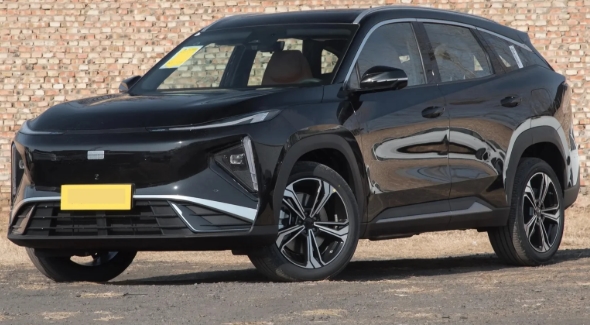
Linktour was created as a new passenger-vehicle brand intended to attract younger buyers. The company introduced crossover SUVs including:
- Linktour K-One
- Linktour K50
The vehicles targeted China’s rapidly expanding compact SUV market.
However, Linktour entered an extremely competitive segment dominated by larger manufacturers with stronger dealer networks and marketing budgets. Sales failed to meet expectations, financial difficulties emerged, and production was eventually halted. By 2020, Linktour had effectively disappeared from the market. The collapse represented one of BAW’s most significant modern business failures.
Sale to Qingdao Fulu
Sold: May 2020
In May 2020, BAIC Group sold its ownership stake in BAW to Qingdao Fulu Investment Holding Group.
Fulu specialized primarily in low-speed electric vehicles rather than conventional automobiles. The transaction officially ended BAW’s status as a BAIC subsidiary and transformed the company from a state-owned enterprise into a privately owned automotive manufacturer. Headquarters operations were relocated from Beijing to Qingdao in Shandong Province.
This move represented one of the most significant ownership changes in the company’s history.
Acquisition by Shandong Weiqiao
Acquired: April 2023
In 2023, another major ownership change occurred.
Shandong Weiqiao Pioneering Group acquired BAW from Qingdao Fulu. Weiqiao is one of China’s largest industrial conglomerates, with major operations in aluminum, manufacturing, and textiles.
The acquisition provided BAW with stronger financial backing and renewed investment opportunities.

Creation of the 212 Brand
Established as Independent Brand: 2024
One of BAW’s most important recent milestones occurred in 2024 when the historic 212 name became a standalone automotive brand.
Rather than simply being a model designation, 212 became an independent off-road vehicle division.
Vehicles include:
- 212 Classic
- 212 T01
- Explorer 01 pickup concept
The strategy allowed BAW to capitalize on the legendary reputation of the BJ212 while modernizing its image for a new generation of buyers.
BAW Vehicle Brands and Notable Models
BAW Brand
Notable models include:
- BJ212
- Yuanbao EV
- Damao (Pudding) EV
- Jiabao
- Kaluli pickup
- BJ130 truck
- Haice van
212 Brand
Notable models include:
- 212 Classic
- 212 T01
- Explorer 01
Linktour Brand
Notable models include:
- Linktour K-One
- Linktour K50
Most Successful Vehicle
Without question, the BJ212 is the most successful vehicle in company history.
Reasons include:
- Continuous production since 1965
- Military adoption
- Government use
- Export success
- Extremely durable design
- Strong brand recognition
Few vehicles anywhere in the world can claim a production run spanning six decades. The BJ212’s longevity rivals iconic models such as the Land Rover Defender, Mercedes-Benz G-Class, and Jeep Wrangler.
Racing Activities
Unlike manufacturers such as Great Wall, Chery, or Geely, BAW has not been heavily involved in international motorsports.
Instead, the company’s off-road vehicles have primarily demonstrated capability through military testing, government service, expedition use, and off-road exhibitions rather than organized racing programs. Public records of major factory-backed racing efforts remain limited.
Factory Operations
Today, BAW operates manufacturing facilities in Qingdao and other locations in China.
Operations include:
- Vehicle assembly
- Chassis production
- Body manufacturing
- Electric vehicle production
- Commercial vehicle manufacturing
The company produces passenger vehicles, commercial vehicles, military vehicles, and electric microcars.
Reception in the United States
BAW has never officially sold vehicles in the United States on a large scale.
As a result:
- U.S. sales figures are effectively zero.
- No nationwide dealer network has existed.
- Most American enthusiasts know BAW primarily through the BJ212 and online discussions.
Among off-road enthusiasts, the BJ212 has developed a cult following due to its military heritage and unusual appearance. However, the brand remains largely unknown to the average American consumer.
Current Status and Future Outlook
Current Status: Active
Years in Operation: 1953–Present
Beijing Automobile Works remains in operation as of 2026, under the ownership of Shandong Weiqiao Pioneering Group.
Recent sales growth has been driven by:
- The new 212 brand
- Electric city car type vehicles
- Commercial vehicle production
- Expanded export activities
The company’s future strategy focuses on three major areas:
- Off-road vehicles under the 212 brand
- Electric urban vehicles
- International market expansion
More than seventy years after its founding, BAW remains one of China’s oldest surviving automobile manufacturers. Its ability to survive repeated ownership changes, market disruptions, and intense competition demonstrates remarkable resilience. While the company may never match the scale of China’s largest automakers, its historic BJ212 legacy and new 212 brand ensure that BAW continues to occupy a unique place in automotive history.