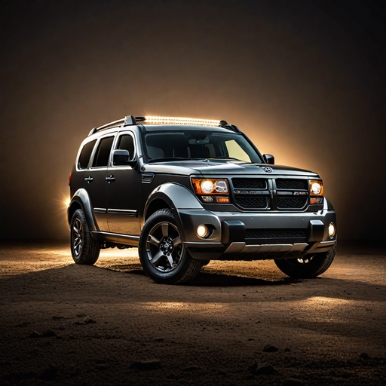
The History of Jiangling Motors Corporation (JMC, JMEV, Landwind, Yusheng)
Jiangling Motors Corporation (JMC) is one of China’s oldest and most influential automotive manufacturers. Although the company itself was formally established in 1993, its roots extend back to 1947, making it one of the longest-operating vehicle producers in China. Today, JMC is best known for commercial vehicles, pickup trucks, sport utility vehicles (SUVs), electric vehicles, and its long-running partnerships with international manufacturers such as Ford Motor Company and Isuzu Motors. Its major brands include JMC, JMEV, Landwind, and Yusheng. Over the decades, the company has survived financial crises, market competition, restructuring efforts, and changing consumer demands while evolving into a major Chinese automotive group.
Origins: 1947–1991
The origins of Jiangling trace back to April 8, 1947, when a vehicle repair facility called the Nanchang Automotive Maintenance Plant was established in Nanchang, Jiangxi Province, China. After the founding of the People’s Republic of China, the facility became the Nanchang Automotive Repairing Plant in 1949.
In 1958, the company expanded beyond repairs and began producing three-wheeled vehicles and light trucks under the Yingxiong brand. During the late 1960s, it became the Jiangxi Automotive Manufacturing Plant and entered large-scale truck production. Most of its early vehicles were based on older Soviet designs and technologies.
The company struggled financially for many years. By the early 1980s, China was opening its economy to foreign competition, and Jiangxi Automotive Manufacturing Plant found it difficult to compete with newer, more advanced vehicles. Heavy discounting and declining competitiveness resulted in significant losses. By 1983, accumulated losses exceeded the value of many company assets.
Founder and Key Early Leader: Sun Min
Although Jiangling evolved from a state-owned enterprise rather than being founded by a single entrepreneur, one of the most important figures in its history was Sun Min. Appointed as the company’s chief executive in 1983, Sun Min led a dramatic turnaround effort. He streamlined operations, improved production efficiency, modernized truck designs, and focused on quality improvements.
Under his leadership, the company achieved its first profit in sixteen years in 1984. Sun Min is often credited with laying the foundation for Jiangling’s later success.
Partnership with Isuzu and Corporate Reorganization
One of the most significant milestones in Jiangling’s history occurred during the 1980s when it began cooperating with Isuzu Motors of Japan. The partnership brought modern manufacturing techniques, engineering expertise, and vehicle technology to the Chinese company.
The relationship allowed Jiangling to manufacture Isuzu-based trucks and commercial vehicles, significantly improving quality and reliability. The partnership also gave the company access to international automotive standards.
Between 1989 and 1992, the company merged with and absorbed several manufacturing businesses in Jiangxi Province, including trailer, gearbox, and chassis manufacturers. These consolidations helped create a vertically integrated automotive group.
In 1991, the broader parent organization became formally known as Jiangling Motors Corporation Group (JMCG). Two years later, the vehicle manufacturing business was reorganized and spun off into Jiangling Motors Corporation. JMC was listed on the Shenzhen Stock Exchange in 1993.
Ford’s Investment: 1995–Present
A major turning point came in 1995 when Ford Motor Company acquired approximately 20% of JMC through the purchase of B-shares. Ford later increased its stake and remains a significant shareholder with roughly 32% ownership.
Unlike a complete acquisition, Ford never bought out Jiangling Motors. Instead, the relationship became a strategic partnership and long-term joint venture arrangement. This collaboration gave JMC access to Ford engineering, manufacturing processes, and vehicle platforms.
The partnership led to production of Ford-branded commercial vehicles and SUVs for the Chinese market, including models such as the Ford Transit and Ford Everest.
Expansion into International Markets
JMC began exporting vehicles in 1996. Initial export destinations included Egypt and Middle Eastern markets. Over time, exports expanded into Latin America, Africa, Southeast Asia, and other developing regions. Chile eventually became one of the company’s most important overseas markets.
Unlike many Chinese manufacturers that focused solely on domestic sales, JMC established a meaningful export presence relatively early.
The Landwind Brand
The Landwind brand emerged during the early 2000s through a joint venture between JMCG and Changan Automobile. The joint venture, known as Jiangling Holdings, was established in 2004.
Notable Landwind models included:
- Landwind X6
- Landwind X8
- Landwind X7
- Landwind Xiaoyao
Landwind Controversy
Landwind became internationally famous, though not always for positive reasons.
The Landwind X7 generated controversy because its styling closely resembled the Range Rover Evoque. The similarity resulted in legal disputes and criticism regarding vehicle design copying.
Earlier Landwind vehicles also performed poorly in European crash tests during the mid-2000s, leading to concerns about safety. The negative publicity hurt the brand’s reputation internationally.
To address these issues, Landwind improved engineering standards, upgraded vehicle safety systems, and invested in more original product development. However, the brand never achieved the same level of success as larger Chinese competitors.
The Yusheng Brand
The Yusheng brand was launched in 2010 as JMC’s dedicated SUV division. It represented the company’s attempt to move beyond commercial vehicles and into the growing passenger vehicle market.
Popular Yusheng models included:
The Yusheng S350 became one of the better-known domestic SUVs in China and was marketed as a rugged off-road vehicle.
The Yusheng S330 gained international significance because it later served as the basis for the Chinese-market Ford Territory SUV developed through the Ford-JMC partnership.
Although Yusheng never became a dominant Chinese SUV brand, it helped JMC gain experience in passenger vehicle development.
JMEV and the Electric Vehicle Era
The company’s electric vehicle division, JMEV, emerged during the 2010s as China rapidly expanded support for electric transportation.
JMEV focused on affordable electric vehicles for urban transportation.
Notable JMEV models included:
A major milestone occurred when JMC partnered with Renault Group for electric vehicle development. Renault acquired a significant stake in the JMEV operation as part of a strategic alliance announced in 2018 and expanded thereafter.
This partnership gave JMEV access to global EV expertise while providing Renault with stronger access to China’s EV market.
Manufacturing and Factory Operations
JMC’s manufacturing operations are centered in Nanchang, Jiangxi Province.
Major facilities include:
- Qingyunpu Assembly Plant
- Xiaolan Economic Zone manufacturing facilities
- Fushan New Energy Vehicle Plant
These factories produce pickup trucks, vans, SUVs, engines, axles, and electric vehicles. Modern production methods incorporate automation, robotics, quality-control systems, and supplier integration. The facilities manufacture both JMC-branded products and Ford-related vehicles.
Hardships and Challenges
Financial Difficulties (1970s–1980s)
The company’s most serious early challenge was chronic financial losses. Outdated products and increasing competition nearly crippled the business before Sun Min’s turnaround efforts restored profitability.
International Safety Criticism
Landwind vehicles faced criticism after poor European crash-test performances. The resulting negative publicity damaged export ambitions and required significant engineering improvements.
Design-Copying Allegations
The Landwind X7 controversy generated lawsuits and negative media attention, forcing the company to rethink its design strategies.
Failed Algerian Expansion
JMCG attempted a major expansion project in Algeria during the 2000s. The initiative sought to establish an industrial zone for automotive manufacturing. However, changing Algerian regulations and disagreements regarding ownership structures and local participation prevented the project from being completed.
Passenger Vehicle Difficulties
JMC’s passenger vehicle operations have often struggled against larger Chinese manufacturers such as BYD, Geely, and Great Wall Motor.
Despite success in commercial vehicles, passenger-car growth has remained challenging.
Marketing and Brand Strategy
JMC traditionally focused on durability, affordability, and commercial utility rather than luxury.
Its marketing strategy emphasized:
- Reliability for business customers
- Commercial fleet sales
- Government procurement contracts
- Rural and regional markets
- Strategic use of Ford technology partnerships
The company also used international auto shows and export programs to increase global visibility.
The Yusheng and Landwind brands were marketed to younger SUV buyers, while JMEV targeted environmentally conscious urban consumers.
Racing Programs
Compared with manufacturers such as Ford, Toyota, or Mitsubishi, JMC has maintained only a limited motorsports presence.
Certain Landwind and Yusheng models participated in regional Chinese rally and off-road events, primarily as marketing exercises to demonstrate durability. However, the company never developed a major international factory racing program.
Motorsports have generally played a minor role in Jiangling’s business strategy.
Most Successful Vehicle
Across all brands, the most successful products have generally been JMC’s commercial vehicles and pickup trucks.
Among them, the JMC Yuhu series and Isuzu-derived commercial trucks have been especially important.
These vehicles became successful because they offered:
- Competitive pricing
- Proven reliability
- Strong cargo capacity
- Access to Isuzu and Ford technology
- Wide availability in developing markets
Rather than relying on a single passenger-car bestseller, JMC built its reputation through commercial transportation products.
Sales Performance
JMC’s sales have fluctuated over the years but generally remained strong.
Selected global sales figures include:
These figures include JMC, Yusheng, Ford joint-venture products, and other associated operations.
United States Sales
JMC has never established significant retail automobile sales in the United States. Consequently, U.S. consumer sales figures are effectively negligible or nonexistent. Most Americans know the company, if at all, through industry reports, imported specialty vehicles, or Ford-related collaborations rather than direct vehicle purchases.
What Makes Jiangling Different?
Several characteristics distinguish JMC from other automakers:
- It evolved from a truck repair facility dating back to 1947.
- It successfully transitioned from a struggling state-owned enterprise into a modern automaker.
- It maintains unusually long partnerships with both Ford and Isuzu.
- It has balanced commercial vehicles, SUVs, and electric vehicles under multiple brands.
- It remains one of China’s strongest commercial-vehicle specialists.
Unlike many newer Chinese EV startups, JMC possesses decades of manufacturing experience and extensive commercial-vehicle expertise.
Current Status and Future Outlook
As of 2026, Jiangling Motors Corporation remains in operation and is financially active. The company continues producing vehicles under the JMC, Yusheng, and JMEV brands while maintaining its strategic relationship with Ford. Production facilities remain operational in Nanchang. Annual vehicle sales have recently exceeded 375,000 units.
The company faces intense competition from China’s rapidly growing EV manufacturers and technology-focused automotive firms. However, its strengths in commercial vehicles, pickup trucks, export markets, and industrial manufacturing provide a solid foundation for continued operation.
While some ventures have been discontinued—most notably the short-lived Jiangling Ford Automobile Technology joint venture that entered liquidation in 2026—the core Jiangling Motors business remains active and continues adapting to the changing automotive landscape.
From a modest truck repair shop established in 1947 to a modern automotive manufacturer producing hundreds of thousands of vehicles annually, Jiangling Motors Corporation has experienced one of the more remarkable transformations in China’s automotive industry. Through strategic partnerships with Isuzu, Ford, and Renault; the creation of brands such as JMC, Landwind, Yusheng, and JMEV; and its ability to survive financial hardships and competitive pressures, the company has carved out a distinctive position in the global automotive market. While it has faced setbacks ranging from safety controversies to failed international expansion projects, Jiangling Motors remains an important player in commercial vehicles, SUVs, and electric transportation, with a future that continues to evolve alongside China’s rapidly changing automotive industry.