The History of Sinotruk Group (Sinotruk, VGV)
From China’s First Heavy-Duty Truck to the VGV Passenger Vehicle Era
Few automotive manufacturers have played a larger role in the development of China’s commercial vehicle industry than Sinotruk Group, officially known as China National Heavy Duty Truck Group Co., Ltd. (CNHTC). Widely regarded as the cradle of China’s heavy-truck industry, Sinotruk traces its origins to 1930 and has been in continuous operation for nearly a century. Today, the company is one of the world’s largest manufacturers of heavy-duty trucks, construction vehicles, specialized transport equipment, and increasingly, passenger vehicles through its VGV brand.
Unlike many automobile manufacturers that built their reputations through passenger cars, Sinotruk became famous for heavy-duty commercial vehicles. The company manufactured China’s first domestically produced heavy truck, introduced advanced European truck technology into China, and developed globally recognized brands such as HOWO, SITRAK, Huanghe, and VGV. Over its long history, Sinotruk has survived political upheaval, economic reforms, financial crises, restructuring efforts, and fierce international competition while maintaining its position as one of China’s leading truck manufacturers.
Origins: 1930–1956
Sinotruk’s roots can be traced to 1930, when the Jinan Automobile Manufacturing General Factory was established in Jinan, Shandong Province, China. The factory was originally created during the Republican era of China and focused primarily on vehicle repair, maintenance, and limited manufacturing activities.
Unlike many Western automakers, Sinotruk did not have a single entrepreneurial founder such as Henry Ford or Enzo Ferrari. Instead, it emerged as a government-supported industrial enterprise. Consequently, no individual founder is officially credited with creating the company.
Throughout the 1930s and 1940s, the facility experienced disruptions caused by war, including the Second Sino-Japanese War and the Chinese Civil War. Despite these challenges, the factory survived and later became part of China’s state-owned industrial system following the establishment of the People’s Republic of China in 1949.
In 1956, the facility was reorganized into the Jinan General Auto Works Plant, a move that many historians consider the beginning of the modern Sinotruk enterprise. This date is often cited as the formal founding year of China’s heavy-duty truck industry.
China’s First Heavy-Duty Truck: 1960
One of the most important milestones in Sinotruk’s history occurred in 1960 when the company successfully developed and produced the Huanghe (Yellow River) JN150, an 8-ton heavy-duty truck.
The significance of this vehicle cannot be overstated. Before the JN150, China lacked the ability to manufacture modern heavy-duty trucks domestically. The introduction of the Huanghe JN150 effectively ended China’s dependence on imported heavy trucks and marked the birth of the country’s heavy-truck manufacturing industry.
The vehicle was heavily inspired by the Czech Škoda-LIAZ truck design but was adapted for domestic production.
The truck gained national attention. Chinese leader Mao Zedong personally inspected the prototype in 1960 and praised the accomplishment. The Huanghe name subsequently became one of the most important brands in Chinese commercial vehicle history.
Growth and Industrial Expansion: 1960s–1970s
During the 1960s and 1970s, Sinotruk expanded production capacity and diversified its heavy vehicle lineup.
Notable developments included:
- Huanghe JN150 cargo trucks
- Huanghe 350 dump trucks
- Military transport vehicles
- Construction and industrial trucks
In 1963, the company successfully developed the Huanghe 350 dump truck, further expanding its capabilities in construction-related transportation.
The company became an essential supplier for infrastructure development, mining, agriculture, and military logistics throughout China.
Introducing Foreign Technology: The Steyr Partnership
By the late 1970s, Sinotruk faced an increasingly common challenge among Chinese manufacturers: technological limitations.
Chinese truck designs lagged behind European and North American competitors in fuel efficiency, reliability, comfort, and payload capacity.
To address this problem, Sinotruk pursued international partnerships.
In 1978, the company began assembling Romanian trucks using Semi Knocked Down (SKD) kits. More than 8,000 Romanian trucks were produced through 1991. This experience gave Sinotruk valuable exposure to foreign manufacturing methods.
A far more significant milestone occurred in 1983, when Sinotruk signed an agreement with Steyr-Daimler-Puch AG of Austria.
The Steyr agreement was historic because it represented China’s first comprehensive introduction of foreign heavy-truck technology. Sinotruk gained access to advanced engineering, manufacturing processes, and vehicle designs that dramatically improved product quality.
In 1985, the first Chinese-built Steyr truck rolled off the assembly line. The program accelerated modernization and helped Sinotruk become one of China’s most technologically advanced truck manufacturers.
Financial Difficulties and Restructuring
Although the Steyr project improved technology, Sinotruk faced substantial financial difficulties during the 1990s.
Several factors contributed:
- Rising competition from domestic manufacturers
- Inefficient state-owned management structures
- Heavy debt burdens
- Rapid market reforms occurring throughout China
By the late 1990s, the company was struggling financially.
To address these issues, the Chinese government implemented a major restructuring program.
In 2001, the company was reorganized into China National Heavy Duty Truck Group Co., Ltd. (Sinotruk Group). This restructuring separated unprofitable operations, improved management efficiency, and created a more competitive enterprise.
This was not a buyout by another company. Instead, it was a government-directed corporate restructuring.
The reorganization ultimately stabilized the company and laid the foundation for future growth.
Volvo Joint Venture
In 2003, Sinotruk signed a heavy-truck joint venture agreement with Volvo Trucks, a division of the Swedish manufacturer Volvo Group, which had been operating since 1927.
The partnership aimed to improve manufacturing quality and technology transfer. While the cooperation was important, it never became as transformative as later partnerships.
Nonetheless, the Volvo relationship helped improve Sinotruk’s understanding of global commercial vehicle standards.
The HOWO Revolution
One of Sinotruk’s most successful achievements came in 2004 with the introduction of the HOWO heavy-duty truck series.
The first HOWO truck rolled off the production line in Jinan on October 28, 2004.
The HOWO series represented a major leap forward in:
- Driver comfort
- Reliability
- Payload capability
- Fuel economy
- International competitiveness
HOWO rapidly became one of China’s best-selling heavy-truck brands. By December 2017, cumulative HOWO sales exceeded one million units.
The brand became especially popular in:
- China
- Russia
- Africa
- Southeast Asia
- South America
- Middle Eastern markets
HOWO remains one of Sinotruk’s most successful products.
Hong Kong Listing and International Expansion
A major milestone occurred in 2007 when Sinotruk was listed on the Hong Kong Stock Exchange.
The public listing provided access to international investment capital and improved the company’s global visibility.
This period also marked aggressive export expansion.
Sinotruk trucks became increasingly common in:
By the 2020s, the company was exporting vehicles to more than 100 countries worldwide.
The MAN Acquisition and Strategic Partnership
One of the most important corporate transactions in Sinotruk history occurred in 2009.
German commercial vehicle manufacturer MAN SE, founded in 1758 and operating as a major truck producer since the late nineteenth century, acquired a 25% plus one share stake in Sinotruk (Hong Kong) Limited.
This was a partial acquisition rather than a full buyout. MAN did not purchase the entire company.
The investment allowed Sinotruk to gain access to:
- D08 engines
- D20 engines
- D26 engines
- Modern axle technology
- Advanced truck engineering
The resulting partnership produced the premium SITRAK truck brand, which combined German engineering with Chinese manufacturing efficiency.
This partnership significantly improved Sinotruk’s reputation in international markets.
The VGV Brand
While Sinotruk was historically known for trucks, the company eventually expanded into passenger vehicles.
This effort led to the creation of VGV, a passenger-vehicle brand that emerged from the restructuring of Weichai Automobile.
In 2021, Sinotruk acquired controlling ownership of Weichai Automobile, with Sinotruk holding approximately 60% ownership and Weichai Automotive retaining 40%.
Following the acquisition, the passenger vehicle operation became closely associated with the VGV brand.
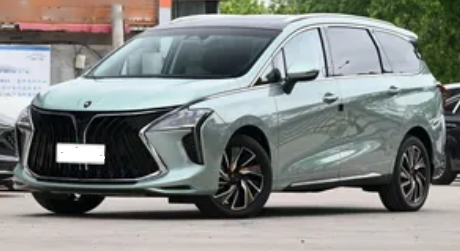
Notable VGV models include:
- VGV U70
- VGV U70 Pro
- VGV VX7
- VGV VX7 PHEV
Unlike Sinotruk’s commercial vehicles, VGV focuses on:
- Family SUVs
- Crossovers
- Plug-in hybrid vehicles
The VGV brand represents Sinotruk’s attempt to diversify beyond commercial transportation.
Factory Operations
Sinotruk operates one of the largest commercial vehicle manufacturing networks in China.
Major operations include:
- Truck assembly plants
- Engine manufacturing facilities
- Transmission factories
- Axle production plants
- Cab stamping facilities
- Vehicle testing centers
The company operates vehicle and component factories across multiple Chinese provinces. Modern facilities use robotics, automated welding, computerized quality-control systems, and advanced manufacturing technologies.
Annual manufacturing capacity exceeds 300,000 vehicles.
Marketing Strategies and Major Events
Sinotruk’s marketing approach differs from passenger-car companies.
Instead of emphasizing luxury or lifestyle, the company promotes:
- Durability
- Reliability
- Low operating costs
- Payload capability
- Fleet profitability
Major promotional efforts have included:
- International truck exhibitions
- Mining and construction trade shows
- Fleet demonstrations
- Long-distance endurance tests
- Export market roadshows
The HOWO and SITRAK brands became central components of Sinotruk’s international expansion strategy.
Racing and Motorsports
Unlike companies such as Mercedes-Benz, Porsche, or Toyota, Sinotruk has had only limited involvement in professional motorsports.
The company has occasionally entered trucks in:
- Commercial vehicle demonstrations
- Endurance events
- Off-road exhibitions
However, Sinotruk has never maintained a major factory-backed international racing program.
Motorsports have not been a significant part of its business strategy.
Most Successful Vehicle
The most successful vehicle in Sinotruk’s history is arguably the HOWO heavy-duty truck series.
Reasons for its success include:
- Competitive pricing
- Strong durability
- Broad export availability
- Easy maintenance
- High parts availability
The HOWO series became one of the most widely exported Chinese trucks ever produced and helped establish Sinotruk as a global commercial vehicle manufacturer. Cumulative sales exceeded one million units by 2017.
United States Consumer Reception
Sinotruk has never established significant retail vehicle sales in the United States.
As a result:
- U.S. sales figures are effectively zero.
- There is no substantial American consumer market presence.
- Most Americans are unfamiliar with the brand.
Among trucking industry observers, Sinotruk is generally viewed as a rapidly improving Chinese commercial vehicle manufacturer, but its vehicles are not currently sold through mainstream U.S. dealer networks.
Global Sales
Sinotruk has become one of China’s largest heavy-truck exporters.
While exact annual figures vary by year, the company regularly ranks among China’s leading heavy-truck manufacturers and exports vehicles to more than 100 countries. The company has reported annual production capacity exceeding 300,000 vehicles.
What Makes Sinotruk Different?
Several characteristics distinguish Sinotruk from most automotive manufacturers:
- It produced China’s first heavy-duty truck.
- It is one of China’s oldest vehicle manufacturers.
- It focuses primarily on commercial vehicles rather than passenger cars.
- It successfully integrated Austrian, Swedish, and German truck technologies.
- It has become one of the largest heavy-truck exporters in the developing world.
Few companies have had as much influence on the development of an entire nation’s trucking industry.
Current Status and Future Outlook
As of 2026, Sinotruk remains fully operational and continues to expand globally.
The company manufactures:
- HOWO trucks
- SITRAK trucks
- Huanghe trucks
- Specialized commercial vehicles
- VGV SUVs and crossovers
Recent growth in commercial electric vehicles has created new opportunities, and Sinotruk has invested heavily in battery-electric truck development. The company is also expanding production outside China, including new manufacturing activities in Europe.
Looking ahead, Sinotruk appears well-positioned to remain one of the world’s leading heavy-truck manufacturers. Its combination of large-scale production, international partnerships, expanding export markets, and growing electric-vehicle capabilities suggests continued growth throughout the remainder of the 2020s.
From its beginnings as a vehicle factory in 1930 to its current position as a global commercial vehicle giant, Sinotruk has played a pivotal role in China’s automotive development. The company produced China’s first heavy-duty truck, pioneered the introduction of foreign truck technology, survived financial restructuring, partnered with industry leaders such as Volvo and MAN, and expanded into passenger vehicles through the VGV brand. While it remains largely unknown to American consumers, Sinotruk’s impact on global trucking is substantial. Today, the company stands as one of the most important heavy-duty vehicle manufacturers in the world, with a legacy that spans nearly a century and a future increasingly focused on advanced commercial transportation and electrification.