The Roewe Clever: Evolution of SAIC’s Ultra-Compact Electric City Car
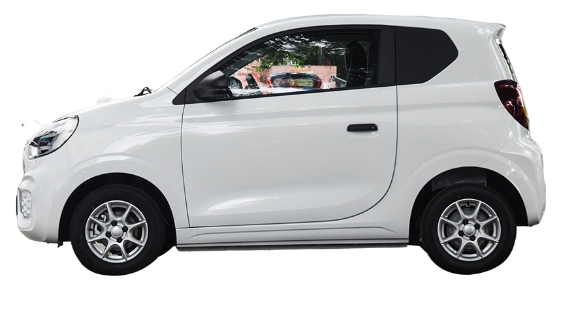
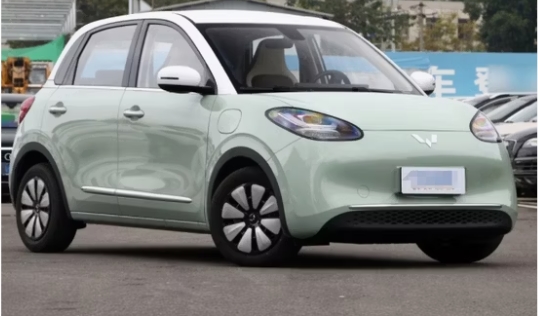
The Roewe Clever is a small battery-electric city car produced by SAIC Motor under its Roewe brand. Introduced in 2020, the Clever was designed to provide an ultra-affordable, practical solution for urban mobility, targeting dense cities where space efficiency and low running costs are essential.
Although its production run was relatively short—lasting from 2020 to 2025—the Roewe Clever underwent several important updates, including battery improvements, expanded trim levels, and repositioning within China’s rapidly growing micro-EV segment. This article examines the full evolution of the Roewe Clever, including its origins, trim structure, engineering changes, and future outlook.
Origins and Background (Pre-2020)
The Roewe Clever was developed as the successor to the earlier Roewe E50, one of SAIC’s first electric city cars introduced in 2012. The E50 was innovative for its time but limited by range, technology, and cost competitiveness.
By the late 2010s, China’s EV market had shifted toward affordable microcars, driven by urban demand and government incentives. SAIC responded by developing a new model that would be:
- Smaller and cheaper than previous EVs
- More efficient and practical for city use
- Competitive with emerging rivals like the Wuling Hongguang Mini EV
This led to the creation of the Roewe Clever.
.
You’ve got that cool car, but is it resting in its own cool place?
It’s visually pleasing for the surrounding areas outside of your home to look as awesome as what’s stored inside your garage! If you desire a truly inspirational environment, you should check into these plans!

.
Launch and Production (2020–2025)
The Roewe Clever was officially launched in March 2020, with production continuing until March 2025.
- Production: 2020–2025
- Assembly: Nanjing, China
- Class: City car (micro EV)
- Body style: 3-door hatchback
The Clever was positioned as one of the most affordable EVs in China, with pricing starting below 60,000 yuan after incentives.
First Generation (2020–2025)
The Roewe Clever remained in a single generation throughout its lifecycle, but it evolved through incremental updates in trims, battery capacity, and equipment.
2020: Launch Model and Initial Trim
At launch in 2020, the Roewe Clever was offered in a single trim level, reflecting its focus on simplicity and affordability.
2020 Trim Structure
- Clever Standard (single variant)
Key Specifications (2020)
- Motor: 37 kW electric motor
- Battery: 27 kWh lithium-ion
- Range: ~260 km (NEDC)
- Top speed: 100 km/h
The car featured:
- Two-seat layout (initially)
- Basic infotainment
- Minimalist interior
The early Clever prioritized cost efficiency over features, targeting urban commuters.
2020–2021: Battery Upgrade and Expanded Variants
Later in 2020, Roewe introduced a significant update to the Clever:
Battery Upgrade (Late 2020)
- Increased battery capacity to ~29 kWh
- Improved range to ~302 km (NEDC)
This upgrade made the Clever more competitive against rival micro EVs.
2021 Trim Levels
By 2021, the lineup expanded to include multiple trims:
- 302 km Excellence Edition
- 302 km New 4-Seat Supercharger Edition
- 302 km All-Purpose Edition
Key Changes in 2021
- Introduction of four-seat configuration
- Slightly improved interior features
- Expanded practicality for families
The addition of a four-seat version was particularly important, as it broadened the Clever’s appeal beyond single commuters.
2022: Peak Development and Lifestyle-Oriented Variants
The Roewe Clever reached its most developed form in 2022, with the introduction of new lifestyle-oriented trims.
2022 Trim Levels
- 311 km Genki Edition
- 311 km Boing Boing Edition
These trims featured:
- Battery: ~29 kWh
- Range: ~311 km (CLTC)
- Motor output: 33 kW (slightly reduced for efficiency)
Key Features (2022 Models)
- Bright, youth-oriented color schemes
- Updated interior styling
- Improved infotainment features
- Continued availability of four-seat configuration
These changes reflected a shift in strategy:
- From purely budget transportation
→ toward a lifestyle-oriented micro EV
Design and Engineering
Exterior Design
The Roewe Clever featured a compact, upright design optimized for city driving:
- Length: 3,140 mm
- Width: 1,648 mm
- Height: 1,531 mm
Key design characteristics:
- Rounded front fascia
- Compact proportions
- Simple, friendly styling
Its small footprint made it ideal for:
- Tight urban streets
- Easy parking
Interior Layout
The Clever’s interior evolved over time:
Early Models (2020)
- Two-seat configuration
- Basic dashboard
- Minimal technology
Later Models (2021–2022)
- Optional four-seat layout
- Improved materials
- More user-friendly infotainment
Despite improvements, the cabin remained functional rather than luxurious, consistent with its price point.
Powertrain and Performance Evolution
The Roewe Clever maintained a simple and consistent electric drivetrain throughout its lifecycle.
Core Specifications
- Drive layout: Front-wheel drive
- Motor output: 33–37 kW
- Torque: ~100 Nm
Battery Evolution
| Year | Battery | Range |
|---|---|---|
| 2020 (launch) | 27 kWh | ~260 km |
| Late 2020–2021 | ~29 kWh | ~302 km |
| 2022 | ~29 kWh | ~311 km |
This gradual improvement in range was crucial for maintaining competitiveness in the micro-EV segment.
Market Position and Competitors
The Roewe Clever competed in China’s rapidly expanding micro EV segment, which includes ultra-affordable electric vehicles designed for city use.
Key Competitors
- Wuling Hongguang Mini EV
- Chery QQ Ice Cream
- other low-cost city EVs
Competitive Advantages
- Higher range than some early rivals
- Practical four-seat option
- Established Roewe/SAIC brand backing
Challenges
- Strong price competition
- Limited performance and features
- Increasing competition from newer EV platforms
Role in SAIC’s EV Strategy
The Roewe Clever played an important role in SAIC’s broader electrification strategy:
- Served as an entry-level EV for mass adoption
- Helped SAIC compete in the fast-growing microcar segment
- Provided a testing ground for low-cost EV technologies
It also complemented other SAIC products, including:
- Larger Roewe EVs
- MG-branded global electric vehicles
Evolution Summary
Timeline
- 2020: Roewe Clever launched (single trim, 260 km range)
- Late 2020: Battery upgrade to ~302 km range
- 2021: Expanded trims and introduction of four-seat variants
- 2022: Lifestyle-focused trims (Genki, Boing Boing)
- 2023–2025: Continued production with minor updates
- 2025: Production ends
Reasons for Discontinuation (2025)
The Roewe Clever was discontinued in 2025, likely due to several factors:
- Intensifying competition in the micro EV segment
- Shift toward more advanced EV platforms
- SAIC’s focus on higher-margin vehicles
While successful in its niche, the Clever faced increasing pressure from:
- Even cheaper competitors
- More advanced small EVs with better features
Future Outlook
Although the Roewe Clever itself has ended production, its legacy is expected to influence future models.
1. Successor Models
SAIC may introduce:
- New micro EVs with improved technology
- Vehicles built on next-generation EV platforms
2. Electrification Strategy
The Clever helped establish:
- Affordable EV manufacturing expertise
- High-volume production capabilities
3. Urban Mobility Trends
Future vehicles inspired by the Clever may include:
- Shared mobility solutions
- Smart city integration
- Autonomous urban vehicles
The Roewe Clever represents a significant chapter in SAIC’s electrification journey. Introduced in 2020 as an ultra-affordable city EV, it quickly adapted to market demands through improved range, expanded trims, and enhanced practicality.
From its humble beginnings as a basic two-seater to its later evolution into a more versatile four-seat microcar, the Clever demonstrated how rapidly electric vehicles can evolve—even within a short lifecycle.
Although production ended in 2025, the Roewe Clever’s impact remains important. It helped popularize low-cost electric mobility in China and contributed to the broader shift toward electrified urban transportation.
In many ways, the Clever was exactly what its name suggests: a smart, efficient, and practical solution for modern city driving—and a stepping stone toward the next generation of affordable electric vehicles.