Wuling Air EV: The Evolution of a Global Micro Electric Mobility Solution
The Wuling Air EV stands as one of SAIC-GM-Wuling’s most globally ambitious electric vehicles. Introduced in 2022, it marked a turning point for the brand by becoming its first widely exported battery-electric city car, bridging the gap between ultra-basic microcars and more practical urban EVs. Built on the same foundation as earlier models like the Mini EV, the Air EV introduced improved usability, export readiness, and a broader appeal across international markets.
This article provides a detailed, factual overview of the evolution of the Wuling Air EV, including its production history, trim levels, variants, global expansion, and future outlook.
Origins and Development
By the early 2020s, SAIC-GM-Wuling had already achieved massive domestic success with affordable electric vehicles. However, most of its models—particularly the Hongguang Mini EV—were primarily designed for the Chinese market.
The Air EV was conceived as a “global micro EV”, capable of meeting the needs of emerging markets such as Southeast Asia, South Asia, and beyond. It is built on the Global Small Electric Vehicle (GSEV) platform, which prioritizes:
- Low production cost
- Compact dimensions
- Efficient urban performance
The Air EV became the third Wuling model on the GSEV platform, following earlier micro EVs.
.

.
Launch and Production (2022–Present)
- Production years: 2022–present
- Initial debut: June 2022
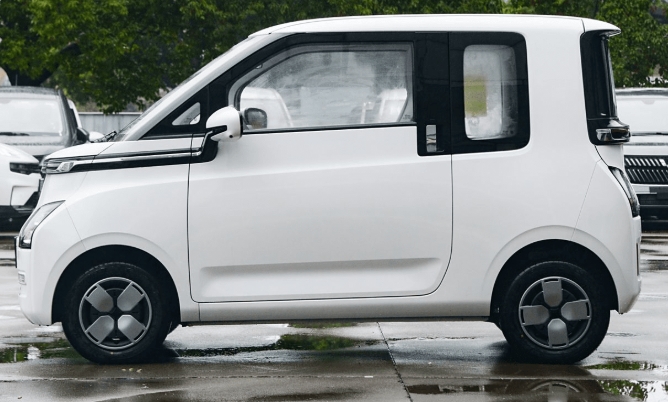
- Body style: 3-door hatchback
- Layout: Rear-motor, rear-wheel-drive
The Air EV was first unveiled in Indonesia on June 1, 2022, before being introduced in China shortly after.
Unlike earlier Wuling EVs, the Air EV was designed from the outset for international markets, with production and assembly in multiple countries:
- China (Liuzhou)
- Indonesia (Cikarang)
- India (as a rebadged variant)
It also gained global attention as an official vehicle during the 2022 G20 Bali Summit, highlighting its role as a showcase for affordable electric mobility.
Core Design and Configurations
One of the defining features of the Air EV is its flexibility in configuration.
Seating Configurations
- 2-seat version (short wheelbase)
- 4-seat version (long wheelbase)
These configurations allowed Wuling to tailor the vehicle for:
- Personal urban commuting
- Small family usage
Dimensions
- Short version: ~2,599 mm length
- Long version: ~2,974 mm length
This made the Air EV slightly larger and more practical than earlier microcars while still maintaining a compact footprint.
Powertrain and Battery Options
The Air EV has remained relatively consistent in its technical philosophy, focusing on efficiency rather than performance.
Motor Options
- 30 kW (base models)
- 50 kW (higher trims)
Battery Options
- 17.3 kWh (Standard Range)
- 26.7 kWh (Long Range)
Range
- Approximately 200 km (Standard Range)
- Up to ~300 km (Long Range)
Charging is handled via AC systems:
- 2.0 kW (base)
- 6.6 kW (higher trims)
2022 Model Year: Initial Launch and Trim Levels
At launch in 2022, the Air EV featured a simple two-trim structure, particularly in markets like Indonesia.
Initial Trim Levels (2022)
- Standard Range
- 17.3 kWh battery
- ~200 km range
- Basic features
- Long Range
- 26.7 kWh battery
- ~300 km range
- Additional premium features
Feature Differences
The Long Range variant added:
- Dual 10.25-inch displays
- Keyless entry
- Enhanced interior materials
- LED lighting upgrades
This structure allowed Wuling to maintain affordability while offering an upgrade path for more demanding users.
2023 Model Year: Expansion with Lite Variant
In 2023, Wuling expanded the Air EV lineup to reach a broader audience.
New Trim Addition
- Air EV Lite (introduced August 2023)
This new variant became the entry-level model, focusing on maximum affordability.
Full Trim Lineup (2023)
By late 2023, the Air EV was offered in three primary trims:
- Lite
- Standard Range
- Long Range
Key Characteristics
- Lite: Minimal features, lowest price
- Standard Range: Balanced option
- Long Range: Maximum range and features
This three-tier structure mirrored Wuling’s broader strategy across its EV lineup.
Global Variants and Rebadged Models (2023–Present)
A key part of the Air EV’s evolution is its adaptation for international markets.
1. MG Comet EV (India, 2023–Present)
In India, the Air EV is sold as the MG Comet EV, representing a rebadged version tailored for local preferences.
- Launch year: 2023
- Similar platform and dimensions
- Marketed as a premium micro EV
2. Chevrolet Spark EV (Egypt, 2022)
The Air EV was also rebadged as a Chevrolet Spark EV for fleet use during international events.
- Used for ride-hailing during COP27
- Limited deployment rather than full retail sales
3. Southeast Asian Markets
The Air EV expanded into:
- Thailand (2023)
- Nepal (2022)
- Brunei (2023)
These markets highlighted the vehicle’s role as a global urban mobility solution.
2024–2025: Refinement and Market Stabilization
Unlike some other Wuling models, the Air EV did not undergo major generational redesigns in its early years. Instead, the focus was on:
Incremental Improvements
- Feature adjustments across trims
- Localization for different markets
- Pricing optimization
Trim Strategy Continuation
The three-tier lineup (Lite, Standard, Long Range) remained the core structure in most markets.
Market Role
The Air EV positioned itself as:
- More refined than the Mini EV
- Smaller and cheaper than compact EVs like the Bingo
Design Philosophy and Features
The Air EV introduced a more futuristic and global-friendly design compared to earlier Wuling models.
Exterior Design
- Boxy, one-box silhouette
- High-mounted LED light strip
- Minimalist styling
Interior Design
- Dual-screen layout (higher trims)
- Clean, modern dashboard
- Focus on usability
Technology
- Internet of Vehicle (IoV) connectivity
- Voice command system (WIND)
- Smart keyless entry (higher trims)
Sales Performance and Market Reception
The Air EV achieved moderate success compared to the Mini EV but played a crucial strategic role.
Sales Highlights
- Strong performance in Indonesia
- Growing presence in Southeast Asia
- Gradual adoption in India under MG branding
Its success is tied to:
- Government EV incentives
- Urban mobility demand
- Competitive pricing
Position in the Wuling Lineup
The Air EV occupies a unique niche within Wuling’s EV portfolio:
| Model | Segment | Role |
|---|---|---|
| Hongguang Mini EV | Ultra-micro EV | Entry-level |
| Air EV | Global micro EV | Export-focused |
| Bingo | Compact EV | Mainstream urban |
| Starlight | Mid-size EV | Family-oriented |
The Air EV serves as a bridge between domestic microcars and global-ready EVs.
Technological Strategy
The Air EV reflects Wuling’s broader EV philosophy:
- Simplicity and cost efficiency
- Modular platform use
- Scalable design for global markets
Its use of LFP batteries ensures:
- Lower cost
- Improved durability
- Safety advantages
Future Outlook
The Wuling Air EV is expected to evolve in several ways:
1. Expanded Global Presence
- Further entry into developing markets
- Increased localization of production
2. Improved Features
- Enhanced safety equipment
- Better infotainment systems
3. Potential New Variants
- Updated body styles
- Possible crossover-inspired versions
4. Platform Evolution
- Integration with next-generation GSEV architecture
- Improved range and efficiency
Since its introduction in 2022, the Wuling Air EV has evolved into a key global product for SAIC-GM-Wuling. While maintaining its core identity as a compact, affordable city car, it has expanded through new trims, international variants, and market adaptations.
The addition of the Lite variant, the continuation of Standard and Long Range trims, and its rebadged global versions demonstrate a flexible and scalable strategy. More importantly, the Air EV represents Wuling’s transition from a domestic-focused automaker to a global player in affordable electric mobility.
As the demand for compact EVs continues to grow worldwide, the Air EV is well positioned to remain a central part of Wuling’s international expansion strategy.