Wuling Hongguang Mini EV: The Evolution of China’s Iconic Micro Electric Car
The Wuling Hongguang Mini EV has become one of the most significant electric vehicles of the modern era, redefining what affordable urban mobility can look like. Since its launch in 2020, this compact battery-electric city car has evolved through multiple generations, expanded into numerous variants and trims, and achieved record-breaking sales in China and beyond.
This article provides a comprehensive, factual overview of the Mini EV’s evolution, including production years, trim levels, major variants, and its broader impact on the automotive industry.
Origins and Development (Pre-2020 Context)
Before the Mini EV, SAIC-GM-Wuling was primarily known for producing affordable commercial vehicles and MPVs such as the Hongguang. However, as China accelerated its push toward electrification in the late 2010s, the company identified a gap in the market: ultra-low-cost electric cars for short-distance urban commuting.
The Mini EV was developed under the Global Small Electric Vehicle (GSEV) platform, designed to maximize cost efficiency and practicality. It aimed to provide basic transportation at a price point accessible to millions of consumers.
.

.
First Generation (2020–Present): The Original Mini EV
Launch and Production
- Production years: 2020–present
- Initial release: July 2020
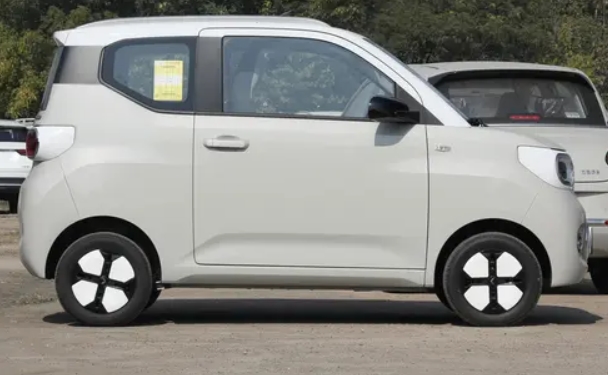
- Body style: 3-door hatchback
- Layout: Rear-motor, rear-wheel-drive
The original Mini EV was intentionally minimalistic. It featured:
- Compact dimensions under 3 meters
- Seating for four (with limited rear space)
- Basic interior with minimal infotainment
Initial Trim Levels (2020–2021)
At launch, the Mini EV was offered in three primary trims:
- Light
- Comfort
- Enjoy
These trims differed mainly in battery size, equipment, and driving range:
- 120 km range version
- 170 km range version
The focus was affordability, with prices starting under $5,000 equivalent, making it one of the cheapest EVs globally.
Market Impact
The Mini EV became an instant success:
- Rapid early orders exceeding tens of thousands within weeks
- Became the best-selling EV in China shortly after launch
- Outsold global competitors in certain months, including larger EVs
Its appeal was simple: low cost, ease of use, and practicality for city driving.
Second Generation Variant: Mini EV Macaron (2021–Present)
Introduction
- Launch year: April 2021
- Marketed as a “second generation” variant
The Macaron version represented a shift toward style and personalization.
Key Features
- Exclusive pastel color schemes (Pantone collaboration)
- Improved safety features:
- Driver airbag
- Rear parking sensors
- Reversing camera
- Slightly more powerful motor (20 kW)
Trim Strategy
The Macaron was typically offered as:
- Macaron Standard
- Macaron Enhanced / Premium (varies by market year)
Rather than replacing the base Mini EV, it complemented it as a more lifestyle-oriented model targeting younger buyers.
Third Generation Expansion (2022–2023): GameBoy Edition and Cabrio
Mini EV GameBoy Edition (2022–Present)
- Launch year: March 2022
- Considered a third-generation evolution
The GameBoy Edition introduced:
- Larger body dimensions
- More aggressive, SUV-like styling
- Expanded battery options:
- 9.2 kWh
- 13.9 kWh
- 25.5 kWh
- Power outputs ranging up to ~40 hp
Trim Levels (GameBoy Edition)
Common trims included:
- Standard Range
- Long Range
- High Power / Premium
These trims varied by:
- Battery capacity
- Motor output
- Feature content
Mini EV Cabrio (2022–Present)
- Launch year: September 2022
- Body style: 2-door convertible
The Cabrio version brought a unique offering to the segment:
- Soft-top convertible roof
- Based on the GameBoy platform
- Limited production compared to standard models
This model emphasized lifestyle appeal rather than mass-market practicality.
Facelifted Macaron and Feature Enhancements (2023)
In late 2023, Wuling updated the Macaron variant:
Key Improvements
- Addition of passenger airbag
- Increased range up to 215 km (CLTC)
- Introduction of fast charging (30–80% in ~35 minutes)
Updated Trim Structure
- Macaron Basic
- Macaron Premium / Advanced
This update marked a significant step forward in safety and usability, addressing earlier criticisms of the Mini EV’s minimal equipment.
Fourth Generation (2024–Present): Major Redesign and 5-Door Expansion
Introduction
- Unveiled: December 2024
- Market launch: February 2025
The fourth generation represented the most substantial redesign in the Mini EV’s history.
Key Changes
- Introduction of a 5-door hatchback variant
- Larger body dimensions
- Improved interior space and usability
- Modernized exterior styling
Trim Levels (4th Generation)
For the 5-door model, three primary trims were introduced:
- Standard
- Mid-Level
- High / Premium
These trims differed in:
- Battery capacity
- Range
- Technology features
The addition of rear doors significantly improved practicality, making the Mini EV more appealing to families.
Fifth Generation Update (2026–Present)
Launch
- Unveiled: February 2026
The fifth-generation Mini EV represents an evolutionary update rather than a complete redesign.
Key Features
- Unified design language across:
- 2-door models
- 4/5-door variants
- Retro-inspired styling elements
- Improved refinement and consistency
Trim Strategy (2026)
While full trim details are still emerging, the lineup continues to include:
- Entry-level city-focused variants
- Mid-range practical trims
- Higher-spec lifestyle or premium versions
Complete Model and Variant Overview (2020–2026)
Core Models
- Mini EV (Standard) – 2020–present
- Mini EV Macaron – 2021–present
- Mini EV GameBoy Edition – 2022–present
- Mini EV Cabrio – 2022–present
- Mini EV 5-Door (4th Gen) – 2025–present
- Mini EV 5th Gen Update – 2026–present
Body Styles
- 3-door hatchback (2020–present)
- 2-door convertible (2022–present)
- 5-door hatchback (2025–present)
Trim Level Evolution Summary
| Year | Key Trims |
|---|---|
| 2020 | Light, Comfort, Enjoy |
| 2021 | Macaron variants added |
| 2022 | GameBoy trims (Standard, Long Range, Premium) |
| 2023 | Updated Macaron trims |
| 2025 | 5-door trims (Standard, Mid, Premium) |
| 2026 | Unified multi-variant lineup |
Sales Success and Market Influence
The Mini EV’s success has been extraordinary:
- Over 1.8 million units sold by 2025
- More than 435,000 units sold in 2025 alone
- Became the best-selling micro EV globally
Its impact includes:
- Proving demand for ultra-affordable EVs
- Inspiring competing models in China
- Demonstrating a viable alternative to traditional urban transport
Technological Philosophy
Unlike many modern EVs, the Mini EV prioritizes:
- Simplicity over advanced technology
- Cost efficiency over performance
- Practical urban usability
Key characteristics include:
- Small battery packs
- Modest motor outputs
- Limited but improving safety features
This approach allows Wuling to maintain extremely low pricing.
Global Presence and Limitations
Despite its success, the Mini EV faces challenges outside China:
- Safety regulations limit exports to markets like the U.S.
- Some variants are sold internationally under different branding (e.g., Air EV)
However, its concept has influenced global discussions about affordable EVs.
Future Outlook
The future of the Mini EV appears strong, with several likely developments:
1. Continued Diversification
- Expansion of body styles
- More lifestyle-oriented variants
2. Improved Safety and Technology
- Additional airbags and driver assistance features
- Better battery and charging capabilities
3. Global Adaptation
- Potential redesigns for export markets
- Compliance with international safety standards
4. Platform Evolution
- Further development of the GSEV architecture
- Integration with newer EV technologies
From its humble beginnings in 2020, the Wuling Hongguang Mini EV has evolved into a diverse and influential vehicle family. Through continuous updates—including the Macaron, GameBoy Edition, Cabrio, and newer 5-door models—it has expanded far beyond its original concept while staying true to its core mission: affordable, practical electric mobility.
Its evolution reflects not only Wuling’s adaptability but also the rapid transformation of the global EV market. As it enters its fifth generation, the Mini EV remains a symbol of how simplicity and affordability can drive mass adoption—an idea that may shape the future of electric transportation worldwide.