The History of Skyworth–Skywell
From Household Electronics to Electric Vehicle Manufacturing
Skyworth–Skywell is one of the newest automotive manufacturers to emerge from China, representing an unusual combination of consumer electronics expertise and commercial vehicle engineering. Although the company is often referred to under the combined name “Skyworth–Skywell,” it is actually the result of two separate corporate histories. Skywell originated as a commercial vehicle manufacturer, while Skyworth, one of China’s largest consumer electronics companies, later entered the automotive industry through a strategic investment and branding partnership. Together, they have sought to establish themselves as a competitor in the rapidly expanding global electric vehicle (EV) market.
Unlike many established automakers with histories stretching back more than a century, Skyworth–Skywell’s automotive story is primarily one of the twenty-first century. Its rise reflects China’s broader transition toward electric mobility, government support for new energy vehicles, and the convergence of consumer electronics and automotive technologies.
Origins of Skywell
Skywell’s automotive roots trace back to 2010, when Skywell New Energy Automobile Group Co., Ltd. was established in Nanjing, Jiangsu Province, China. The company entered the market by acquiring the assets of Nanjing Jinlong Bus Manufacturing Co., Ltd., a commercial bus manufacturer that had been founded in 2000.
The acquisition gave Skywell valuable manufacturing licenses, production facilities, engineering expertise, and an existing workforce. Rather than starting from scratch, Skywell inherited an operational commercial vehicle business that specialized in buses and commercial transportation.
Initially, the company’s primary focus was electric buses, commercial vans, and fleet transportation. During the early 2010s, China invested heavily in electrifying public transportation, creating favorable conditions for companies like Skywell.
Founder Stephen Wong
The driving force behind Skywell’s expansion is Stephen Wong (Wong Kwong-yue), a Hong Kong entrepreneur.
Wong built his reputation in the electronics industry before entering automotive manufacturing. Rather than beginning as an engineer or automobile designer, he accumulated experience in manufacturing management, technology investment, and consumer electronics.
His most notable achievement before Skywell was founding Skyworth Group in 1988.
Skyworth began as a television manufacturer serving Hong Kong and mainland China. Over several decades, the company expanded into:
- Televisions
- Home appliances
- Set-top boxes
- Computer displays
- Smart home electronics
- Internet-connected consumer devices
Under Wong’s leadership, Skyworth became one of China’s largest electronics manufacturers and a recognized global television brand.
His experience managing high-volume electronics manufacturing proved valuable when transitioning into electric vehicles, where batteries, software, displays, connectivity, and electronics are becoming just as important as mechanical engineering.

History of Skyworth Group
Skyworth Group was founded in 1988 in Shenzhen, China.
The company spent the 1990s building manufacturing capacity while exporting televisions and electronics worldwide.
During the 2000s, Skyworth became one of China’s largest television producers, competing with companies such as Samsung, LG, Sony, TCL, and Hisense.
Its expertise in display technology, software, user interfaces, and smart connectivity later became an important competitive advantage in automotive interiors.
Formation of the Skyworth Automotive Brand
Although Skywell already manufactured commercial vehicles, it lacked widespread consumer recognition.
In 2021, Skywell and Skyworth Group announced that passenger vehicles would be sold under the Skyworth Auto brand.
This branding strategy allowed the automotive business to benefit from Skyworth’s internationally recognized electronics name.
Importantly, this was not a corporate merger.
Instead:
- Skywell remained the vehicle manufacturer.
- Skyworth licensed and promoted its established consumer brand for automobiles.
- Both companies remained connected through common ownership and leadership under Stephen Wong.
Therefore, Skyworth Auto became the passenger vehicle division, while Skywell continued producing commercial vehicles.
Years of Business Operation
- Skyworth Group: 1988–present
- Nanjing Jinlong Bus Manufacturing: 2000–2010
- Skywell New Energy Automobile Group: 2010–present
- Skyworth Auto brand: 2021–present
None of these companies have gone out of business.
Expansion into Passenger Vehicles
After years producing buses and commercial EVs, Skywell entered the passenger vehicle market.
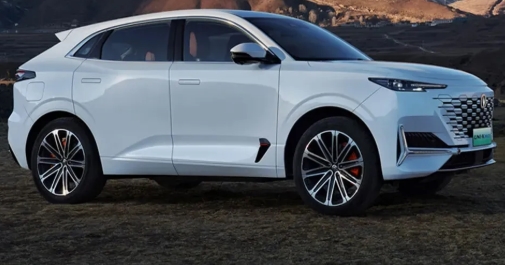
The company’s first major SUV was introduced in 2020 under the Skywell name before later being rebranded internationally as the Skyworth ET5.
The vehicle represented the company’s transition from commercial transportation to consumer automobiles.
Rather than competing in the luxury vehicle market, Skyworth positioned itself as offering:
- Long driving range
- High technology content
- Competitive pricing
- Spacious interiors
- Family-oriented transportation
Factory Operations
Skywell operates major manufacturing facilities in Nanjing, China.
Its factories include:
- Body stamping
- Robotic welding
- Battery installation
- Electric drivetrain assembly
- Vehicle painting
- Final assembly
- Quality inspection
- Vehicle testing
The company also manufactures many commercial electric vehicles alongside passenger automobiles.
Its production strategy emphasizes flexible assembly lines capable of producing multiple vehicle types.
Like many Chinese manufacturers, Skywell relies on a network of domestic suppliers for batteries, electric motors, semiconductors, displays, and electronic components.
Engineering Philosophy
Skyworth–Skywell differs from many traditional automakers because its background combines two different industries.
Most automobile companies originated in:
- Mechanical engineering
- Engine manufacturing
- Coach building
- Industrial machinery
Skyworth instead entered automotive production after decades of electronics manufacturing.
As a result, the company places heavy emphasis on:
- Large digital displays
- Smart infotainment
- Connected services
- Software integration
- Voice controls
- Artificial intelligence
- Smart home connectivity
This consumer electronics perspective influences both interior design and vehicle software.
Hardships and Challenges
Like nearly every new automobile manufacturer, Skywell has faced significant obstacles.
Building Brand Recognition (2020–Present)
One of the company’s greatest challenges has been establishing consumer trust.
Outside China, Skyworth is still relatively unknown as an automobile manufacturer.
Consumers often recognize established names such as Toyota, Ford, Volkswagen, Hyundai, or Tesla long before Skyworth.
The company has attempted to overcome this challenge through international expansion, competitive pricing, and technology-focused marketing.
Entering Mature Markets
Europe, Australia, and other international markets already contain intense competition from established automakers.
Skyworth must compete against:
Rather than competing on prestige, Skyworth has emphasized value for money and long-range electric driving.
Supply Chain Disruptions
Like nearly every global automaker, Skywell experienced component shortages during the COVID-19 pandemic beginning in 2020.
The shortages affected semiconductors, electronic components, and logistics.
China’s large domestic supplier network helped reduce some impacts compared to manufacturers heavily dependent on overseas imports.
Milestones
Several milestones stand out in Skywell’s history.
1988
Stephen Wong founded Skyworth Group.
2000
Nanjing Jinlong Bus Manufacturing began producing buses.
2010
Skywell acquired Nanjing Jinlong and entered commercial vehicle manufacturing.
2017
Skywell significantly expanded electric bus production.
2020
Launch of the company’s first modern passenger SUV.
2021
Passenger vehicles officially adopted the Skyworth brand.
2022–Present
Expansion into international markets including Europe, the Middle East, Southeast Asia, and selected right-hand-drive countries.
Marketing Strategy
Skyworth’s marketing differs from many legacy automakers.
Rather than emphasizing heritage, racing history, or luxury, advertisements typically highlight:
- Smart technology
- Battery range
- Digital lifestyles
- Family transportation
- Affordable pricing
- Connectivity
- Health-focused interior air quality
The company also benefits from Skyworth’s existing reputation in home electronics.
Cross-brand recognition allows consumers familiar with Skyworth televisions to become aware of Skyworth automobiles.
Major Events
One of the most significant events in company history was the launch of the Skyworth passenger vehicle brand in 2021.
This represented a major strategic shift from commercial transportation toward consumer automobiles.
Another milestone was the expansion into export markets beginning in the early 2020s.
Rather than remaining exclusively a Chinese manufacturer, Skyworth actively pursued sales across Europe, Asia, Africa, and the Middle East.
Racing Programs
Unlike many traditional automakers, Skywell has not maintained a significant factory-backed racing program.
The company has not participated in major international motorsports such as:
- Formula One
- NASCAR
- IndyCar
- World Rally Championship
- World Endurance Championship
- Formula E
Instead, its engineering resources have focused almost entirely on commercial vehicles and consumer electric transportation.
Vehicle Models
Skyworth–Skywell has produced several electric vehicles, including:
- Skyworth ET5
- Skyworth HT-i
- Skyworth EV6
- Skywell D07 electric bus
- Skywell electric commercial vans
- Skywell logistics vehicles
Commercial buses remain an important portion of the company’s business alongside passenger automobiles.
Most Successful Vehicle
The company’s most successful passenger vehicle has been the Skyworth EV6, which is marketed in some export markets as the Skyworth ET5.
The SUV became the company’s flagship because it:
- Was the first widely exported passenger model.
- Offered competitive electric driving range.
- Featured a spacious interior.
- Included large digital displays.
- Incorporated advanced driver-assistance systems.
- Served as the foundation for the Skyworth passenger vehicle brand.
Its success established Skyworth as a recognizable EV manufacturer outside China.
Sales Figures
Skywell does not publicly release detailed, audited global sales figures for every passenger vehicle model on a consistent basis, making exact cumulative worldwide totals unavailable.
The company has reported growing domestic deliveries and expanding exports, but comprehensive global sales statistics for individual models have not been consistently published.
United States Sales
Skyworth has never officially sold passenger vehicles in the United States.
As a result:
- U.S. vehicle sales: 0
- No official dealer network
- No factory distribution
- No EPA-certified retail passenger vehicles
- No established American service network
Although the company has expressed interest in international expansion, the United States remains absent from its retail markets.
Consumer Reception
China
Chinese buyers generally view Skyworth as an emerging value-oriented EV manufacturer.
Reviews commonly praise:
- Comfortable ride
- Spacious cabin
- Technology features
- Competitive pricing
Some reviewers have criticized:
- Limited brand recognition
- Conservative styling
- Relatively small dealership network compared to major Chinese competitors
United States
Because Skyworth vehicles are not officially sold in America, U.S. consumer reception remains extremely limited.
Most awareness comes from automotive journalists covering international EV developments rather than from actual ownership.
What Makes Skyworth Different?
Several characteristics distinguish Skyworth–Skywell from other manufacturers.
First, the company combines expertise in electronics and automotive manufacturing.
Second, its experience building televisions and smart home devices strongly influences its vehicle software and infotainment systems.
Third, unlike many startups, Skywell entered passenger vehicles only after years producing commercial transportation equipment.
This commercial vehicle background provided manufacturing experience before entering the consumer market.
Finally, Skyworth positions itself between budget EV manufacturers and premium luxury brands by offering substantial technology at relatively affordable prices.
Corporate Structure
Although many people refer to the company simply as “Skyworth,” the business structure remains distinct.
Skywell manufactures the vehicles.
Skyworth supplies branding, consumer recognition, and electronics expertise.
The companies remain closely connected through common ownership rather than through a merger or acquisition.
Therefore, no historical merger between Skyworth Group and Skywell has occurred.
Current Status and Future Outlook
As of 2026, Skyworth Group, Skywell New Energy Automobile Group, and the Skyworth Auto brand all remain in operation.
The company’s future depends largely on continued growth in global EV demand and its ability to compete against increasingly strong Chinese rivals such as BYD, Geely, Chery, XPeng, NIO, and SAIC-owned MG.
Skyworth is expected to continue expanding exports while developing new electric SUVs, commercial vehicles, and connected automotive technologies. Its electronics heritage positions it well to integrate advanced infotainment, software, and smart-device ecosystems into future models. However, the company must also contend with tightening international trade regulations, growing competition, and the need to build stronger brand recognition outside China.
Although Skyworth–Skywell is still a relatively young automaker, it has established itself as an example of China’s evolving automotive industry. By combining commercial vehicle experience with consumer electronics expertise, the company has created a distinctive identity in the electric vehicle market. While it lacks the decades of heritage enjoyed by traditional automakers, its focus on software, connectivity, and affordable electric mobility reflects the direction in which much of the global automotive industry is moving. Whether Skyworth–Skywell ultimately becomes a major worldwide automotive brand will depend on its success in expanding internationally, maintaining product quality, and earning the long-term confidence of consumers.