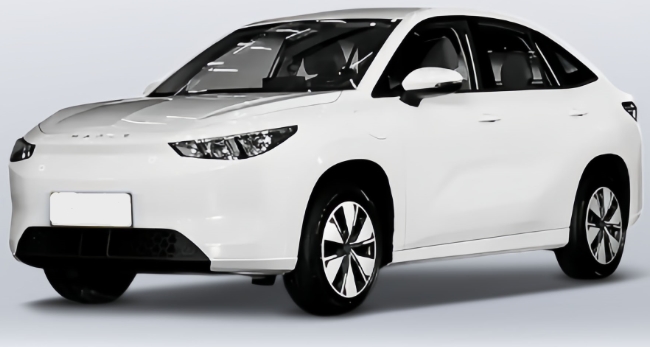
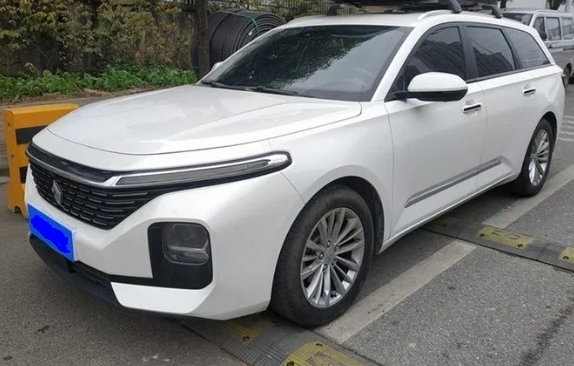
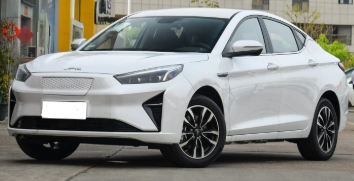
The Evolution of the Maple Cao Cao 60: A Purpose-Built Electric Taxi for China’s Ride-Hailing Revolution
The Maple Cao Cao 60 is a uniquely positioned electric sedan developed specifically for ride-hailing operations under Geely’s mobility ecosystem. Unlike conventional passenger vehicles designed for private ownership, the Cao Cao 60 was engineered primarily for fleet efficiency, durability, and low operating cost in high-mileage urban service. Introduced in 2023, it represents one of the clearest examples of a vehicle designed around a mobility-as-a-service (MaaS) business model rather than traditional consumer automotive sales.
This article examines the evolution of the Maple Cao Cao 60, including its production timeline, technical development, trim structure, operational role, and future outlook.
Origins and Background (2021–2023)
The Cao Cao 60 originates from Geely’s broader push into ride-hailing and shared mobility through its subsidiary Cao Cao Mobility. Before the Cao Cao 60, the company relied on earlier fleet vehicles such as the Maple 80V and adapted production models.
In 2021, Cao Cao Mobility partnered with Geely’s Maple/Livan engineering group to develop a dedicated taxi-focused vehicle platform. The goal was to reduce total cost of ownership while optimizing passenger comfort for high-frequency urban use.
By 2022, development had shifted toward a second-generation dedicated ride-hailing vehicle based on the Maple 60s compact electric sedan platform. This ultimately became the foundation for the Cao Cao 60.
The vehicle was officially launched in March 2023 as Cao Cao Mobility’s first fully purpose-built electric taxi model.
.

.
Launch and Production Start (2023–Present)
Production Timeline
- 2023–present (2026)
The Maple Cao Cao 60 entered production in early 2023, with initial deployment directly into Cao Cao Mobility’s ride-hailing fleet across multiple Chinese cities.
Unlike consumer vehicles, its production volume is closely tied to fleet contracts rather than retail demand.
Vehicle Concept and Design Philosophy
The Cao Cao 60 was engineered around three core principles:
- Fleet durability for constant daily use
- Low operating cost through electric power and battery swapping
- Passenger comfort optimization for ride-hailing service
It is based on the Maple 60s sedan platform but heavily modified for fleet operations, including reinforced interior materials and simplified user interfaces.
2023 Model Year: Initial Configuration
At launch, the Cao Cao 60 was offered in two primary fleet-oriented configurations, rather than traditional consumer trims.
2023 Variants
- Standard Fleet Version
- Enhanced Fleet Version (sensor-equipped / autonomous-ready hardware package)
These variants were not marketed to retail customers but instead allocated directly to Cao Cao Mobility operations.
Powertrain (2023)
The Cao Cao 60 is a fully electric sedan designed for high-efficiency urban driving.
Key specifications:
- Electric motor output: 120 kW (163 horsepower equivalent)
- Torque: approximately 240 Nm
- Drivetrain: Front-wheel drive
- Top speed: ~93 mph (150 km/h)
The vehicle uses a single-speed transmission optimized for smooth acceleration in stop-and-go traffic.
Battery System and Swapping Capability
One of the most important innovations of the Cao Cao 60 is its battery-swapping system, which allows depleted batteries to be exchanged in minutes at dedicated stations.
- Battery type: Lithium iron phosphate (LFP)
- Driving range: approximately 258 miles (415 km CLTC)
- Swapping: Supported (fleet infrastructure dependent)
This system significantly reduces downtime compared to traditional charging, which is critical for ride-hailing operations.
2023 Trim Evolution: Fleet Specification Differences
Although not marketed as consumer trims, the Cao Cao 60 had two operational configurations:
Standard Operation Model
- Base comfort interior
- Standard driver-assist package
- Designed for maximum fleet efficiency
Advanced Fleet Model
- Additional sensors for data collection and semi-autonomous testing
- Enhanced driver monitoring systems
- Improved connectivity for fleet management
These configurations allowed Cao Cao Mobility to balance cost efficiency with future automation testing.
2024 Model Year: Fleet Expansion and Optimization
By 2024, the Cao Cao 60 had become a core part of Cao Cao Mobility’s fleet expansion strategy.
Operational Growth
- Rapid fleet scaling across major Chinese cities
- Increased share of customized vehicles within Cao Cao’s total fleet
- Higher utilization rates in urban ride-hailing markets
Technical Improvements
While the core hardware remained unchanged, 2024 updates focused on:
- Software optimization for fleet routing
- Improved energy efficiency in urban conditions
- Enhanced battery management systems
No major new consumer-style trims were introduced, as the model remained fleet-focused.
2025 Model Year: Software and Service Integration
In 2025, the Cao Cao 60 continued its evolution primarily through software and service integration rather than hardware redesign.
Key Developments
- Improved dispatch algorithms for ride-hailing efficiency
- Enhanced driver assistance calibration
- Expanded battery-swapping network availability
The vehicle’s role expanded beyond simple transportation into a data-collecting mobility platform, feeding information back into Geely’s autonomous driving development ecosystem.
2026 Model Year: Continued Fleet Role and Platform Stability
As of 2026, the Maple Cao Cao 60 remains in production without a full redesign.
Current Status
- Still based on original 2023 platform
- Continues serving Cao Cao Mobility fleets
- Gradual software improvements ongoing
No official consumer retail trims have been introduced, reinforcing its identity as a dedicated service vehicle rather than a passenger car product line.
Interior and Driver-Centered Design
The Cao Cao 60 interior is heavily optimized for professional drivers and passengers in urban transport scenarios.
Key Interior Features
- Simplified dashboard layout for durability
- Durable seat materials designed for heavy usage
- Rear-seat comfort optimization with increased legroom
- Multiple charging ports for passengers
The rear seat design prioritizes:
- Accessibility
- Comfort during short urban trips
- Ease of cleaning and maintenance
Technology and Fleet Intelligence
The Cao Cao 60 integrates deeply with Cao Cao Mobility’s digital ecosystem.
Core Technologies
- Real-time fleet tracking system
- Driver behavior monitoring
- Centralized dispatch optimization
- Battery-swapping network integration
These systems allow Cao Cao Mobility to optimize:
- Vehicle utilization rates
- Driver income efficiency
- Energy consumption per trip
Market Role and Business Strategy
The Cao Cao 60 is not a traditional consumer vehicle—it is a fleet economics tool.
Cao Cao Mobility uses two main customized vehicle types:
- First generation: Maple 80V
- Second generation: Cao Cao 60
The Cao Cao 60 plays a central role in reducing:
- Vehicle downtime
- Maintenance costs
- Fuel and charging inefficiencies
This aligns with Geely’s broader strategy of vertically integrating mobility services and vehicle manufacturing.
Relationship to the Livan/Maple Platform
The Cao Cao 60 is closely related to Geely’s Livan and Maple engineering families, particularly the Maple 60s sedan.
The underlying platform provides:
- Modular electric architecture
- Swappable battery compatibility
- Standardized fleet production design
This allows rapid scaling of production for fleet deployment.
Future Outlook
The future of the Maple Cao Cao 60 will likely be shaped by broader changes in mobility and autonomous driving.
1. Increased Automation
Future versions may include:
- Higher-level autonomous driving hardware
- Expanded sensor suites for robotaxi use
2. Fleet Electrification Expansion
- Greater reliance on battery swapping networks
- Faster turnaround between shifts
3. Potential Second Generation
A successor model could introduce:
- Dedicated EV taxi platform
- Improved crash safety structure
- Reduced manufacturing cost per unit
4. Integration with Robotaxi Systems
The Cao Cao 60 is already positioned as a stepping stone toward:
- Semi-autonomous fleet operations
- Fully autonomous ride-hailing services in controlled environments
The Maple Cao Cao 60 is a specialized electric vehicle designed not for private ownership, but for the future of urban mobility services. Since its introduction in 2023, it has remained focused on a single mission: efficient, high-utilization ride-hailing transportation.
Across its evolution, it has maintained:
- A consistent 120 kW electric drivetrain
- A 415 km battery-swapping-capable range
- Fleet-optimized trim configurations rather than consumer models
Instead of evolving through traditional redesign cycles, the Cao Cao 60 has evolved through software updates, fleet integration, and operational scaling, reflecting a fundamentally different automotive philosophy.
As mobility services continue to grow, the Cao Cao 60 stands as an early example of how vehicles can be engineered not just as products, but as components of a larger transportation ecosystem.