The Evolution of the Changhe Freedom Series: From the M50 to the M70
The Changhe Freedom Series represented one of the company’s most ambitious attempts to move beyond basic commercial microvans and into the growing Chinese multi-purpose vehicle (MPV) market. Developed under the ownership of BAIC Group, the Freedom lineup evolved from the original Changhe Freedom microvan into a family-oriented range of compact MPVs that included the Freedom M50, M60, and M70. Although the vehicles were never widely exported outside China, the series reflected major shifts in the Chinese automotive industry during the 2010s, particularly the demand for affordable seven-seat family transportation.
The Freedom Series also demonstrated how Chinese automakers adapted commercial vehicle platforms into passenger-focused MPVs for smaller cities and rural markets. While the lineup eventually disappeared following Changhe’s decline and discontinuation of operations, the M50, M60, and M70 remain notable examples of China’s rapidly expanding domestic vehicle industry during the late 2000s and 2010s.
Origins of the Changhe Freedom
The original Changhe Freedom debuted in 2007 as a compact microvan and light pickup truck. It was designed primarily as a low-cost work vehicle for third- and fourth-tier Chinese cities. The model was offered in both passenger and cargo configurations, with seating layouts ranging from five to eight passengers. A pickup version was also available for commercial use.
Production years for the original Changhe Freedom were:
- 2007–2014 in China
- 2014–2022 in Vietnam as the Thaco Towner
The original Freedom used a simple rear-wheel-drive layout and compact dimensions typical of Chinese microvans at the time. Early models featured utilitarian styling, bumper-mounted rear lamps, and minimal equipment. Power came from small 1.0-liter inline-four gasoline engines paired with a five-speed manual transmission.
As China’s automotive market expanded, consumer expectations also changed. Buyers increasingly wanted vehicles that combined the practicality of a van with the comfort and styling of a passenger car. This shift encouraged Changhe to transform the Freedom name into a broader MPV sub-brand.
.
NO MORE dead batteries with this:

.
Changhe Freedom M50
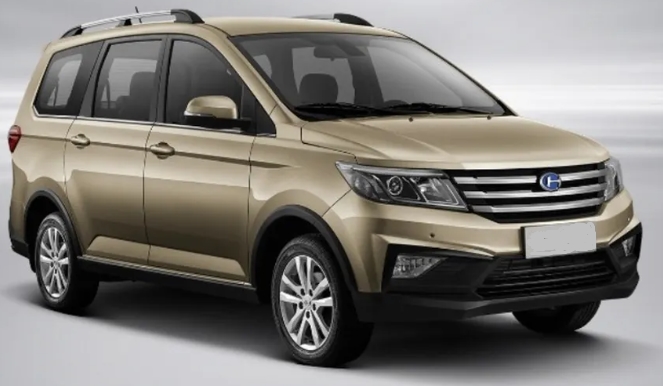
The Changhe Freedom M50 was introduced during the mid-2010s as a more modern and passenger-oriented MPV. The vehicle retained the practical box-shaped design of the original Freedom but featured updated styling, a more refined interior, and improved seating arrangements aimed at families instead of purely commercial operators.
Production Years
- 2015–2021
The M50 became one of Changhe’s better-selling products during the company’s final years. Sales peaked in 2016, when more than 32,000 units were reportedly sold in China.
Available Models and Trim Levels
Throughout its production run, the M50 was offered in several configurations, typically divided into basic commercial versions and better-equipped passenger trims. Common trim levels included:
- Standard
- Comfort
- Luxury
- Elite
Depending on market year and configuration, buyers could choose between:
- Five-seat layouts
- Seven-seat layouts
- Cargo-oriented versions
The M50 emphasized affordability and practicality. Equipment on higher trims often included:
- Touchscreen infotainment systems
- Power windows
- Air conditioning
- Rear parking sensors
- Alloy wheels
The design language also evolved noticeably compared to the original Freedom. The M50 adopted larger headlights, a taller front fascia, and a more passenger-car-like appearance.
Mechanically, the vehicle remained relatively simple. Most models used naturally aspirated four-cylinder gasoline engines paired with manual transmissions. Reliability and low ownership costs were prioritized over performance.
Changhe Freedom M60
The Changhe Freedom M60 represented a further attempt to modernize the Freedom lineup. Introduced during the late 2010s, the M60 targeted families looking for affordable seven-seat transportation while competing against successful Chinese MPVs such as the Baojun 730.
Production Years
- 2016–2021
The M60 featured more contemporary styling than the M50, including a larger grille, angular headlights, and body lines inspired by more expensive MPVs and crossovers. Some automotive observers noted that its front-end styling resembled premium Lexus models.
Available Models and Trim Levels
The M60 lineup generally included:
- Standard
- Luxury
- Elite
Configurations included:
- Seven-seat family versions
- Entry-level commercial MPVs
Higher-end trims introduced features that were becoming increasingly important in China’s entry-level MPV market:
- Touchscreen infotainment
- Bluetooth connectivity
- Rearview cameras
- Power mirrors
- Sunroof options
- Leather seating on premium variants
The M60 was typically powered by a 1.5-liter inline-four gasoline engine. Depending on trim and production year, manual and automatic transmissions were available.
Although the M60 offered improved comfort and styling, it entered an extremely competitive segment dominated by larger manufacturers with stronger dealer networks. Sales never reached the levels Changhe had hoped for, especially as Chinese consumers increasingly shifted toward SUVs during the late 2010s.
Changhe Freedom M70
The final major development in the Freedom Series was the Changhe Freedom M70, also known simply as the Changhe M70. The vehicle was revealed in 2016 and officially launched in China in March 2017.
Production Years
- 2016–2019
The M70 was the most advanced and largest vehicle in the Freedom family. It was positioned as a compact MPV with flexible seating and improved interior space.
Available Models and Trim Levels
The M70 was offered in several seating configurations:
- Five-seat
- Seven-seat
- Eight-seat
Trim levels varied by market year, but commonly included:
- Standard
- Comfort
- Luxury
- Elite
Compared to earlier Freedom models, the M70 had a more mature design. The vehicle featured:
- A larger body
- Sliding practicality with tall roof dimensions
- Modern front styling
- Improved dashboard materials
- Enhanced passenger comfort
The M70 measured approximately 185.8 inches long with a 110.6-inch wheelbase, making it significantly larger than the original Freedom microvan.
Power came from a 1.5-liter inline-four gasoline engine paired with a five-speed manual transmission. The vehicle used a rear-wheel-drive layout and emphasized low operating costs over outright performance.
Pricing in China reportedly ranged from 54,900 to 64,900 yuan at launch, placing the M70 firmly in the affordable family transportation category.
The Role of BAIC and Changhe’s Decline
The Freedom Series emerged during a turbulent period for Changhe. Originally linked to Suzuki through joint ventures, Changhe later became part of BAIC after ownership changes in the early 2010s. BAIC attempted to reposition the company with updated MPVs, crossovers, and sedans.
However, the Chinese market evolved rapidly. Consumer demand shifted away from basic MPVs and toward SUVs and crossovers. At the same time, stronger domestic manufacturers such as Geely, Chery, Great Wall, and BYD gained market share with more advanced products.
Changhe struggled to maintain competitiveness despite introducing vehicles like the M50, M60, and M70. Sales declined sharply by the end of the decade, and the company’s products were gradually discontinued. By 2022, Changhe had effectively ceased operations, and its official website disappeared.
Legacy and Future Outlook
Although the Changhe Freedom Series is no longer in production, it remains significant as part of the broader evolution of Chinese family vehicles. The lineup demonstrated how Chinese automakers transitioned from producing basic utility vans to creating more sophisticated MPVs aimed at everyday consumers.
The M50, M60, and M70 also reflected the rapid growth of China’s domestic automotive industry during the 2010s. These vehicles provided affordable transportation for large families and small business owners during a period of major economic expansion in smaller Chinese cities.
Today, the segment once occupied by the Freedom Series has largely been replaced by compact SUVs and electrified MPVs. Modern Chinese brands now focus heavily on hybrid and electric vehicles equipped with advanced technology and safety systems.
While the Freedom Series itself has no confirmed successor, its influence can still be seen in the development of affordable Chinese MPVs. The vehicles represented an important transitional chapter in Changhe’s history and in the broader story of China’s automotive industry.