The Evolution of the Changhe M60
The Changhe M60 was one of several multi-purpose vehicles developed during the rapid expansion of China’s domestic automotive market in the 2010s. Designed as an affordable family-oriented people mover, the M60 reflected the growing demand in China for compact seven-seat vehicles that combined practicality, low operating costs, and modern styling. Although the model never achieved the international recognition of larger Chinese brands, it represented an important chapter in the evolution of Changhe as a manufacturer and demonstrated the company’s effort to remain competitive in the crowded MPV segment.
Origins of Changhe
Changhe traces its roots back to the early 1970s, when the company began producing buses and utility vehicles in Jiangxi Province, China. The automaker later formed a long-running partnership with Suzuki, helping it develop compact passenger cars and microvans for the Chinese market. Over time, ownership of Changhe changed several times, including periods under Changan Automobile and later BAIC Group.
For decades, Changhe specialized in small commercial vans and budget-oriented passenger vehicles. By the mid-2010s, however, the Chinese market had shifted heavily toward SUVs and practical family MPVs. This transition encouraged Changhe to introduce newer products aimed at younger buyers and growing families.
The M60 emerged during this period of transformation.
.
NO MORE dead batteries with this:

.
Introduction of the Changhe M60
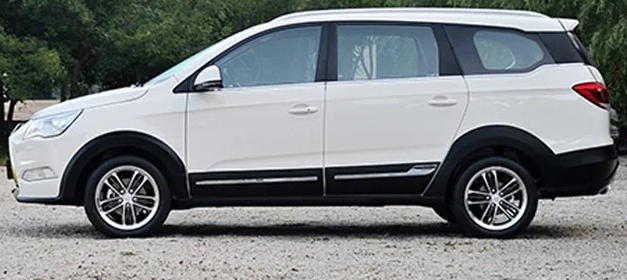
The Changhe M60 was introduced in 2016 as a compact MPV with seating for up to seven passengers. The vehicle was intended to compete with affordable domestic MPVs produced by manufacturers such as Wuling, Changan, and Dongfeng.
The M60 featured a modern front fascia, large cabin space, and flexible seating arrangements. Like many Chinese MPVs of the era, the emphasis was placed on affordability and interior practicality rather than luxury performance.
Production of the M60 began in 2016 and continued into the early 2020s. The vehicle remained part of Changhe’s lineup during a difficult period for the brand, as the company faced declining sales and increasing competition from larger Chinese automakers.
First Generation (2016–2022)
The Changhe M60 remained largely a single-generation vehicle throughout its production life. Unlike many global models that receive extensive redesigns every five or six years, the M60 instead received smaller annual updates and trim adjustments.
Exterior Design
The M60 adopted a relatively conservative MPV design language. It featured:
- A tall roofline for improved headroom
- Large side windows for visibility
- Sliding or wide-opening rear doors depending on configuration
- Chrome-accented front grille
- Compact overall dimensions suitable for urban driving
The styling was intended to appeal to middle-class Chinese buyers seeking a practical family vehicle without the cost of larger imported vans.
Interior Layout
One of the vehicle’s strongest selling points was its cabin flexibility. Most versions of the M60 included three-row seating with a 2+2+3 or 2+3+2 arrangement. Foldable rear seats allowed owners to prioritize cargo space when necessary.
Standard interior features generally included:
- Cloth upholstery
- Manual climate controls
- Power windows
- Touchscreen infotainment system
- Bluetooth connectivity
- USB charging ports
Higher trims added upgraded materials and additional convenience equipment.
Engines and Performance
The Changhe M60 was powered primarily by small-displacement gasoline engines designed for fuel efficiency and affordability.
The most commonly documented engine was a 1.5-liter inline-four gasoline engine. Some reports also referenced turbocharged versions producing approximately 148 horsepower, paired with either a six-speed manual or six-speed automatic transmission.
Performance was modest but suitable for urban commuting and family transportation. Fuel economy and low maintenance costs were emphasized more heavily than acceleration or handling.
Front-wheel drive was standard across most configurations.
Trim Levels Throughout Production
The Changhe M60 was offered in several trim levels during its production run. Equipment availability varied by year and market region within China, but the following trims were among the most commonly referenced.
Standard Trim
The Standard trim served as the entry-level version of the M60. Features typically included:
- Basic cloth seating
- Manual air conditioning
- Steel wheels with covers
- Front power windows
- Basic audio system
- Rear parking sensors
This trim targeted budget-conscious buyers and fleet operators.
Luxury Trim
The Luxury trim added more comfort and convenience features, including:
- Alloy wheels
- Improved infotainment system
- Power mirrors
- Enhanced interior trim materials
- Sunroof availability
- Additional storage compartments
This version became popular among private family buyers who wanted more equipment without moving into premium MPV territory.
Elite Trim
The Elite trim represented the highest specification offered for the M60. Equipment on Elite models commonly included:
- Leather seating surfaces
- Larger touchscreen display
- Premium audio system
- Panoramic sunroof
- Rearview camera
- Advanced infotainment functions
The Elite trim was designed to give the affordable MPV a more upscale appearance while maintaining competitive pricing.
Year-by-Year Evolution
2016 Model Year
The M60 debuted with its original exterior styling and core family-oriented layout. Early models focused on affordability and practicality.
2017 Model Year
Minor equipment updates improved infotainment and cabin materials. Changhe also expanded trim availability to appeal to a broader customer base.
2018 Model Year
Safety equipment improved slightly, with additional parking assistance systems and upgraded braking technology becoming available on higher trims.
2019 Model Year
The M60 continued with small cosmetic revisions and feature upgrades. However, sales competition in China intensified significantly as larger automakers introduced newer MPVs and compact SUVs.
2020–2021 Model Years
Changhe focused on maintaining affordability during a period of declining market visibility for the brand. Production volumes became lower compared to earlier years. Sales figures reported for the model showed reduced market presence by this period.
2022 Final Production Period
By 2022, the Changhe brand itself was being phased out in many markets, and the M60 gradually disappeared from production. Reports indicate that the Changhe brand was effectively discontinued around this time as BAIC restructured portions of its vehicle operations.
Market Position and Competition
The Changhe M60 competed in one of the most crowded automotive segments in China. Rivals included compact MPVs from:
- Wuling
- Changan
- Dongfeng
- Baojun
- Jinbei
The vehicle appealed mainly to:
- Large families
- Rural buyers
- Taxi and transport operators
- Small business owners
Its combination of seven-seat practicality and low pricing made it attractive in lower-tier Chinese cities where affordability remained a major purchasing factor.
Reliability and Ownership Experience
Owners generally viewed the M60 as a practical and inexpensive transportation solution rather than a premium vehicle. The simple engine and drivetrain layout helped keep maintenance costs manageable.
However, the model also faced criticism for:
- Limited refinement
- Basic safety technology
- Modest interior quality
- Weak brand recognition outside China
Even so, the M60 fulfilled its intended purpose as affordable family transportation.
Influence on Changhe’s Legacy
Although the Changhe M60 never became a globally recognized MPV, it reflected an important stage in the evolution of China’s automotive industry. During the 2010s, Chinese manufacturers increasingly moved away from purely commercial microvans and began producing more modern passenger-oriented vehicles.
The M60 illustrated Changhe’s attempt to modernize its lineup while remaining competitive in the value-focused segment.
The vehicle also demonstrated how rapidly the Chinese market evolved. By the early 2020s, many buyers had shifted toward compact crossovers and electric vehicles, reducing demand for traditional low-cost MPVs like the M60.
Future Outlook
Because the Changhe brand was largely discontinued after 2022, the M60 itself does not appear likely to return as a new-generation model. However, the concepts behind the vehicle — affordable family transportation and flexible seating — remain highly important in China and other emerging markets.
Modern Chinese automakers are now applying these same ideas to electric and hybrid MPVs, many of which offer significantly more technology and improved safety systems than vehicles like the M60 ever featured.
In retrospect, the Changhe M60 can be viewed as part of a transitional era in Chinese automotive history. It bridged the gap between older utility-oriented microvans and the more sophisticated family vehicles now dominating the market.
While it may not have achieved major international fame, the Changhe M60 remains a notable example of China’s rapidly developing domestic automobile industry during the late 2010s.