The Evolution of the Huansu H3 Through H6: The Rise and Fall of Huansu’s MPV Lineup
During the mid-2010s, China’s automotive market experienced enormous growth in affordable family transportation. One of the brands attempting to capitalize on this demand was Huansu, a division associated with Chongqing Bisu Automotive Corporation and the Beiqi-Yinxiang joint venture. Huansu became known for producing inexpensive SUVs and MPVs aimed at growing middle-class families and commercial buyers throughout China.
Among the brand’s most notable products were the Huansu H3, H3F, H5, and H6. These vehicles represented Huansu’s effort to establish a complete lineup of practical multi-purpose vehicles ranging from compact family transporters to larger commercial vans. Although Huansu eventually disappeared from the market following financial troubles at Yinxiang Group, the H-series models remain important examples of China’s rapidly evolving automotive industry during the 2010s.
The Origins of Huansu
Huansu was launched in 2014 as a budget-oriented automotive brand under the Beiqi-Yinxiang partnership between BAIC Group and Yinxiang Group. The company focused heavily on affordable SUVs and MPVs designed for domestic Chinese consumers in smaller cities and rural regions. Unlike premium joint-venture brands, Huansu emphasized low pricing, practicality, and high passenger capacity.
The company rapidly expanded its lineup during the middle of the decade. Its H-series MPVs became especially important because Chinese buyers increasingly demanded vehicles capable of carrying large families while remaining affordable to own and operate.
.
NO MORE dead batteries with this:

.
Huansu H3 (2015–2019)
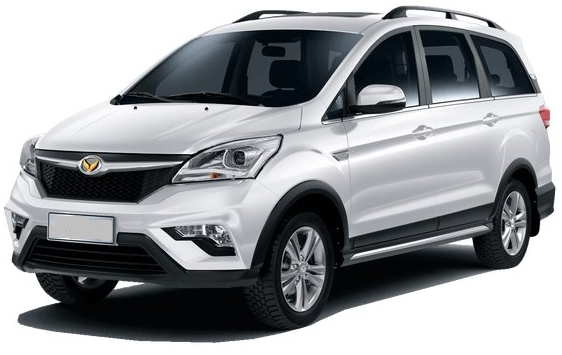
The Huansu H3 was officially introduced during the 2015 Chengdu Auto Show and entered production shortly afterward for the 2015 through 2019 model years. It became one of Huansu’s best-selling vehicles and helped establish the brand within China’s crowded MPV segment.
The H3 was designed as a seven-seat MPV featuring a front-engine, front-wheel-drive layout. It measured approximately 183.5 inches in length with a wheelbase of 110.2 inches, giving it enough interior room for family and commercial use.
Engines and Performance
At launch, the Huansu H3 used a naturally aspirated 1.5-liter inline-four gasoline engine producing approximately 113 horsepower and 150 Nm of torque. Power was sent to the front wheels through a five-speed manual transmission.
Later, Huansu added a larger 1.8-liter inline-four engine generating approximately 140 horsepower and 180 Nm of torque. This engine became available with either a five-speed manual transmission or a five-speed automatic transmission depending on trim level.
Trim Levels
Throughout its production life, the Huansu H3 was offered in multiple trim levels designed around affordability and passenger comfort. Common trims included:
- Standard
- Comfort
- Luxury
- Exclusive
- Elite
Lower trims focused on practicality with cloth seating, manual climate controls, and basic infotainment systems. Higher-end trims added touchscreen displays, faux leather upholstery, upgraded interior trim, alloy wheels, and rear parking sensors.
Pricing at launch ranged from approximately 55,800 yuan to 67,800 yuan, positioning the H3 as one of the more affordable seven-seat MPVs in China.
Sales Success
The H3 quickly became Huansu’s strongest seller. In 2016 alone, the vehicle sold more than 106,000 units in China, making it one of the company’s most successful products. Sales later declined as competition increased and Huansu’s financial situation worsened.
Huansu H3F (2016–2019)
In June 2016, Huansu introduced the H3F, an upgraded and more stylish version of the standard H3. The H3F was designed to appeal to buyers seeking a slightly more upscale MPV without moving into a significantly higher price category.
Design Changes
The H3F retained the same basic platform and dimensions as the regular H3 but received redesigned front and rear styling. The exterior featured a more aggressive grille, revised headlights, and additional chrome trim intended to create a more premium appearance.
Inside, the H3F included upgraded materials and improved seating layouts. The model retained the practical 2-2-3 seating arrangement, which provided easier third-row access and improved passenger comfort.
Powertrain and Trims
The H3F initially used the same 1.5-liter naturally aspirated engine paired with a five-speed manual transmission. Although mechanically similar to the standard H3, the H3F focused more heavily on comfort-oriented trim levels.
Trim packages generally included:
- Comfort H3F
- Luxury H3F
- Exclusive H3F
The H3F also added improved infotainment systems, larger touchscreen displays, upgraded upholstery, and additional convenience features.
Pricing ranged from approximately 58,800 yuan to 67,800 yuan at launch.
Huansu H5 (2017–2019)
The Huansu H5 debuted in 2017 as a larger and more modern MPV intended to compete in China’s increasingly sophisticated family vehicle market. Unlike the simpler H3 series, the H5 attempted to blend MPV practicality with crossover-inspired styling.
The vehicle rode on the same platform as the Bisu T5 SUV and featured a six-seat configuration with a more upscale cabin layout.
Dimensions and Design
The H5 measured approximately 187 inches long, 70.9 inches wide, and 70.9 inches tall. Its wheelbase measured 108.7 inches, allowing for a spacious passenger compartment.
Compared with earlier Huansu MPVs, the H5 featured smoother body lines, more aerodynamic styling, and a more modern front fascia. The interior also represented a significant improvement over previous Huansu products.
Engine and Transmission
The H5 was powered by a turbocharged 1.3-liter inline-four gasoline engine producing approximately 131 horsepower. The engine was paired exclusively with a continuously variable transmission (CVT).
This setup gave the H5 smoother urban driving characteristics compared with the more basic manual transmissions used in earlier Huansu MPVs.
Trim Levels
Available trim levels included:
- Standard
- Comfort
- Luxury
- Elite
Higher trims added features such as:
- Leather seating
- Automatic climate control
- Large touchscreen infotainment systems
- Multifunction steering wheels
- Rearview cameras
- Advanced audio systems
Despite its improvements, the H5 struggled commercially. Only modest sales were achieved between 2017 and 2019.
Huansu H6 (2016–2018)
The Huansu H6 was introduced at the 2016 Guangzhou Auto Show as the largest and most commercial-oriented MPV in the H-series lineup. Unlike the front-wheel-drive H3 and H5, the H6 used a front-mid-engine, rear-wheel-drive configuration more suitable for cargo and passenger transport applications.
Commercial and Passenger Variants
The H6 was designed to serve both commercial and passenger markets. Huansu offered multiple seating configurations, including:
- 2-seat logistics van
- 5-seat utility model
- 6-seat passenger model
- 7-seat family model
- 9-seat transport model
This flexibility allowed the H6 to compete against both passenger MPVs and commercial vans.
Engines and Specifications
The H6 offered two gasoline engine options:
- 1.5-liter inline-four
- 1.8-liter inline-four
Both engines were paired with five-speed manual transmissions.
The vehicle measured approximately 193.9 inches long and nearly 78 inches tall, giving it substantial interior cargo and passenger capacity.
Trim Levels
The H6 lineup included:
- Basic Logistics
- Standard Passenger
- Comfort Passenger
- Luxury Passenger
- Commercial Transport Edition
Higher trims featured upgraded seating, improved infotainment systems, power accessories, and enhanced interior materials.
Prices ranged from approximately 59,800 yuan to 75,300 yuan at launch.
Financial Collapse and Brand Decline
By 2018, the Yinxiang Group experienced severe financial difficulties. Production disruptions began affecting Huansu’s operations, and several models saw declining sales and limited dealership support. The H6 ended production in 2018, while the H3 and H5 disappeared by 2019.
In 2021, Yinxiang Group officially declared bankruptcy. Some former Huansu products were later revived under the Ruixiang brand, including a rebadged version of the H6 known as the Ruixiang Boteng V2.
Legacy and Future Outlook
Although Huansu no longer exists as an active automotive brand, the H3 through H6 lineup demonstrated how quickly Chinese automakers evolved during the 2010s. These vehicles offered affordable transportation, modern styling, and practical seating configurations at prices significantly below foreign competitors.
Today, surviving Huansu MPVs remain common in China’s used-car market, especially in rural regions where affordability and practicality remain important. The H-series models also helped pave the way for newer Chinese MPVs that now compete internationally with increasingly sophisticated technology and higher quality standards.