The History of Sinogold
The Rise and Fall of a Chinese Electric Vehicle Startup (2016–2024)
Sinogold was a Chinese electric vehicle manufacturer that emerged during the rapid expansion of China’s new-energy vehicle industry in the mid-2010s. Founded in 2016, the company sought to establish itself as a producer of battery-electric passenger vehicles, particularly family-oriented multipurpose vehicles (MPVs) and sedans. Although Sinogold never achieved the scale or international recognition of larger Chinese automakers such as BYD, NIO, or XPeng, it played an interesting role in China’s early electric vehicle boom.
The company’s life span was relatively short. Sinogold operated from 2016 until approximately 2024, producing only a handful of vehicles and facing significant challenges in a fiercely competitive industry. While it achieved some noteworthy milestones, including becoming one of the first electric vehicle manufacturers approved in its home province of Shandong, it ultimately failed to establish a sustainable market position.
Company Overview
Years of operation: 2016–2024
Headquarters: Shandong
Industry: Electric vehicle manufacturing
Founder: Zhongwei Wang
Primary products: Battery-electric passenger vehicles
Sinogold was established in January 2016 as part of a broader effort to expand China’s electric vehicle sector. The company focused exclusively on battery-electric vehicles and attempted to capitalize on growing government support for new-energy transportation.
The Founder: Zhongwei Wang
Sinogold was founded by Zhongwei Wang in 2016. Public information regarding Wang’s personal life and early career is relatively limited compared with the founders of larger automotive companies.
Available records indicate that Wang was involved in China’s industrial and automotive sectors before establishing Sinogold. His goal was to create a domestic electric vehicle manufacturer capable of competing in the rapidly growing Chinese EV market. Rather than focusing on traditional gasoline-powered automobiles, Wang chose to enter the market as a pure electric vehicle producer from the company’s inception.
This strategy reflected broader trends occurring throughout China during the 2010s, when government incentives and environmental policies encouraged the development of electric transportation.
Founding and Early Development
Sinogold was established during a period when dozens of Chinese startups entered the electric vehicle industry.
The company became associated with Shandong Guojin Automobile Manufacturing Co., a manufacturing operation located in Shandong Province. The relationship provided Sinogold with production capabilities and access to factory infrastructure. The company invested heavily in research, development, production equipment, and assembly facilities.
From the beginning, Sinogold pursued a strategy centered on practical electric family vehicles rather than luxury cars or performance models.
Factory Operations
One of Sinogold’s most significant accomplishments was the construction of a modern manufacturing facility in Shandong Province.
The factory was designed around the concept of a “smart factory” and included:
- Stamping operations
- Body welding operations
- Paint shops
- Final assembly lines
- Battery assembly facilities
Reports indicated that the plant contained more than 400 industrial robots and achieved approximately 90 percent automation in some production processes. The company promoted the factory as a highly automated operation built according to Industry 4.0 manufacturing principles.
Unlike many startup automakers that outsourced production, Sinogold emphasized in-house manufacturing. The company performed major production activities including stamping, welding, painting, and assembly within its own facilities.
Becoming Shandong’s First EV Manufacturer
A major milestone occurred in 2019 when Sinogold became the first electric passenger vehicle manufacturer in Shandong Province to receive official production approval from China’s Ministry of Industry and Information Technology. This approval was critical because it allowed the company to legally manufacture and sell electric passenger vehicles.
For a young startup, obtaining this approval represented a major achievement and validated the company’s manufacturing capabilities.
Early Vehicle Development
Before launching a production vehicle, Sinogold developed two prototype vehicles:
Sinogold K01
The K01 was one of the company’s earliest electric vehicle concepts.
Sinogold K03
The K03 followed as another prototype program.
Neither vehicle entered mass production. Instead, lessons learned from these projects contributed to the development of Sinogold’s first production automobile.
The Sinogold GM3
The Company’s First Production Vehicle
Sinogold’s first production automobile was introduced as the G60 before being renamed the GM3.
The GM3 was a compact MPV, an electric MPV designed primarily for family transportation. Production began in 2018 and continued until 2023. The vehicle featured:
- Five-door body design
- Electric powertrain
- Seating for families
- Spacious interior layout
- Front-wheel drive architecture
The Sinogold GM3 represented the company’s most important and successful product. It remained Sinogold’s flagship vehicle for most of the company’s existence.
Controversy and Legal Problems
One of the earliest challenges faced by Sinogold involved the design of the GM3.
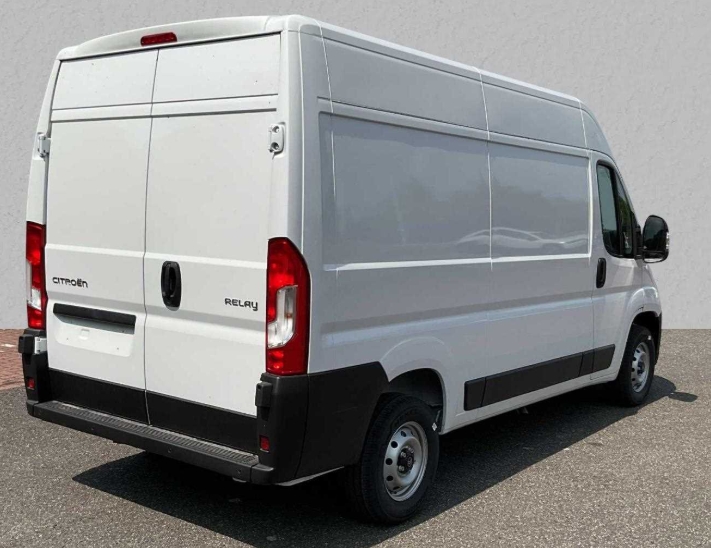
Industry observers quickly noticed that the vehicle strongly resembled the Citroën Grand C4 Picasso. The similarities generated criticism within the automotive press and among consumers.
In 2017, Sinogold encountered additional controversy after promotional materials reportedly used images of a Citroën vehicle rather than photographs of its own product. This resulted in legal action and negative publicity.
How the Company Responded
The company eventually shifted its marketing toward images of its actual vehicles and continued selling the GM3 despite the criticism.
Although the controversy damaged the company’s reputation, it did not prevent production from moving forward.
The Sinogold Junxing
After several years focused almost entirely on the GM3, Sinogold introduced a second production vehicle.
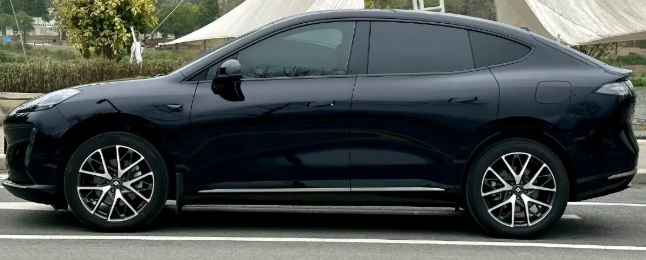
The Junxing sedan appeared in 2022 and was based heavily on the electric version of the Chery Arrizo 5e developed by Chery Automobile. The vehicle featured revised styling and Sinogold branding.
The Junxing represented an attempt to expand beyond the MPV segment and enter the much larger electric sedan market.
However, the vehicle arrived during an increasingly competitive period for China’s EV industry.
Proposed Future Models
Sinogold also explored several additional products.
Sinogold Yuechi
The Sinogold Yuechi was planned as a midsize SUV. Industry reports suggested it shared substantial design similarities with the Jetour X70. Although prototypes and regulatory filings appeared, the vehicle never entered regular production.
Sinogold A00
The company also proposed a small city car known as the A00. Like the Yuechi, it never reached full-scale production.
What Made Sinogold Different?
Several characteristics distinguished Sinogold from other automakers.
Focus on Electric Vehicles Only
Unlike traditional automakers that transitioned from gasoline vehicles, Sinogold was created specifically as an electric vehicle company.
Emphasis on MPVs
Many EV startups focused on luxury sedans and SUVs. Sinogold instead concentrated heavily on practical family transportation through its GM3 MPV.
High Factory Automation
The company invested significantly in automated manufacturing technology and promoted its smart-factory capabilities.
Regional Identity
Sinogold strongly promoted its role as a pioneering EV manufacturer within Shandong Province.
Marketing and Business Strategy
Sinogold lacked the massive marketing budgets available to larger competitors.
Its strategy centered on:
- Government support for EV adoption
- Regional branding
- Family-oriented transportation
- Commercial fleet opportunities
- Participation in China’s rapidly growing new-energy vehicle sector
The company also pursued partnerships with other organizations to expand manufacturing and development capabilities. In 2019, Sinogold announced cooperation with Haiquan Group involving a new-energy vehicle industrial park project and future vehicle development.
Hardships and Challenges
Extreme Competition
Perhaps the company’s biggest challenge was market competition.
When Sinogold entered the industry, China already had hundreds of EV manufacturers and startups competing for customers. Major firms possessed larger budgets, broader dealer networks, and stronger brand recognition.
Limited Product Range
For several years, Sinogold effectively relied on a single production model. This made it difficult to compete with companies offering multiple vehicles across different market segments.
Brand Recognition Problems
Outside of China, the Sinogold name was largely unknown.
Even within China, the company struggled to establish a strong brand identity compared with major rivals.
Design Controversies
The GM3’s resemblance to Citroën products created negative publicity and raised questions about originality.
Financial Pressures
Like many EV startups, Sinogold faced the challenge of funding vehicle development, manufacturing expansion, and sales operations while competing against much larger corporations.
Racing Programs
There is no evidence that Sinogold operated any significant factory-backed racing program.
Unlike manufacturers such as Porsche, Toyota, or Hyundai, Sinogold did not participate in major international motorsports championships.
The company focused entirely on consumer electric vehicles rather than racing activities.
Sales Performance
Reliable detailed sales figures for Sinogold vehicles are limited.
The GM3 remained the company’s highest-volume product and the closest thing Sinogold had to a commercial success. However, production numbers never approached those of major Chinese EV manufacturers.
In 2023, company reports indicated that Sinogold secured overseas orders exceeding 100,000 vehicles across markets in the Middle East and Southeast Asia, although publicly available delivery figures remain unclear.
Most Successful Vehicle
Sinogold GM3
The GM3 was unquestionably Sinogold’s most successful automobile.
Reasons include:
- Longest production run (2018–2023)
- Highest visibility
- First production vehicle
- Largest contribution to company sales
- Established Sinogold’s presence in the EV market
Although not a blockbuster success by global standards, the GM3 became synonymous with the Sinogold brand.
U.S. Consumer Reception
Sinogold never officially sold vehicles in the United States.
As a result:
- U.S. sales: Essentially zero
- U.S. dealer network: None
- Official imports: None
Most American consumers have never heard of the brand.
Among automotive enthusiasts, the company occasionally gained attention because of the GM3’s resemblance to the Citroën Grand C4 Picasso, but it never established a meaningful presence in the U.S. market.
Mergers, Acquisitions, and Buyouts
There is no evidence that Sinogold was acquired by another automaker, merged with another automotive company, or bought out by a larger corporation.
The company maintained its own identity throughout its operational history. It worked with manufacturing and development partners but was not purchased by another company.
Decline and End of Operations
Evidence indicates that Sinogold effectively ceased operating as an independent automobile manufacturer around 2024. Industry references now commonly list the company as defunct.
Several factors likely contributed to its decline:
- Intense competition in China’s EV market
- Limited vehicle lineup
- Difficulty achieving large-scale production
- Brand recognition challenges
- Financial pressures faced by many EV startups
Unlike larger competitors that expanded globally and developed numerous vehicle models, Sinogold remained a relatively small manufacturer with limited resources.
Legacy and Historical Significance
Although Sinogold did not become a major global automaker, it occupies an interesting place in automotive history.
The company represents one of the many ambitious Chinese EV startups that emerged during the industry’s explosive growth period. It demonstrated how regional manufacturers attempted to capitalize on the transition from internal-combustion vehicles to electric transportation.
Its most notable achievements include:
- Establishment in 2016
- Construction of a highly automated manufacturing facility
- Becoming one of Shandong’s pioneering EV manufacturers
- Launching the GM3 and Junxing production vehicles
- Receiving official EV production approval
- Expanding into international export markets
Sinogold’s story is a classic example of both the opportunities and risks associated with the electric vehicle revolution. Founded in 2016 by Zhongwei Wang, the company entered the market with ambitious goals, modern manufacturing facilities, and a commitment to electric transportation. It achieved several important milestones, including becoming one of the first approved EV manufacturers in Shandong Province and launching the GM3, its best-known vehicle.
However, the company faced enormous challenges. Limited resources, intense competition, design controversies, and a narrow product lineup prevented it from achieving the scale necessary for long-term survival. By 2024, Sinogold had effectively disappeared as an active automaker.
Despite its relatively short lifespan, Sinogold remains part of the broader story of China’s electric vehicle boom—a period that transformed the global automotive industry and produced both spectacular successes and notable failures. Its rise and decline illustrate how difficult it can be for new manufacturers to survive in one of the most competitive industries in the world.