The Evolution of the Zinoro 1E: BMW Brilliance’s Pioneering Electric Crossover
The Zinoro 1E holds a significant place in the history of China’s electric vehicle industry. Introduced during a period when battery-electric vehicles were still a niche segment, the 1E represented an ambitious collaboration between BMW and its Chinese joint-venture partner Brilliance Auto. As the first vehicle sold under the newly created Zinoro brand, the 1E served as a testbed for electrification strategies, premium electric mobility, and local-market adaptation in China.
Although the Zinoro 1E enjoyed a relatively brief production run, its importance extends beyond sales figures. It helped establish BMW Brilliance’s presence in the emerging new-energy vehicle sector and paved the way for future electrified products developed specifically for the Chinese market.
Origins of the Zinoro Brand
The Zinoro brand was launched in 2013 by BMW Brilliance Automotive, a joint venture between BMW and Brilliance Auto. The brand was created exclusively for the Chinese market and focused on new-energy vehicles, particularly battery-electric models.
At the time, China was beginning to encourage electric vehicle adoption through government incentives, favorable registration policies, and investments in charging infrastructure. BMW recognized the potential of this rapidly growing market and decided to create a dedicated local brand rather than relying solely on imported or BMW-branded electric vehicles.
The name “Zinoro,” known in China as “Zhi Nuo,” roughly translates to “The Promise,” reflecting the brand’s emphasis on innovation and sustainable transportation.
.
NO MORE dead batteries with this:

.
Development of the Zinoro 1E
The Zinoro 1E was unveiled at the Guangzhou Auto Show in November 2013. It was the first production vehicle developed under the Zinoro brand and became one of the earliest premium electric crossovers available in China.
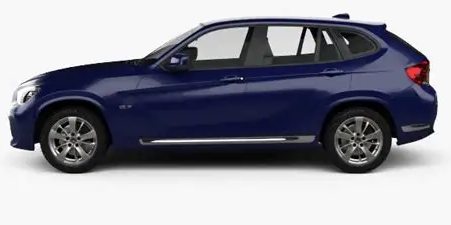
Rather than developing an entirely new platform, BMW Brilliance based the 1E on the first-generation BMW X1 (E84). This approach reduced development costs while allowing engineers to leverage BMW’s proven chassis technology.
Although the vehicle clearly resembled the BMW X1, designers modified the front fascia, grille, lighting elements, and badging to create a unique identity. The result was a crossover that looked familiar yet distinct enough to establish Zinoro as a separate marque.
The 1E officially entered the Chinese market in early 2014.
Production Years
The Zinoro 1E was produced from 2014 through 2016.
While the model debuted in late 2013, customer deliveries began in 2014. Production continued for approximately three years before BMW Brilliance decided to discontinue the vehicle and replace it with the plug-in hybrid Zinoro 60H.
Production ended during 2016 as the company shifted its focus away from a purely battery-electric crossover and toward a more practical plug-in hybrid solution that better matched market conditions at the time.
Models and Trim Levels
Unlike many crossover SUVs that feature multiple trim levels and extensive option packages, the Zinoro 1E was offered in a remarkably simple configuration.
2014 Zinoro 1E
The launch model was effectively sold as a single, well-equipped trim level.
Rather than offering entry-level and premium versions, BMW Brilliance focused on delivering a fully specified vehicle that showcased the capabilities of the new brand. Features included:
- Automatic climate control
- Premium interior materials
- BMW-derived dashboard design
- Advanced infotainment functions
- Regenerative braking technology
- Electric drivetrain management systems
- Comprehensive safety equipment
The vehicle was initially available only through leasing programs in Beijing and Shanghai rather than traditional retail sales.
2015 Zinoro 1E
For 2015, the vehicle continued with minimal changes.
No additional trim levels were introduced, and the overall package remained largely unchanged. BMW Brilliance focused on gathering customer feedback and evaluating the market response to premium electric vehicles.
Some software refinements and equipment updates were made during the model year, but there were no significant mechanical changes.
2016 Zinoro 1E
The final production year saw the model continue in essentially the same configuration.
Again, no separate trim levels were offered. The vehicle remained available primarily through leasing arrangements and select dealership programs. During 2016, BMW Brilliance announced that the Zinoro 1E would be replaced by the new Zinoro 60H plug-in hybrid crossover.
Summary of Trim Levels
Throughout its production life, the Zinoro 1E was generally offered as a single trim level.
Known variants included:
- Zinoro 1E (2014–2016)
No officially documented lower, mid-range, luxury, sport, or performance trims were introduced during production. This simplified approach reflected the vehicle’s role as a technology demonstrator and market-development product rather than a mass-market model.
Electric Powertrain
One of the most notable aspects of the Zinoro 1E was its fully electric drivetrain.
The vehicle utilized a rear-mounted electric motor developed using BMW technology. The motor produced approximately 170 horsepower (125 kilowatts) and 184 pound-feet (250 Newton-meters) of torque.
Power was supplied by lithium iron phosphate battery packs positioned throughout the vehicle. Because the original BMW X1 platform had not been designed as a dedicated electric vehicle architecture, engineers distributed the batteries in three separate locations:
- Under the hood
- Within the center tunnel
- Near the rear of the vehicle
This arrangement helped maintain balanced weight distribution while maximizing available interior space.
Key specifications included:
- Power output: 170 horsepower
- Torque: 184 pound-feet
- Top speed: 81 mph (130 km/h)
- Electric range: approximately 93 miles (150 km)
- Full charging time: about 7.5 hours using a 16-amp charging system
While these figures may appear modest by modern standards, they were competitive for an electric crossover introduced in 2013 and 2014.
Design and Interior
The Zinoro 1E retained much of the BMW X1’s overall architecture. This provided several advantages, including a spacious cabin, elevated driving position, and proven handling characteristics.
Exterior modifications included:
- Unique front grille design
- Revised bumpers
- Distinctive Zinoro badging
- Modified lighting elements
Inside, the vehicle closely resembled the BMW X1. High-quality materials and familiar BMW switchgear contributed to a premium driving experience that distinguished the 1E from many early electric vehicles.
The practical crossover body style also made the vehicle more versatile than many compact electric cars available during the same period.
Market Position
The Zinoro 1E was targeted at affluent Chinese consumers interested in environmentally friendly transportation without sacrificing comfort or prestige.
BMW Brilliance initially restricted availability to leasing arrangements rather than outright sales. This strategy allowed the company to monitor vehicle performance, collect user data, and evaluate charging infrastructure requirements.
The vehicle was primarily marketed in major urban centers such as Beijing and Shanghai, where government incentives and registration benefits favored electric vehicles.
Despite its advanced technology, the 1E faced several challenges:
- Limited charging infrastructure
- High production costs
- Relatively short electric range by emerging market expectations
- Consumer uncertainty regarding electric vehicle ownership
These factors ultimately limited sales volumes.
Legacy and Impact
Although the Zinoro 1E was not a commercial blockbuster, it played an important role in the evolution of electric mobility in China.
The vehicle became:
- The first model sold under the Zinoro brand
- One of China’s earliest premium electric crossovers
- BMW Brilliance’s first dedicated new-energy vehicle
- An important learning platform for future electrified products
The lessons learned from the 1E directly influenced later vehicles developed by BMW Brilliance, including the Zinoro 60H and various BMW plug-in hybrid models sold in China.
The project also demonstrated that established luxury manufacturers were taking China’s electric vehicle market seriously long before the segment became globally dominant.
Future Outlook
The Zinoro brand itself was discontinued in 2020, making a direct successor to the 1E unlikely. Nevertheless, the vehicle’s influence can still be seen in BMW’s modern electric lineup.
Many concepts first explored through the Zinoro program—including localized electrification strategies, Chinese-market-specific vehicle development, and battery-electric crossover design—have become central components of BMW’s global electric vehicle strategy.
Today, vehicles such as the BMW iX1, BMW iX3, and other members of BMW’s electric family reflect how far the company’s electrification efforts have progressed since the introduction of the modest Zinoro 1E.
Looking back, the Zinoro 1E was an experimental but historically significant vehicle. It arrived at a time when electric vehicles were still largely unproven in the marketplace and helped establish a foundation for the explosive growth of China’s new-energy vehicle industry. Though produced for only a few years and offered in a single trim configuration, the 1E remains an important chapter in both BMW’s electrification journey and the broader history of modern electric transportation.