The Evolution of the Zinoro 60H: BMW Brilliance’s Chinese Plug-In Hybrid SUV
The Zinoro 60H occupies a unique place in the history of China’s rapidly developing new-energy vehicle market. Developed through the BMW-Brilliance joint venture under the Zinoro brand, the 60H represented an important step in BMW’s efforts to expand its electrification strategy in China while meeting local market demands. Although its production run was relatively short, the vehicle demonstrated how global automakers adapted their technologies and products specifically for the Chinese market during the transition toward electrified transportation.
Origins of the Zinoro Brand
The Zinoro brand was established in 2013 by BMW Brilliance Automotive, a joint venture between BMW and Brilliance Auto. The purpose of the brand was to develop and market new-energy vehicles exclusively for China. The first Zinoro model was the Zinoro 1E, an electric crossover based on the first-generation BMW X1. The brand was intended to help BMW gain experience in China’s emerging electric vehicle sector while complying with local regulations and incentives for new-energy vehicles.
By 2015, Zinoro revealed the Concept Next at the Shanghai Auto Show. This concept previewed a more advanced successor to the 1E and signaled a shift from a purely electric vehicle to a plug-in hybrid design. The production version would eventually become the Zinoro 60H.
.
NO MORE dead batteries with this:

.
Development of the Zinoro 60H
The Zinoro 60H was developed from the long-wheelbase version of the second-generation BMW X1, known internally as the F49 platform. Unlike the earlier Zinoro 1E, which was based on the previous BMW X1 generation, the 60H incorporated BMW’s latest plug-in hybrid technology available at the time. The vehicle shared much of its engineering with the BMW X1 xDrive25Le, another China-focused plug-in hybrid model produced by BMW Brilliance.
The production model was officially revealed during 2016 and entered the Chinese market on March 23, 2017. Unlike the Zinoro 1E, which was primarily available through leasing programs, the 60H was sold through BMW’s dealer network, making it more accessible to private buyers.
Production Years
The Zinoro 60H was produced from 2017 through 2020. It remained the final production model sold under the Zinoro brand before the marque was discontinued. Production ceased in 2020 as BMW Brilliance increasingly focused on electrified BMW-branded products rather than maintaining a separate Chinese-exclusive sub-brand.
Model Years and Trim Levels
One of the unusual aspects of the Zinoro 60H was its limited model structure. Unlike many crossover SUVs that are offered in numerous trim levels and equipment packages, the 60H was generally marketed as a single highly equipped model.
2017 Zinoro 60H
The 2017 model year marked the vehicle’s launch. The model was introduced with a comprehensive equipment package rather than multiple trim levels. Available features included premium interior materials, BMW-derived infotainment technology, automatic climate control, advanced safety systems, and a plug-in hybrid powertrain. The launch price was approximately 313,000 yuan after applicable Chinese new-energy vehicle incentives.
2018 Zinoro 60H
For 2018, the vehicle continued largely unchanged. Zinoro did not introduce significant trim-level diversification or major mechanical revisions. The focus remained on promoting the vehicle as a premium plug-in hybrid crossover combining BMW engineering with Chinese-market positioning.
2019 Zinoro 60H
The 2019 model year saw only minor updates related to software, equipment availability, and regulatory compliance. The vehicle maintained the same core specifications and continued to be sold in essentially one trim configuration.
2020 Zinoro 60H
The final production year was 2020. No major redesign or second-generation model was introduced. As BMW Brilliance shifted attention toward electrified BMW products, the Zinoro brand gradually faded from the market, and the 60H concluded production as the brand’s last vehicle.
Powertrain and Performance
The defining feature of the Zinoro 60H was its plug-in hybrid powertrain. The vehicle combined a 1.5-liter turbocharged BMW three-cylinder gasoline engine with an electric motor and a lithium-ion battery pack.
Published specifications varied slightly depending on the source because BMW and Zinoro sometimes quoted engine output and combined system output differently. The production version shared its drivetrain architecture with the BMW X1 xDrive25Le and delivered significantly more performance than the original Zinoro 1E electric vehicle. The system used a six-speed automatic transmission and provided all-wheel-drive capability through the hybrid drivetrain arrangement.
The vehicle offered:
- Approximately 60 kilometers (37 miles) of electric-only driving range.
- Combined driving range of roughly 630 kilometers (391 miles).
- Fuel consumption as low as 1.8 liters per 100 kilometers under official testing procedures.
- Acceleration from 0 to 62 mph (100 km/h) in approximately 7.6 seconds.
The model’s name reflected its capabilities. The number “60” referred to the claimed electric driving range, while the letter “H” stood for hybrid.
Design and Styling
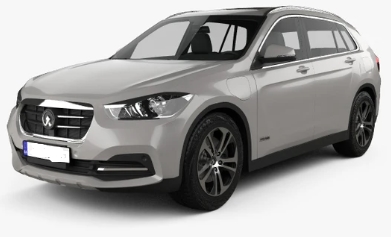
Although mechanically related to the BMW X1, the Zinoro 60H featured distinctive styling intended to establish a separate brand identity. Designers modified the front fascia, grille, lighting elements, bumpers, and rear-quarter design. The result was a crossover that was clearly connected to BMW architecture while maintaining its own appearance.
The vehicle retained the spacious cabin and long-wheelbase layout of the Chinese-market BMW X1, providing increased rear-seat room compared with many global compact crossover competitors. This emphasis on rear-passenger comfort aligned with Chinese consumer preferences.
Market Position
The Zinoro 60H was positioned as a premium compact crossover aimed at environmentally conscious Chinese buyers seeking advanced technology and luxury features. It competed against other domestic and international plug-in hybrid SUVs entering China’s rapidly expanding new-energy vehicle segment.
The model also benefited from government incentives available to qualifying plug-in hybrid vehicles. These incentives reduced the effective purchase price and made the vehicle more attractive in major cities where license plate restrictions favored electrified vehicles.
Legacy and Impact
Although sales volumes were relatively modest, the Zinoro 60H played an important strategic role. It allowed BMW Brilliance to test electrification technologies, dealer strategies, and customer acceptance within a dedicated Chinese brand framework. The lessons learned through Zinoro helped support the expansion of BMW’s broader electrified vehicle lineup in China.
The 60H also marked the transition of the Zinoro brand from a pure-electric experiment to a more practical plug-in hybrid solution. It demonstrated the growing importance of hybrid technology as a bridge between conventional gasoline vehicles and fully electric vehicles during the late 2010s.
Future Outlook
The Zinoro brand itself was discontinued in 2020, making a direct successor to the 60H unlikely. However, many of the technologies and market lessons associated with the vehicle live on in BMW’s current electrified offerings. BMW continues to expand its range of plug-in hybrid and battery-electric vehicles in China, one of the world’s largest automotive markets.
Looking back, the Zinoro 60H can be viewed as an experimental but significant chapter in BMW’s electrification journey. While it existed for only a few years and was sold exclusively in China, it served as an important bridge between early electric vehicle programs and the more comprehensive electrified portfolios that major manufacturers offer today.
The Zinoro 60H remains a noteworthy example of how international automakers adapted products specifically for China during the formative years of the country’s new-energy vehicle revolution. Its combination of BMW engineering, local-market customization, and plug-in hybrid technology makes it an interesting and often overlooked vehicle in the history of automotive electrification.