The Evolution of the Huasong 7: Brilliance Auto’s Premium Chinese MPV
The Huasong 7 occupies a unique position in the history of China’s automotive industry. Developed by Brilliance Auto under the newly established Huasong brand, the vehicle was designed to compete in the premium multi-purpose vehicle (MPV) segment, a market traditionally dominated by imported and joint-venture products. Combining Chinese manufacturing with engineering support from international partners, including BMW and Magna Steyr, the Huasong 7 was intended to elevate Brilliance Auto’s reputation in the luxury transportation market.
Although the model never achieved the sales success initially envisioned, it remains an important example of China’s efforts to move beyond budget-oriented vehicles and into more premium automotive segments. Produced from 2014 through 2020, the Huasong 7 served as the sole model of the Huasong brand and became its defining product.
Origins of the Huasong Brand
The Huasong brand was introduced by Brilliance Auto in 2014 as a premium division focused on larger passenger vehicles and executive transportation. The brand was positioned above Brilliance’s mainstream offerings and was closely associated with the company’s Jinbei commercial vehicle division.
At the time, China’s premium MPV market was expanding rapidly. Business executives, government agencies, hotels, and transportation companies increasingly sought spacious, comfortable vehicles capable of transporting passengers in luxury. Recognizing this trend, Brilliance created Huasong as a dedicated brand to target buyers who might otherwise purchase imported vans or luxury MPVs from established international manufacturers.
The Huasong 7 became the brand’s first and ultimately only production vehicle.
.
NO MORE dead batteries with this:

.
Development of the Huasong 7
Development of the Huasong 7 began in the early 2010s. Brilliance Auto partnered with Austrian engineering firm Magna Steyr and leveraged technical cooperation with BMW to improve the vehicle’s engineering, refinement, and performance.
The project was ambitious for a domestic Chinese manufacturer. Magna Steyr contributed to vehicle engineering and development, while BMW’s influence was particularly evident in the powertrain. The vehicle utilized a BMW-sourced N20 2.0-liter turbocharged four-cylinder engine, an unusual feature for a Chinese domestic MPV at the time.
The Huasong 7 made its public debut at the 2014 Guangzhou Auto Show and entered the Chinese market before the end of the year. It was marketed as a premium executive transporter with seating for seven passengers in a 2+2+3 configuration.
Production Years
The Huasong 7 was produced from 2014 through 2020.
Its production run lasted approximately six years, making it one of the longer-running premium MPVs from a domestic Chinese manufacturer during that period. Despite periodic updates and a facelift, the vehicle remained fundamentally the same throughout its lifecycle.
Production effectively ended in 2020 as the Huasong brand disappeared from manufacturer communications and vehicle approvals ceased. The brand itself was subsequently discontinued.
Models and Trim Levels
Unlike many mainstream MPVs that offer extensive trim hierarchies, the Huasong 7 maintained a relatively straightforward lineup. Depending on the model year, trim names and equipment levels varied slightly, but the vehicle generally remained available in a small number of luxury-oriented configurations.
2014 Huasong 7
The launch-year model focused on introducing the new brand to the market.
Initial versions included:
- Standard Executive
- Luxury Executive
These trims emphasized comfort, passenger space, and premium features rather than sporting performance.
Equipment commonly included:
- Leather seating
- Dual sliding rear doors
- Automatic climate control
- Power-adjustable seats
- Rear passenger entertainment features
- Alloy wheels
- Advanced safety systems
2015 Huasong 7
For 2015, the lineup remained largely unchanged.
Available trims continued to focus on executive transportation and premium passenger comfort. Additional convenience features and interior refinements became available, although no major redesign occurred.
2016 Huasong 7
The 2016 model year introduced minor equipment revisions and expanded feature availability.
Common trim designations included:
- Comfort
- Luxury
- Premium Executive
These names varied depending on region and dealership offerings, but all versions retained the same overall luxury-oriented positioning.
2017 Huasong 7
The vehicle continued with minimal mechanical changes.
Brilliance concentrated on improving quality, infotainment systems, and passenger comfort. Trim structures remained similar to previous years, with most differences centered on equipment packages rather than mechanical specifications.
2018 Huasong 7 Facelift
A significant update arrived in 2018 with a facelifted version.
The most visible changes included:
- Redesigned front bumper
- Revised front fascia
- Darkened trim elements around the daytime running lights
- Updated exterior detailing
Trim levels generally consisted of:
- Luxury
- Executive
- Premium Executive
The facelift helped modernize the appearance while retaining the vehicle’s original architecture.
2019 Huasong 7
The 2019 model year carried over the facelifted design with only minor updates.
Equipment packages expanded to include additional connectivity features and interior enhancements. The overall structure of the lineup remained largely unchanged.
2020 Huasong 7
The final production year saw no major changes.
The vehicle remained available in its established luxury-oriented trims until production concluded. Sales volumes declined significantly compared with earlier years, reflecting increased competition in China’s MPV market.
Powertrain and Performance
One of the Huasong 7’s most distinctive characteristics was its BMW-derived engine.
The vehicle was powered by a turbocharged 2.0-liter BMW N20 four-cylinder gasoline engine paired with a six-speed automatic transmission. Depending on the market and configuration, output ranged from approximately 201 to 238 horsepower. Torque figures ranged between 199 and 233 pound-feet.
Unlike many MPVs that prioritize efficiency above all else, the Huasong 7 emphasized smooth performance and highway capability. The BMW powerplant gave the vehicle a level of prestige and performance uncommon among domestic Chinese vans of the era.
The vehicle utilized a front-engine, rear-wheel-drive layout, contributing to balanced handling and improved load-carrying capability.
Design and Interior
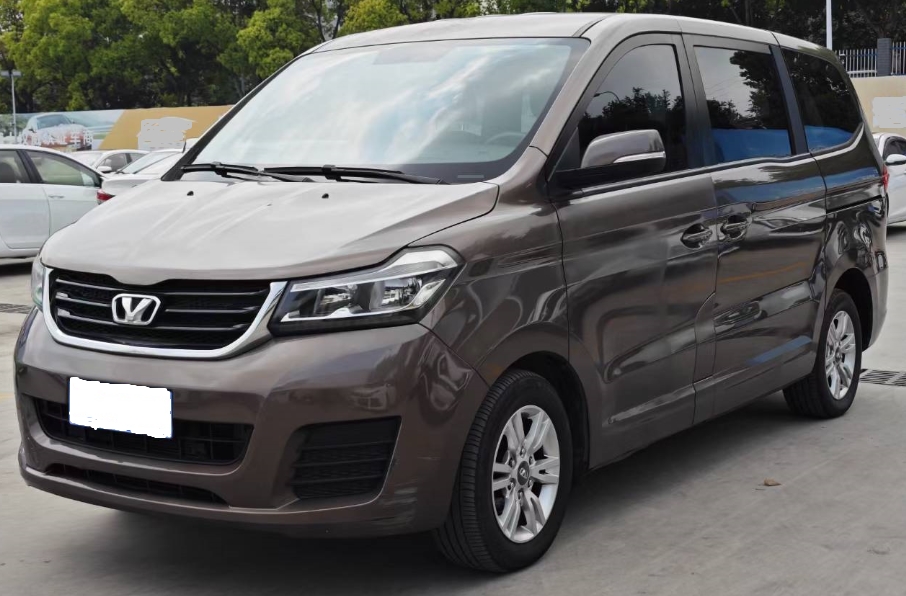
The Huasong 7 was designed as a full-size MPV measuring over 197 inches in length.
Its exterior featured:
- Large chrome grille
- Upright body design
- Executive styling cues
- Dual sliding side doors
- Tall roofline for passenger comfort
Inside, the focus was clearly on passenger accommodation. The standard 2+2+3 seating arrangement provided second-row captain’s chairs and generous legroom. High-end versions featured upgraded leather upholstery, wood-grain trim, and additional luxury amenities.
The spacious interior made the vehicle particularly attractive for business transportation and chauffeur-driven applications.
Market Performance
The Huasong 7 entered a competitive market dominated by vehicles such as the Toyota Alphard, Buick GL8, and various imported executive vans.
While the Huasong 7 offered impressive specifications and premium features, establishing a new luxury brand proved challenging. Many buyers in the executive transportation segment continued to favor established international brands.
Sales initially showed promise but gradually declined as competition intensified. By 2019 and 2020, annual sales had fallen substantially, contributing to the eventual discontinuation of both the model and the Huasong brand.
Legacy and Significance
Despite limited commercial success, the Huasong 7 remains an important vehicle in the evolution of China’s automotive industry.
It demonstrated several significant achievements:
- One of the first Chinese premium MPVs developed with extensive international engineering support.
- Use of BMW-sourced powertrain technology.
- A serious attempt to create a domestic luxury transportation brand.
- An example of China’s transition from budget vehicles toward premium segments.
The vehicle also highlighted both the opportunities and challenges facing Chinese automakers seeking to compete with established global brands in higher-end market segments.
Future Outlook
The Huasong brand was discontinued in 2020, making a direct successor to the Huasong 7 unlikely. However, the lessons learned from the project continue to influence Chinese manufacturers pursuing premium vehicle development.
Today’s Chinese automotive industry has evolved dramatically, with companies such as luxury and new-energy manufacturers achieving far greater success in premium segments than was possible when the Huasong 7 debuted in 2014.
Looking back, the Huasong 7 can be viewed as a transitional vehicle. It bridged the gap between traditional Chinese commercial vans and the sophisticated premium MPVs that have become increasingly common in China’s automotive market. While it remained the sole model produced under the Huasong nameplate, its combination of BMW technology, executive-focused design, and ambitious positioning ensures that it remains a noteworthy chapter in the history of China’s automotive development.