The Evolution of the Bisu T3: A Compact SUV from China’s Rapid Expansion Era
The Bisu T3 was a compact sport utility vehicle (SUV) produced by Chinese automaker Bisu Auto, a brand created under the BAIC Yinxiang joint venture between Beijing Automotive Industry Holding Co. (BAIC Group) and the Yinxiang Motorcycle Group. Introduced during the mid-2010s boom in China’s SUV market, the T3 represented the brand’s entry-level crossover offering, designed to deliver affordability, practicality, and SUV styling for budget-conscious buyers.
Production of the Bisu T3 began in 2016 and continued until approximately 2020, depending on market and production facility output. Although it was not a global sales success, the T3 played an important role in establishing Bisu Auto’s initial product lineup and reflects broader trends in China’s automotive industry during a period of rapid growth, intense competition, and eventual market consolidation.
Origins of Bisu Auto and the Development of the T3
Bisu Auto was established as part of the BAIC Yinxiang joint venture, combining the resources of BAIC Group with Yinxiang Motorcycle Group. The goal of the venture was to produce affordable passenger vehicles for China’s fast-growing domestic automotive market, particularly SUVs, which were experiencing a surge in popularity during the 2010s.
The Bisu T3 was developed as the brand’s entry-level SUV, positioned below larger and more expensive models such as the Bisu T5. It was intended to attract younger buyers and small families seeking an affordable vehicle with SUV styling and basic practicality.
The T3 was designed with cost efficiency in mind, sharing components and engineering principles with other BAIC Yinxiang products. This allowed the company to quickly bring the vehicle to market while keeping production costs low.
.
NO MORE dead batteries with this:

.
Launch and Production Start (2016–2020)
The Bisu T3 officially launched in 2016 as one of the first production models under the Bisu brand. It entered the highly competitive subcompact SUV segment, which at the time was expanding rapidly in China due to increasing demand for affordable crossovers.
From the beginning, the T3 was marketed as a simple, practical SUV with modern styling and essential features. It was aimed primarily at urban drivers and first-time car buyers.
The vehicle remained in production until around 2020, when the BAIC Yinxiang joint venture began to collapse and Bisu Auto ceased operations in its original form.
Design and Platform Overview
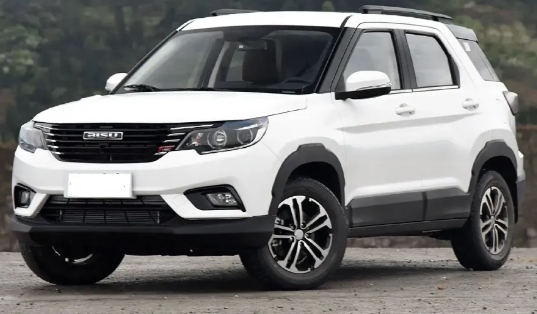
The Bisu T3 was built on a compact front-engine, front-wheel-drive platform typical of budget-oriented Chinese SUVs of its era. It emphasized affordability, ease of maintenance, and practical interior packaging.
Styling followed contemporary SUV design trends, including:
- A large front grille with chrome accents
- Angular headlight design
- A compact but tall body profile
- Raised ride height for SUV appearance
- Roof rails for added utility styling
Despite its small size, the T3 aimed to deliver a more rugged appearance than traditional hatchbacks, aligning with consumer preferences in China during the mid-2010s.
Inside, the cabin focused on simplicity and functionality. Higher trims offered touchscreen infotainment systems and improved materials, while base models remained highly utilitarian.
Engine and Mechanical Specifications
Throughout its production, the Bisu T3 was offered with a small turbocharged gasoline engine designed for efficiency and adequate urban performance.
1.3-Liter Turbocharged Engine
The primary engine was a 1.3-liter turbocharged four-cylinder gasoline unit producing approximately 133 horsepower and around 133 pound-feet of torque.
This engine was chosen to provide a balance between fuel economy and acceptable performance for a lightweight SUV.
Transmission options included:
- Five-speed manual transmission
- Continuously variable transmission (CVT)
Front-wheel drive was standard across all variants.
While not designed for high performance, the T3’s powertrain was sufficient for city driving and light highway use.
Trim Levels and Equipment (2016–2020)
The Bisu T3 was offered in several trim levels during its production run. Trim naming conventions varied slightly by market and model year, but the structure generally followed a progression from basic entry-level models to more equipped versions.
Base / Standard Trim
The entry-level version of the T3 typically included:
- Manual air conditioning
- Basic audio system
- Power windows
- Dual front airbags
- Anti-lock braking system (ABS)
- Rear parking sensors
This trim was designed to maximize affordability and appeal to budget-conscious buyers.
Comfort Trim
The Comfort trim added several convenience and cosmetic upgrades, including:
- Alloy wheels
- Improved interior materials
- Enhanced infotainment system with touchscreen display
- Multifunction steering wheel
- Additional USB ports
- Body-colored exterior trim enhancements
This trim was one of the most commonly sold variants due to its balance of price and features.
Luxury Trim
The Luxury trim focused on comfort and convenience, offering:
- Automatic climate control
- Larger touchscreen infotainment system
- Keyless entry
- Push-button start
- Upgraded seat materials (fabric or leatherette depending on market)
- Chrome exterior accents
This version targeted buyers seeking a more refined driving experience without moving into higher price categories.
Flagship Trim
The top-tier Flagship model included:
- Largest available infotainment display
- Rearview camera system
- Advanced connectivity features
- Enhanced interior trim materials
- Additional driver convenience features
- Upgraded exterior styling elements
The Flagship trim represented the most fully equipped version of the T3.
Market Position and Competition
The Bisu T3 competed in the highly crowded subcompact SUV segment in China, one of the fastest-growing automotive categories during the mid-2010s. This segment attracted many domestic manufacturers due to strong consumer demand for affordable SUVs.
Key competitors included models from:
- Chery (Tiggo series)
- Geely (Vision X3 and related models)
- Changan (CS15)
- JAC Motors
- Dongfeng
In this environment, the T3’s main selling points were affordability, SUV styling, and ease of ownership rather than advanced technology or performance.
Sales Performance and Market Reception
The Bisu T3 achieved moderate sales during its early production years, particularly among first-time buyers and younger customers in urban areas. Its low price point made it accessible, and its SUV styling aligned well with market trends in China.
However, as competition intensified and consumer expectations increased, the T3 faced challenges. Rival models began offering more advanced infotainment systems, better safety features, and improved interior quality at similar price points.
These factors contributed to declining competitiveness in the later years of production.
Production Timeline
- 2016: Official launch and start of production
- 2017: Full model availability with multiple trims introduced
- 2018: Continued production with minor feature updates
- 2019: Stable production period with limited changes
- 2020: Production ends amid BAIC Yinxiang restructuring and Bisu brand decline
End of the Bisu Brand and Discontinuation of the T3
The discontinuation of the Bisu T3 was closely tied to the collapse of the BAIC Yinxiang joint venture and the eventual dissolution of the Bisu brand. Financial difficulties, increased competition, and industry consolidation in China all contributed to the brand’s downfall.
As a result, the T3 did not receive a direct successor. Its role in the market was effectively absorbed by newer or more successful compact SUVs from other BAIC-related brands and competing manufacturers.
Future Outlook and Legacy
Although the Bisu T3 is no longer in production, it remains an example of China’s rapidly evolving automotive industry during the 2010s. It reflects a period when many new automakers entered the market with low-cost SUVs designed to meet surging domestic demand.
Legacy Highlights
- Part of China’s SUV boom era
- Example of platform-sharing strategies in emerging brands
- Demonstrated demand for ultra-affordable compact SUVs
- Highlighted challenges faced by new automakers in a saturated market
Influence on Future Development
While the Bisu brand itself has largely disappeared, the development approach used for the T3—cost efficiency, shared platforms, and rapid market entry—continues to influence newer Chinese automotive startups and joint ventures.
Future compact SUVs in this segment are expected to focus on:
- Hybrid or electric powertrains
- Improved safety technology
- Larger infotainment systems
- Higher build quality standards
- Increased export potential
The Bisu T3 was a short-lived but representative product of China’s highly dynamic automotive industry during the mid-2010s. Produced between 2016 and 2020, it served as the entry-level SUV for the Bisu brand and embodied the company’s focus on affordability and practicality.
While it did not achieve long-term market success or global recognition, the T3 remains a notable example of the rapid rise—and equally rapid decline—of many small automotive brands in China during this era. Its legacy lies in its role within the broader story of China’s transition into one of the world’s most competitive automotive markets.