The Evolution of the Jiangnan TT: China’s Ultra-Low-Cost City Car
The Jiangnan TT was a compact city car produced by Jiangnan Automobile, a Chinese manufacturer best known for building extremely affordable vehicles aimed at first-time buyers and budget-conscious urban drivers. Introduced in the early 2000s and produced into the 2010s, the TT became widely recognized as one of the least expensive production cars ever sold in China. It played an important role in the country’s early mass-motorization period by offering basic personal transportation at a price point significantly lower than most competitors.
Produced from approximately 2005 through 2016, the Jiangnan TT remained in production for over a decade with only minor updates. It was eventually phased out as China’s automotive market shifted toward safer, more modern, and more feature-rich vehicles.
Historical Background
The Jiangnan TT’s origins trace back to a licensed production agreement for the second-generation Suzuki Alto. Jiangnan Automobile originally built simplified versions of older Suzuki microcars under license, adapting them for the Chinese domestic market with minimal changes to reduce manufacturing costs.
By the early 2000s, Jiangnan had become known for producing extremely low-cost vehicles, often stripped to their most basic mechanical and safety components. The TT emerged from this strategy as an evolution of earlier microcars, designed to meet demand in smaller cities and rural areas where affordability mattered more than refinement or performance.
The TT gained widespread attention because of its extremely low purchase price, which made it one of the cheapest new cars available in China at the time of its release.
.
MANY auto lovers not only spend time in their garages to tinker on their autos, but have other projects going on in there as well. Wood working is a popular pastime for the creative type of individual. Not sure what to make next? Or thinking about getting into this kind of hobby? There’s lots of possibilities… Here’s some of them…

.
Production Years
The Jiangnan TT was produced from 2005 through 2016, although availability and specifications varied slightly depending on model year and regulatory changes.
Production Timeline
| Year | Development |
|---|---|
| 2005 | Jiangnan TT introduced and production begins |
| 2006–2009 | Early expansion and steady production |
| 2010 | Minor updates and continued low-cost positioning |
| 2011–2013 | Simplified production as emissions standards tighten |
| 2014–2016 | Final production years with limited updates |
| 2016 | End of production |
The model remained largely unchanged throughout its lifecycle, reflecting Jiangnan’s focus on affordability rather than continuous redesign.
Design and Dimensions
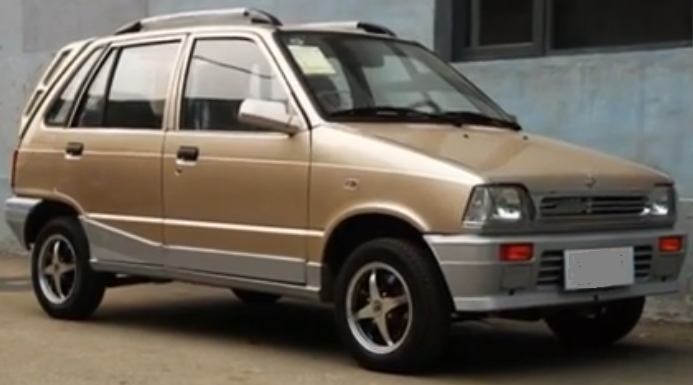
The Jiangnan TT was a two-box hatchback designed for urban use. Its design was simple and functional, with compact proportions that made it ideal for narrow streets and tight parking conditions.
Key dimensions included:
- Length: approximately 137 inches (3,480 mm)
- Width: approximately 61 inches (1,550 mm)
- Height: approximately 57 inches (1,450 mm)
- Wheelbase: approximately 93 inches (2,360 mm)
The TT’s exterior design was minimalistic, with basic body panels, small headlights, and a straightforward grille layout. Aerodynamics and styling were secondary considerations, as the focus was strictly on cost reduction and practicality.
The interior was equally simple, typically offering seating for four passengers in a tight configuration, with limited cargo space.
Powertrain and Mechanical Layout
The Jiangnan TT was powered by extremely small and efficient gasoline engines derived from older Suzuki designs. These engines were chosen for their simplicity, low cost, and ease of maintenance.
Engine Options
Most versions of the TT were equipped with:
- 0.8-liter three-cylinder gasoline engine
- Output: approximately 36 horsepower to 40 horsepower
- Torque: modest, designed for city driving only
In later years, some variants received a slightly larger:
- 1.0-liter three-cylinder gasoline engine
- Output: approximately 45 horsepower to 50 horsepower
Transmission options included:
- Four-speed manual transmission
- Five-speed manual transmission (later models)
There were no automatic transmission options offered in most configurations.
Performance was limited, with the TT designed strictly for low-speed urban transportation rather than highway travel.
Trim Levels and Variants
The Jiangnan TT was offered in a very simple trim structure, reflecting its low-cost philosophy. Unlike modern vehicles with complex option packages, the TT’s variations were minimal and focused on essential equipment differences.
Base Trim
The entry-level TT was stripped to the essentials and included:
- Basic cloth seating
- Manual windows
- Simple dashboard layout
- No power steering on early models
- Steel wheels
- Minimal instrumentation
- Basic heating system (in later years)
This version was often marketed as the lowest-cost new car in China.
Standard Trim
The standard version added modest improvements for everyday usability:
- Power steering (on later models)
- Improved interior materials
- Basic radio system
- Upgraded seating fabric
- Optional air conditioning in some model years
- Slightly improved exterior trim elements
This became the most commonly purchased configuration.
Comfort Trim (Late Production Models)
In the final years of production, Jiangnan introduced a slightly more equipped version often referred to as a comfort-oriented variant. It included:
- Air conditioning as standard
- Improved dashboard design
- Basic audio system upgrades
- Rear seat headrests
- Enhanced seat cushioning
- Limited exterior styling refinements
Even this version remained extremely basic compared to international standards.
Driving Characteristics
The Jiangnan TT was not designed for performance or refinement. Instead, it prioritized affordability and simplicity.
Key characteristics included:
- Low top speed, typically around 62 miles per hour (100 km/h)
- Light weight for improved fuel efficiency
- Minimal insulation, resulting in noticeable road and engine noise
- Basic suspension tuned for city roads
- Extremely low operating and maintenance costs
Its simplicity made it easy to repair, which was a major advantage in rural and lower-income markets.
Market Position and Reception
The Jiangnan TT became widely known as one of the cheapest production cars in China. Its extremely low price made it accessible to first-time buyers who might otherwise rely on motorcycles or used vehicles.
Strengths included:
- Extremely low purchase price
- Simple and inexpensive maintenance
- Compact size ideal for urban environments
- High accessibility for low-income buyers
However, it also faced significant criticism:
- Very limited safety equipment
- Outdated design even at launch
- Poor crash protection by modern standards
- Minimal comfort and convenience features
- Low performance and highway capability
Despite these drawbacks, the TT filled an important niche in China’s early automotive development.
Safety Considerations
By modern standards, the Jiangnan TT offered minimal safety features. Early versions lacked airbags and advanced crash protection systems. Later models added basic safety improvements such as seatbelts and limited structural reinforcements, but it remained far behind global safety benchmarks.
As China’s automotive regulations tightened during the 2010s, the TT increasingly struggled to meet new safety and emissions requirements, contributing to its eventual discontinuation.
Role in China’s Automotive Growth
The Jiangnan TT played an important role in China’s transition from motorcycle-based transportation to widespread car ownership. In many smaller cities and rural areas, it represented an affordable entry point into the automotive world.
Its significance includes:
- Expanding access to low-cost personal transportation
- Supporting early domestic automotive manufacturing
- Demonstrating demand for ultra-budget vehicles
- Influencing later microcar and mini EV development
The TT’s success helped establish the viability of ultra-low-cost cars in emerging markets.
Decline and End of Production
By the mid-2010s, the Jiangnan TT was becoming increasingly outdated. Several factors contributed to its discontinuation:
- Stricter emissions regulations
- Rising safety standards
- Increased competition from newer microcars and compact hatchbacks
- Shift in consumer demand toward more modern vehicles
Production ended in 2016, marking the conclusion of one of China’s longest-running budget city cars.
Legacy and Future Outlook
The Jiangnan TT remains an important symbol of early Chinese automotive development. While it is no longer produced, its legacy continues through the evolution of ultra-compact vehicles and low-cost electric city cars that followed.
Its influence can be seen in:
- Modern Chinese micro EVs
- Affordable city-focused hatchbacks
- Continued demand for budget urban transportation solutions
As of 2026, there are no plans to revive the TT nameplate. However, Jiangnan Automobile’s later rebirth and transition into electric vehicle development reflects how far the brand has evolved from its TT-era origins.
The Jiangnan TT was a simple, ultra-low-cost city car that helped define an important stage in China’s automotive history. Produced from 2005 through 2016, it provided basic mobility to thousands of drivers who needed an affordable alternative to motorcycles or public transportation.
Although it lacked modern safety, comfort, and performance features, its impact lies in its accessibility and role in expanding car ownership in emerging markets. Today, the TT is remembered as a product of its time—an era when simplicity and affordability were the most important factors shaping China’s automotive landscape.